A cutting tool, not a gemstone
When a listing describes a gold chain as diamond-cut, it is telling you about the surface of the metal, not about stones. The term refers to a finishing process in which small flat facets are machined into the gold using a diamond-tipped cutting tool. The diamond in question is industrial: a hard cutting point that shaves the metal cleanly, leaving a plane so smooth it needs no further polishing.
The confusion is understandable, because in the same breath the industry uses diamond cut to describe the shape of an actual gemstone, as in round brilliant cut or princess cut. Same words, entirely different subjects. On a chain, diamond-cut is a verb that happened to the gold. On a stone, cut is a noun describing the stone itself.
Once you know the distinction, you will spot it everywhere, and you will also spot the listings that lean on the ambiguity.
How the lathe work is done
Diamond-cutting a chain is precision machine work. The finished chain is mounted on a rotating drum or lathe, chilled or held under tension so the links cannot shift, and a diamond-tipped tool is brought against it at an exact angle. As the chain passes the tool, the tip shaves a microscopically thin layer of gold from the high points of each link, leaving behind a flat, mirror-bright facet.
The angle, depth and pattern of the passes determine the effect. A bead chain can be faceted around its whole circumference, a curb link can be faceted on its face, a rope can be faceted along the ridges of the spiral. The tool must remove enough metal to create a true flat plane but so little that the link is not weakened, which is why good diamond-cutting is done on solid links with weight to spare.
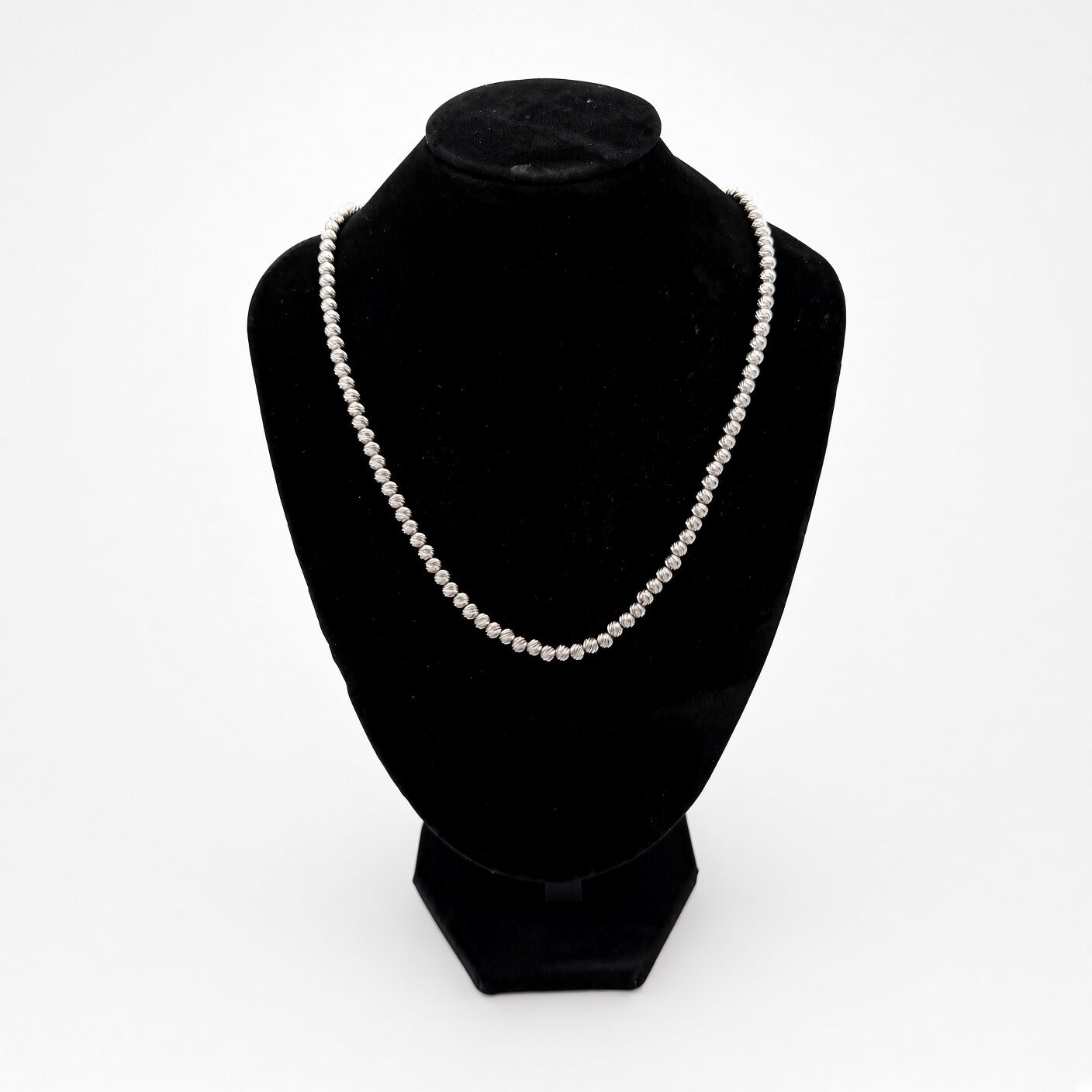
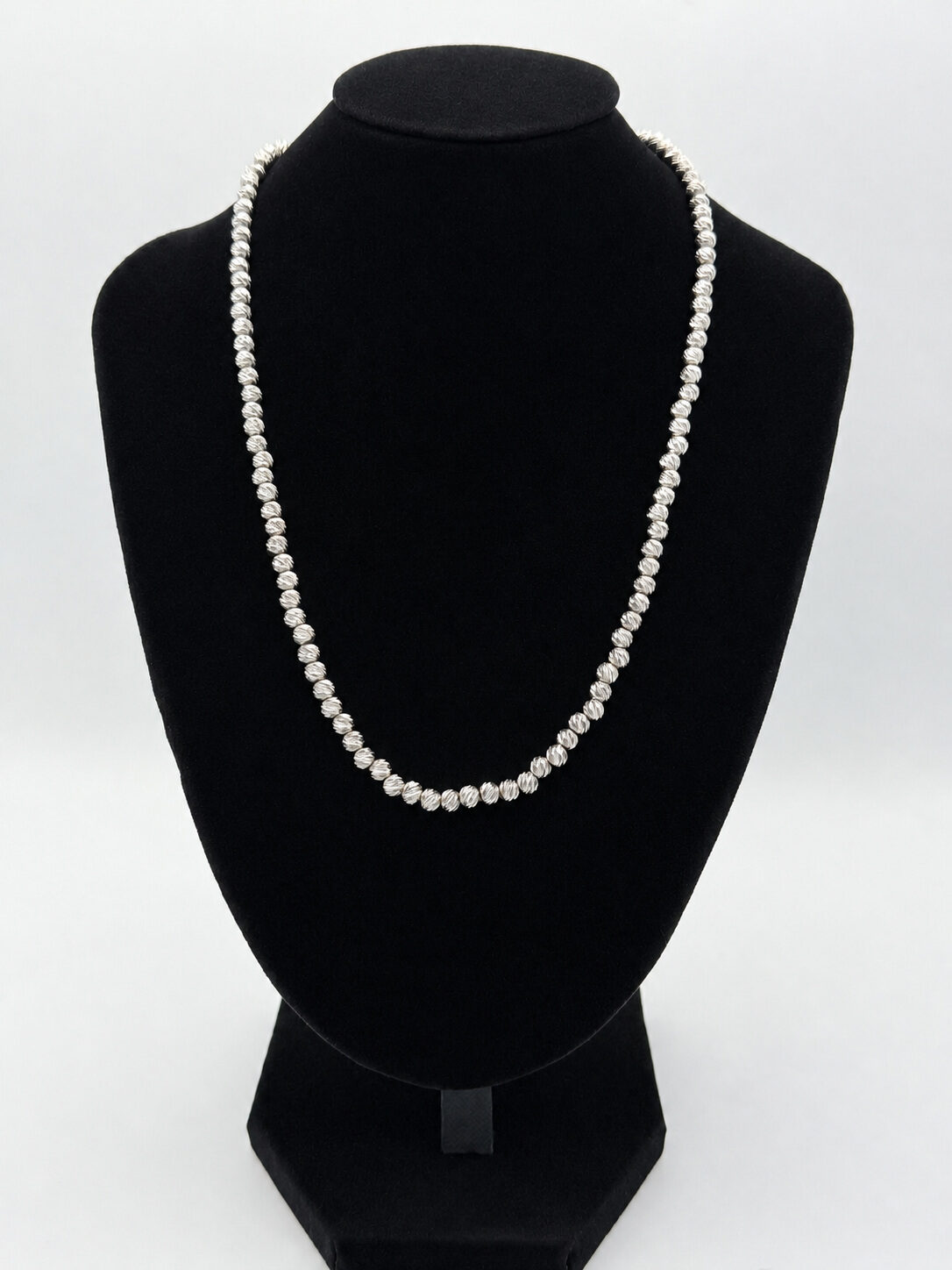
It is honest work in the literal sense: gold is actually removed. A diamond-cut chain weighs fractionally less than the same chain uncut, and the facets cannot be faked with polish alone. You can feel the difference too: run a fingernail slowly along a diamond-cut chain and the facets register as a faint, regular texture, where a plain polished chain reads as uniformly smooth. On a photograph, look for hard pinpoint flashes rather than a soft continuous sheen; that punctuated sparkle is the signature of true faceting, and it is one of the reasons we photograph every chain as the actual piece rather than substituting a render.
Why it catches light the way it does
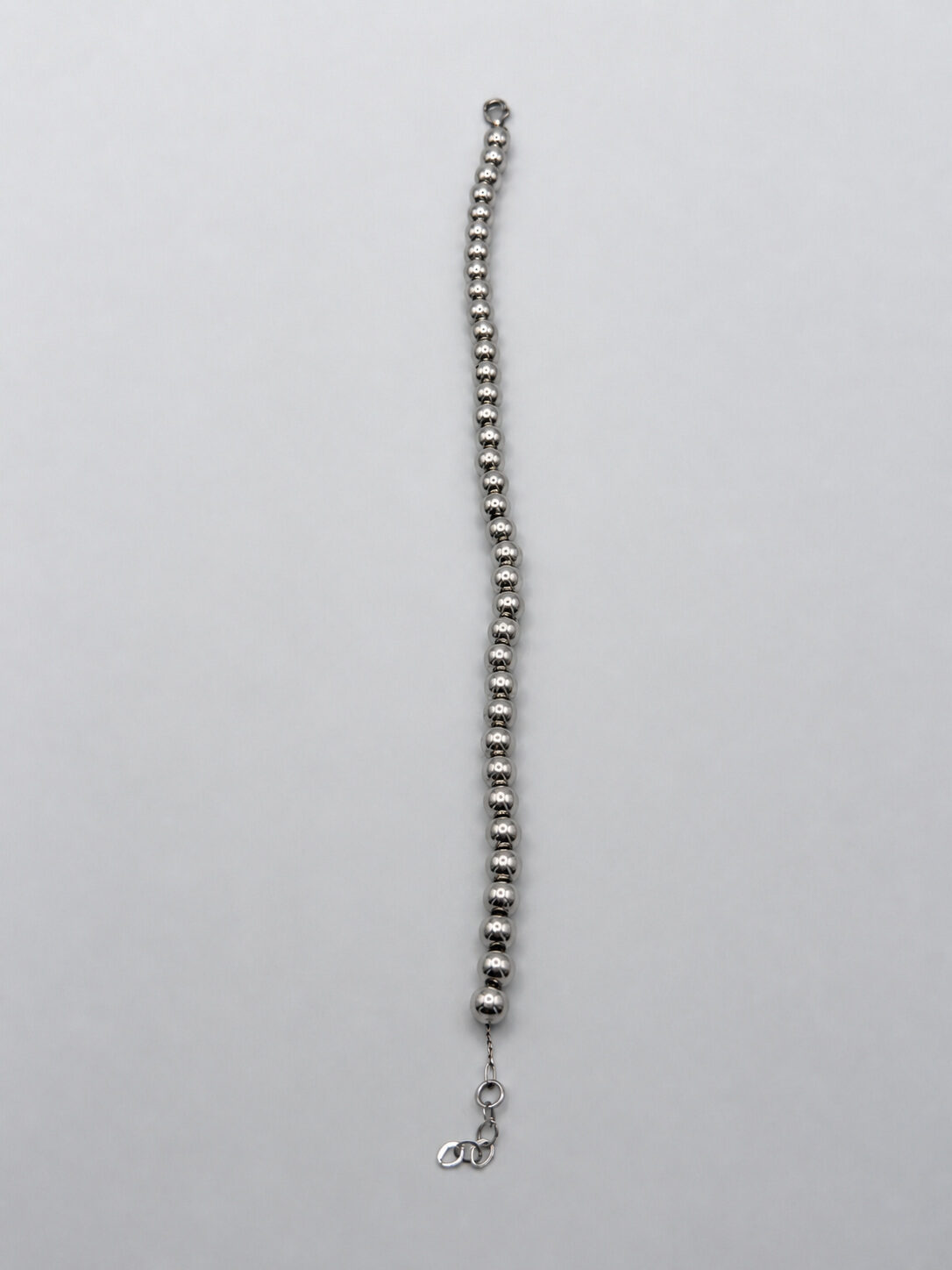
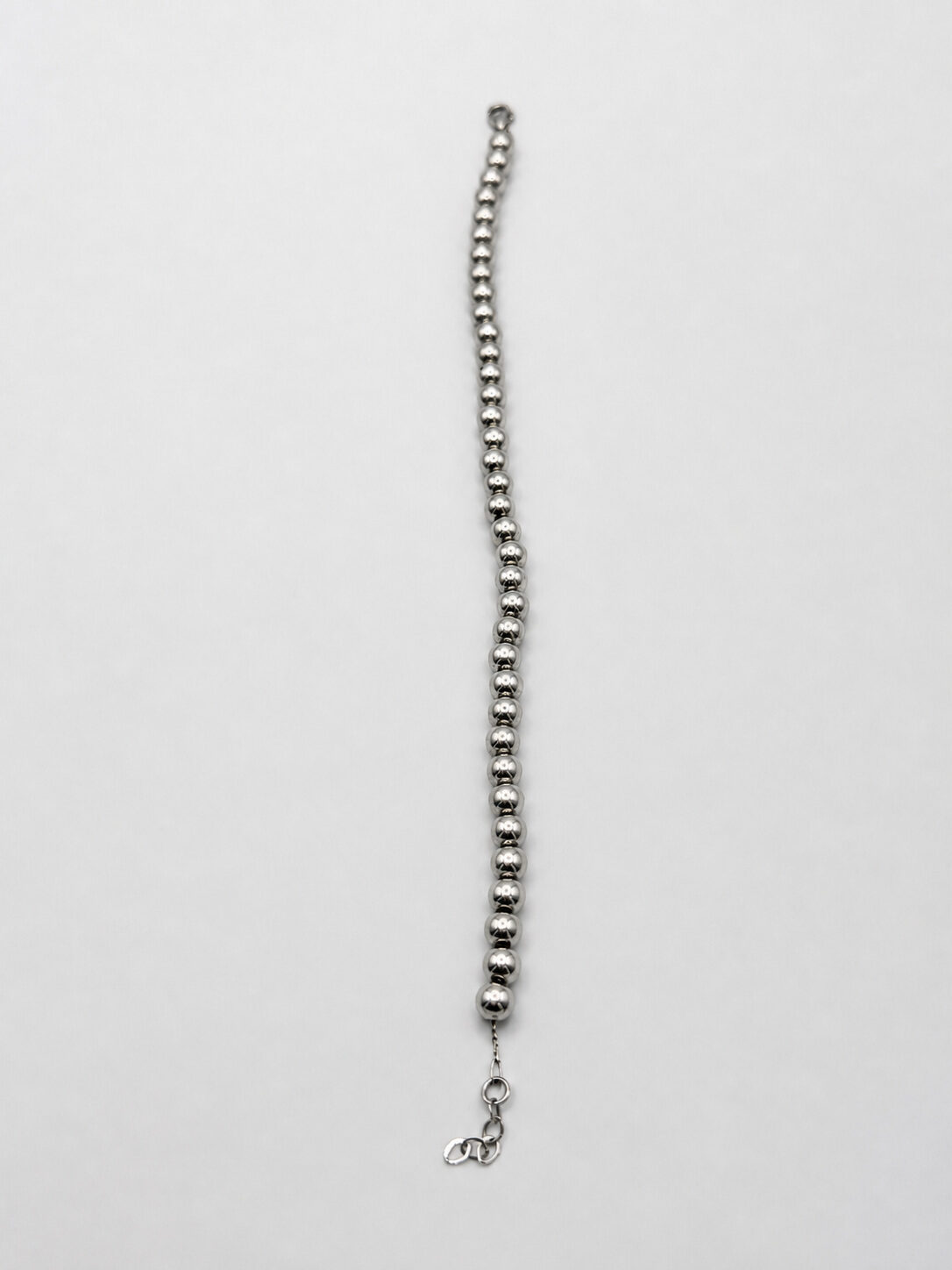
A polished round surface reflects light in a soft, continuous gradient; think of the gentle sheen on a plain ball chain. A flat facet behaves differently. It acts as a tiny mirror, dark from most angles and then, at exactly the right angle, throwing back a hard flash of light. Cover a chain in hundreds of these small mirrors, each at a slightly different orientation, and the chain flickers as it moves. That intermittent flash is the same optical principle that makes a faceted gemstone lively, which is partly why the borrowed name has stuck.
The effect is strongest on chains with curved links, because the facet contrasts with the surrounding rounded surface. Our 14k white gold diamond-cut ball chain is a good illustration: each 4mm bead carries faceting that turns what would be a quiet, matte-reading chain into one that glints with every small movement. In white gold the effect reads as ice rather than warmth, which is its own argument.
How to spot it in listings, and how listings get it wrong
Reading a listing, the tell is simple: a genuine diamond-cut chain is described with the phrase attached to the chain style, and nowhere in the listing will you find a carat weight, a stone count, or a clarity grade, because there are no stones. If a listing says diamond-cut rope chain and also implies brilliance from diamonds, it is either sloppy or hoping you will not ask.
The mislabeling runs in both directions. Some listings write diamond chain when they mean diamond-cut, letting the buyer believe stones are involved. Others bury diamond-cut in a title to catch searches from people shopping for diamond jewelry. Neither is illegal phrasing, but both trade on confusion, and a seller willing to blur that line is worth wondering about elsewhere in the listing too.
- Stones present: expect a stated total carat weight, like 3ctw, and a stone description.
- Faceted metal only: expect diamond-cut next to the chain style and no stone details at all.
- Ambiguous wording with neither: ask before you buy, or buy elsewhere.
When we sell actual diamonds, we say so plainly with the carat weight in the title, as with our rose gold diamond Hamsa pendant at 3ctw. When a chain is diamond-cut, that is all it claims to be.
Is diamond-cut better, or just different
Different. A diamond-cut finish adds light and visual texture, and on smaller chains it adds presence beyond the gram weight, which is genuinely useful. The tradeoffs are real but modest: facets show scratches slightly sooner than a uniformly polished surface, since any scratch interrupts a flat mirror, and a heavily worn diamond-cut chain cannot be fully restored by simple polishing because polishing rounds the very facets that make it sparkle.
For a chain worn in rotation rather than around the clock, none of that should scare you off. For a single daily chain that will be worn hard for a decade, a plain solid finish ages more gracefully. This is the kind of tradeoff we would rather explain than gloss over.
Every piece in our collection is photographed as it actually is, so what you see in the listing, faceting included, is the piece that ships. If you are weighing a diamond-cut finish against a plain one and want an honest steer, send us an enquiry.