What the second row buys you
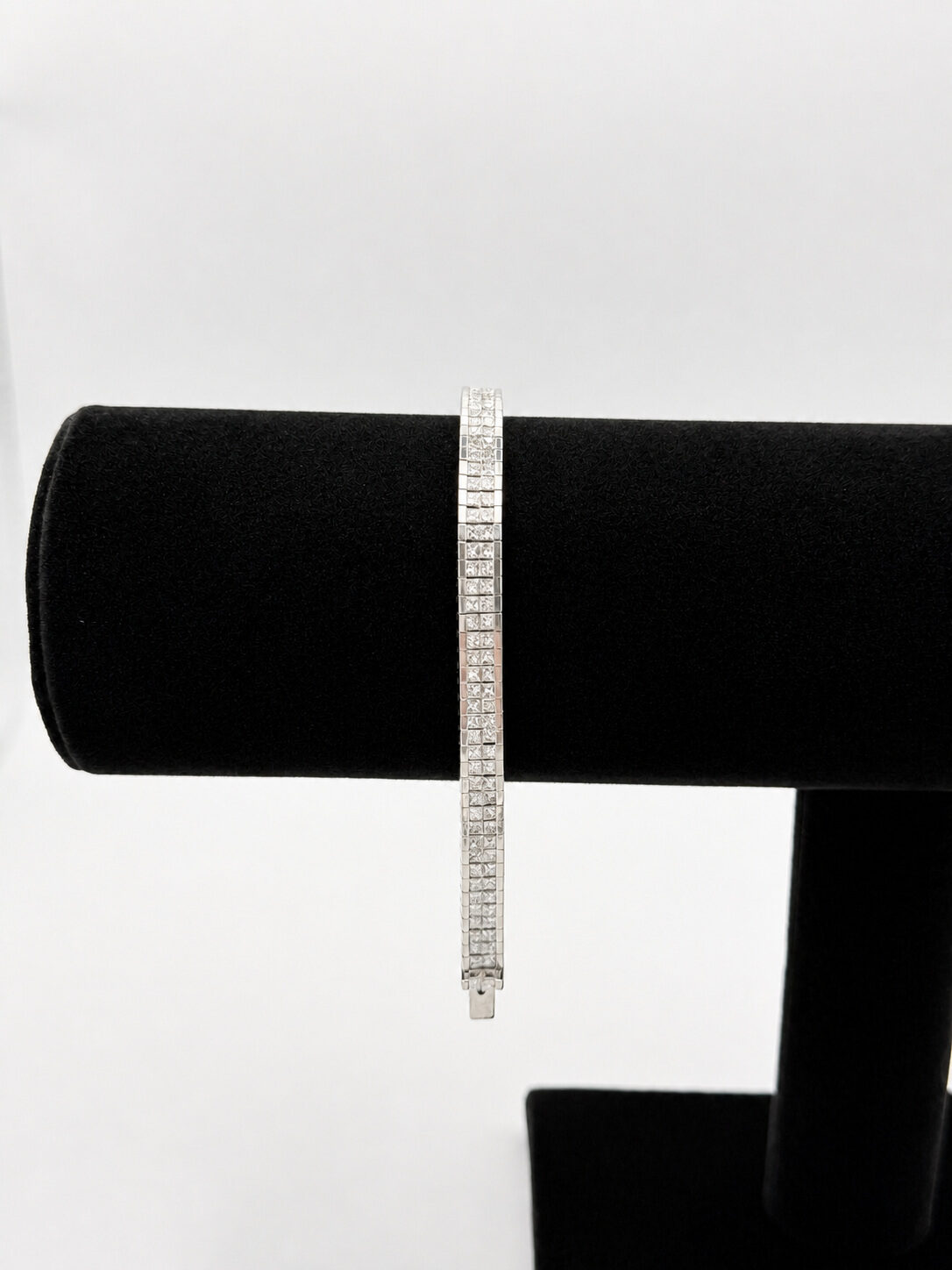
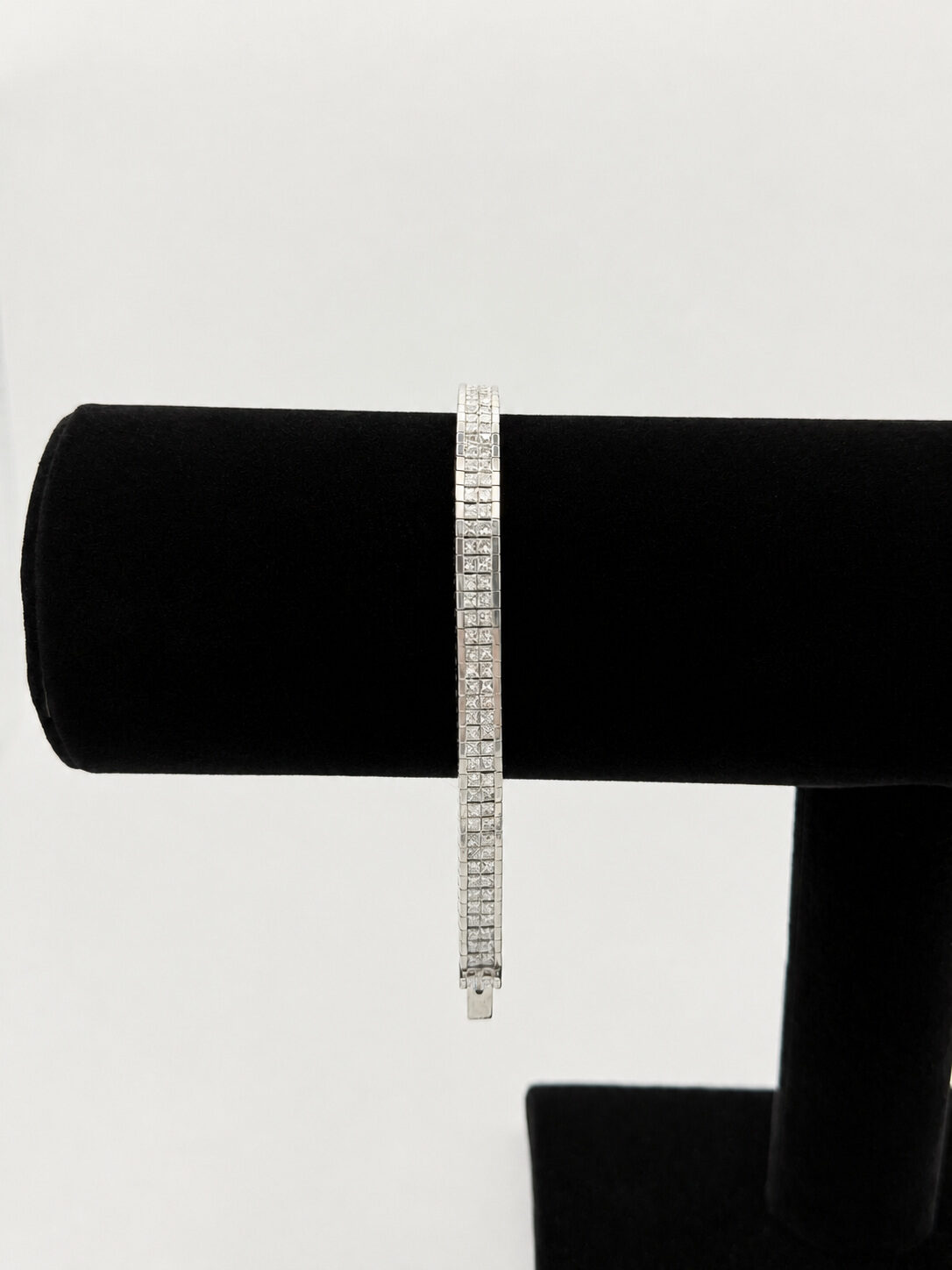
A single-row tennis bracelet is a line. A two-row is a band. That sounds obvious, but the practical consequence is that a two-row reads at conversational distance where a single row of the same total carat weight reads only close up. Width is what the eye registers first; individual stone size is second.
Which means: if presence is what you want, two rows of smaller stones beats one row of larger ones for the same money, almost every time.
Carat efficiency runs the other way
Stone price per carat rises sharply with individual stone size, not linearly. Eight carats made of many small stones costs far less than eight carats made of few large ones. So a two-row 8.00 ctw bracelet is usually cheaper per carat than a single-row 8.00 ctw — while looking substantially wider.
The trade-off is that individual stones are smaller, so under direct light you get more, smaller flashes rather than fewer, larger ones. Both look expensive; they look expensive differently.
Flexibility and how it sits
Two-row bracelets are built as two articulated lines held in a common frame. Done well, they drape as easily as a single row. Done badly, they stiffen across the width and stand off the wrist. Ask for a photograph of the bracelet lying loose on a flat surface — a good one curves; a stiff one arches.
Durability: more settings, more to check
Twice the stones means twice the settings, and settings are the failure point on any tennis bracelet. This is why the safety catch matters more than almost any other feature: it is the difference between losing a stone and losing the bracelet. Insist on a double-locking clasp with a figure-eight safety on anything you intend to wear regularly.
Have the settings checked once a year. It costs almost nothing and it is the single highest-return maintenance in fine jewellery.
18k versus 14k for the setting
18k is 75% gold and slightly softer; 14k is 58.5% and harder. For a piece with many small prongs, the harder alloy holds its shape marginally better over decades of wear. But 18k is warmer in colour and carries more intrinsic metal value. For a two-row bracelet, either is defensible — just know which one you are buying, and check that the karat is stamped.