Why it is called a tennis bracelet
The design is older than the name. Jewelers made flexible, diamond-lined bracelets for most of the twentieth century and called them line bracelets or eternity bracelets — a single row of matched stones, each in its own setting, linked to drape around the wrist.
The name changed at the 1987 US Open. Chris Evert, one of the most dominant players in the sport's history, was wearing a diamond line bracelet during a match when the clasp gave way and the bracelet slipped off her wrist. Play was stopped while she searched the court for it. Evert referred to it as her tennis bracelet, television carried the moment, and the term stuck. Within a few years the industry had adopted the name wholesale, and a piece of formal jewelry became permanently associated with an athlete wearing diamonds mid-match.
There is a practical lesson buried in the story: the most famous tennis bracelet moment in history is a clasp failure. A tennis bracelet is a piece you evaluate for security as much as for sparkle.
Channel versus prong settings
The two dominant ways to hold the stones behave differently on the wrist, and the choice shapes everything about the bracelet.
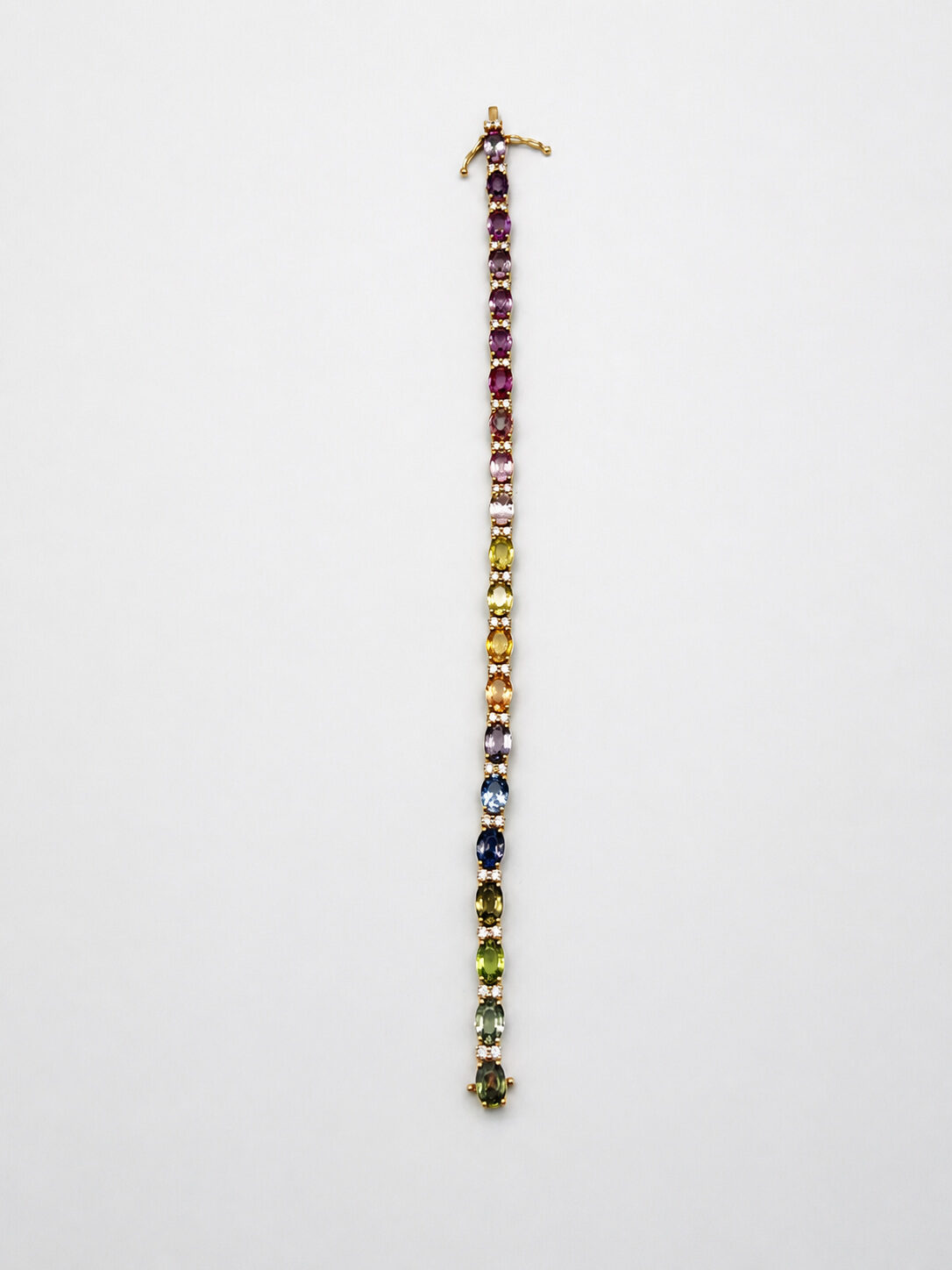
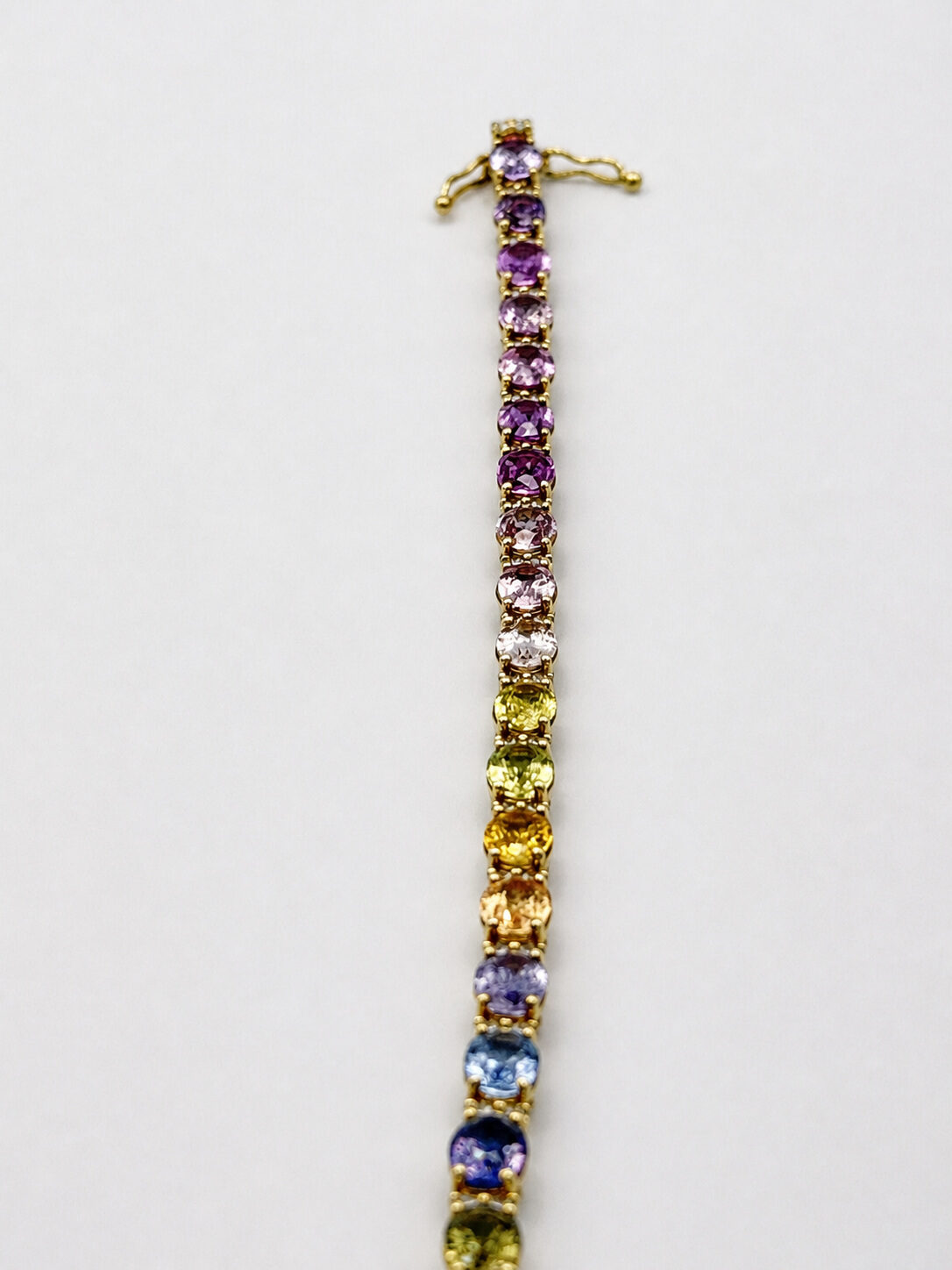
Prong settings hold each diamond in three or four small claws of metal. Maximum light enters each stone from all sides, so prong-set bracelets are the brighter of the two, and each diamond reads as an individual. The trade-offs: prongs can snag knitwear and hair, and they wear down over years of contact with desks and door handles. A prong-set bracelet worn daily should have its prongs checked periodically, because a worn prong precedes a lost stone.
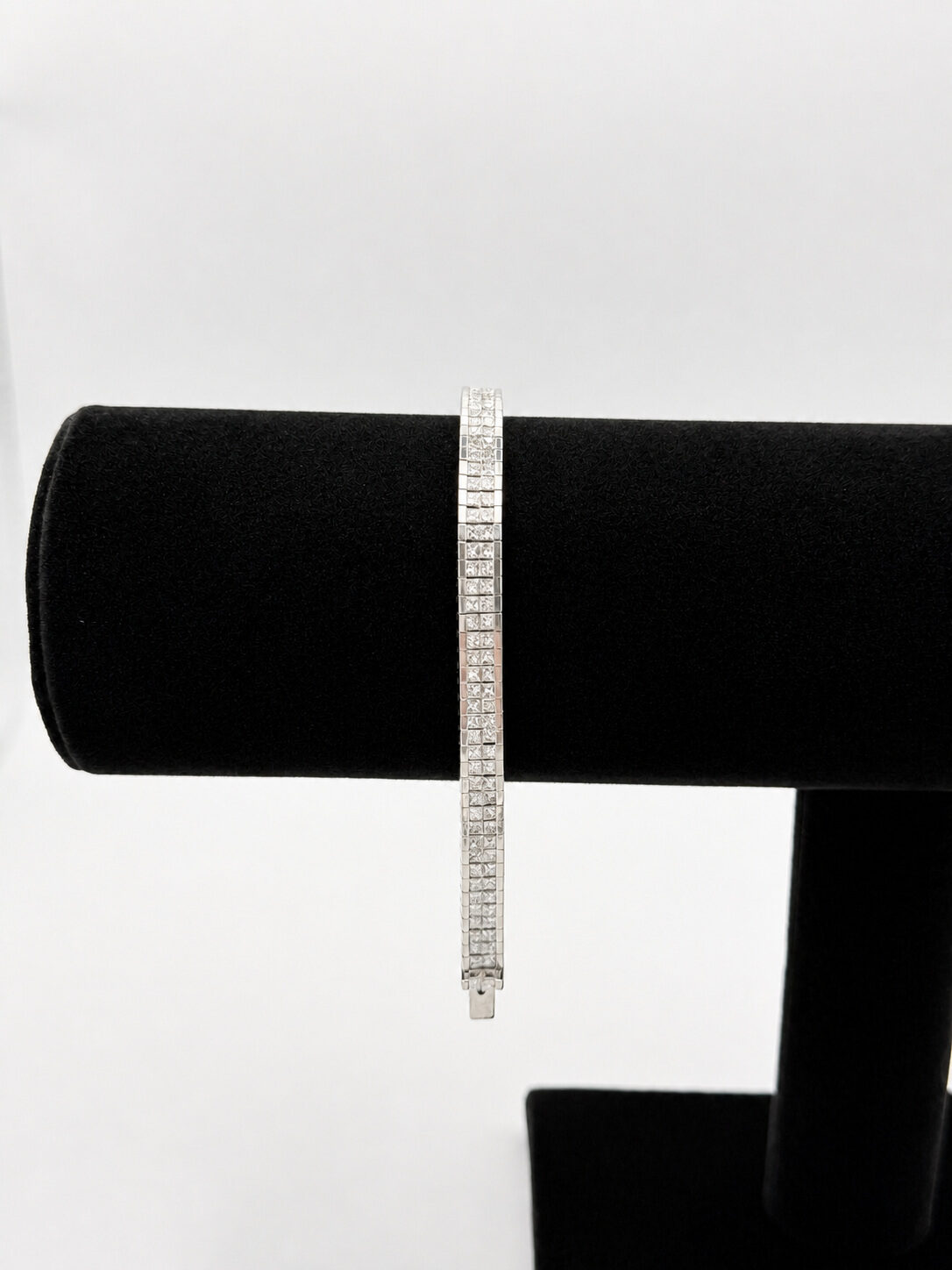
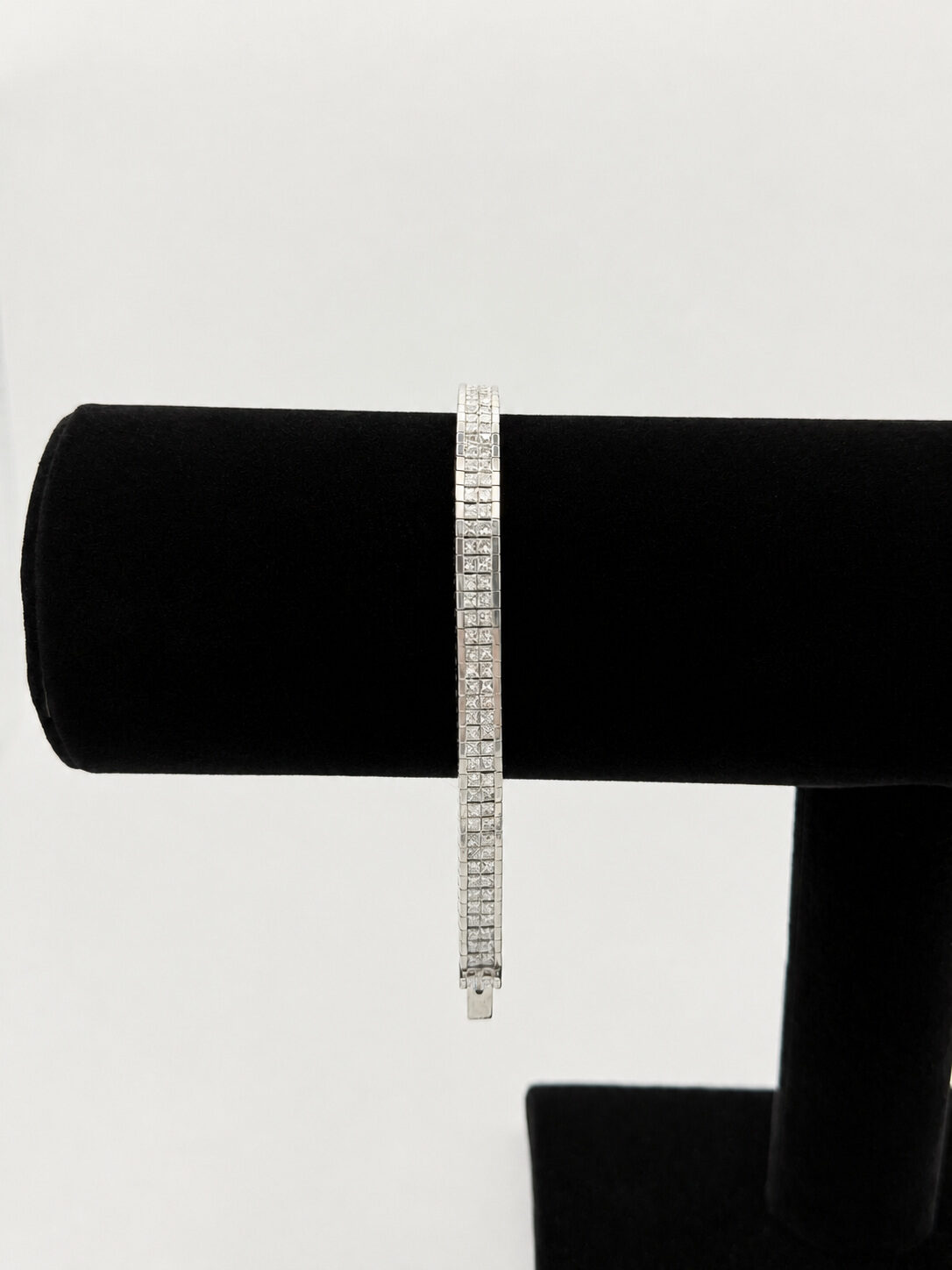
Channel settings seat the diamonds in a continuous groove between two walls of gold, girdle to girdle, with no metal between stones. The result is a smooth, armored line — nothing to snag, and the stones are protected by the channel walls on both sides. The cost is some light: with metal covering the girdle, channel-set stones read as a continuous river of sparkle rather than distinct points, and slightly less fire escapes each stone.
Neither is superior. Prong suits a bracelet worn for occasions and admired up close. Channel suits a bracelet that never comes off. A third style, bezel setting, rings each stone fully in metal — the most secure and most metal-forward of all, worth considering for the most active wearers.
Total carat weight versus per-stone size
Tennis bracelets are sold by total carat weight — the sum of every stone on the bracelet — and this number can mislead if you do not also ask how it is divided.
Five carats spread across fifty stones means 0.10-carat diamonds, each around 3mm. Five carats across twenty-five stones means 0.20-carat diamonds at roughly 3.8mm each — a visibly more substantial bracelet with the identical headline number. Because diamond prices rise steeply with individual stone size, the second bracelet costs meaningfully more than the first despite matching it on paper.
Ask for the stone count and the per-stone weight, not just the total. Then think about what you want the bracelet to do. Many small stones produce a delicate, continuous shimmer that suits stacking and everyday wear. Fewer, larger stones produce distinct flashes that read clearly from across a room.
Matching matters as much as size. In a good tennis bracelet the stones agree with each other in color and clarity, because a single noticeably warmer or duller stone breaks the line the way one wrong note breaks a chord. When examining photographs of an actual bracelet — which is the only kind we publish — look down the line for consistency, not just at the prettiest stone.
Clasp security: where bracelets are won and lost
Chris Evert's bracelet did not fail at a link. Bracelets almost never do. They fail at the clasp, which is why the clasp deserves more scrutiny than any single diamond on the piece.
The standard for a serious tennis bracelet is a box clasp with a safety: a folded tongue of metal that snaps into a box with a firm, audible click, backed by one or two hinged safety clasps — often a figure-eight — that latch over the closure independently. For the bracelet to leave your wrist, both mechanisms must fail simultaneously. Hidden box clasps that integrate into the final link are elegant and equally secure when well made.
Treat with more caution: lobster clasps on heavy diamond bracelets (adequate on chains, but a single-mechanism closure on a valuable bracelet), any clasp that closes without a decisive click, and any visible play in the closed clasp. Test a clasp by closing it and pulling firmly — a good box clasp does not creep.
If a bracelet you love has a clasp that is its weak point, a bench jeweler can usually add a safety for a modest cost — the cheapest insurance in jewelry.
Getting the fit right
A tennis bracelet should drape, not grip and not dangle. The standard test: with the bracelet closed on your wrist, you should be able to slide one finger between the bracelet and your skin. Tighter than that and the bracelet will not move with the fluid articulation that makes the design beautiful; looser and it slides over the hand, spins, and takes far more knocks.
Measure your wrist snugly with a soft tape, then add roughly three-quarters of an inch to an inch for the bracelet length. Most women's tennis bracelets run 6.5 to 7 inches; men's typically 7.5 to 8.5. Flexibility matters too — pick the bracelet up and let it hang. It should fall in a smooth curve without stiff, plank-like sections; a supple bracelet conforms to the wrist instead of levering against its own links.
Sizing a tennis bracelet means removing or adding set links, which is jeweler's work but routine work. Buying slightly long and having links removed is the safer direction than buying short.
Buying one well
The tennis bracelet rewards the unglamorous questions: how many stones, at what per-stone weight, in what setting, behind what clasp, at what length. A seller who answers all five plainly is a seller you can work with.
Our approach is to make those answers unavoidable. Every piece we sell is a one-of-one we own outright, weighed on a calibrated scale, and photographed exactly as it will arrive — no stock imagery, no renders. Inventory changes as pieces sell, so if you are looking for a diamond bracelet, see what is currently in the shop, or send an enquiry describing what you are after; we can tell you what we have and what is coming in. Orange County buyers are welcome to examine pieces in person by appointment.