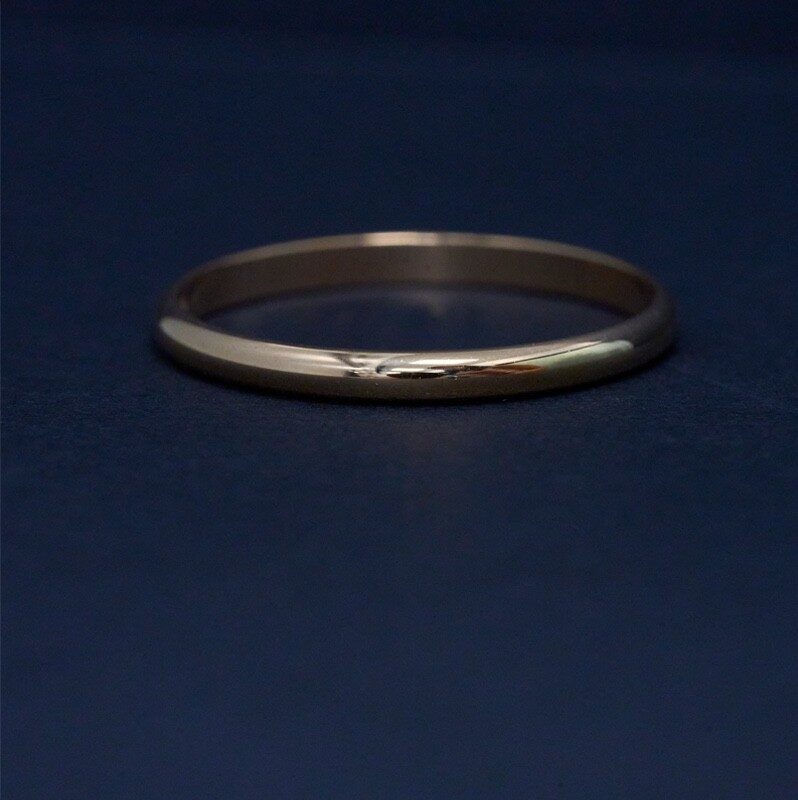
The chemistry: copper does the work
Pure gold is always yellow. There is no rose-colored gold in nature. The blush comes from the alloy — the metals mixed with gold to bring a piece to a working karat.
A 14k piece is 58.3% gold by weight regardless of its color. In yellow gold, the remaining 41.7% is a balance of silver and copper that roughly preserves gold's natural warmth. In rose gold, that balance tips decisively toward copper, usually with a small amount of silver retained to keep the tone from going brick-red. Copper is a warm, reddish metal, and at that concentration it pulls the whole alloy toward pink.
The ratio is tunable, which is why rose gold spans a range rather than a single shade. More copper gives a deeper, redder tone; a touch more silver softens it toward champagne pink. An 18k rose piece, at 75% gold, carries proportionally less copper and reads softer and warmer than a 14k rose piece of the same design.
The practical upshot: rose gold at a given karat contains exactly as much gold as its yellow or white counterpart. When we weigh a rose gold piece on the calibrated scale, the gold content math works identically.
Why rose gold flatters warm skin
Color theory explains most of it. Skin with warm undertones — golden, olive, peachy — harmonizes with metals that share that warmth. Yellow gold does this, which is why it has been the default for most of jewelry history. Rose gold does it too, but along a slightly different axis: its pink leans toward the red already present in skin, so it tends to blend rather than contrast.
That blending is the effect people describe as rose gold looking "lit from within" on the wrist or collarbone. Where white gold creates a crisp, cool contrast against warm skin, rose gold sits closer to the skin's own palette. On deeper complexions the copper tone picks up the red undertone and reads rich rather than pale; on fair, warm-toned skin it avoids the washing-out effect that bright white metals can produce.
None of this is a rule. Plenty of cool-toned people wear rose gold deliberately for the contrast, and mixing metals is a legitimate style rather than a mistake. But if you have ever noticed that yellow gold suits you and wondered whether rose would too, the answer is usually yes — they flatter along the same warm axis.
Durability: rose versus yellow versus white
Copper is harder than both gold and silver, and its concentration in rose gold makes the alloy measurably tougher than yellow gold at the same karat. A 14k rose gold piece resists scratching and denting somewhat better than its 14k yellow equivalent. For a pendant or chain worn daily, that margin is real, if not dramatic.
The more interesting comparison is with white gold. White gold is typically alloyed with white metals such as nickel or palladium, then plated with rhodium to achieve its bright, mirror-white finish. That rhodium layer is thin. With daily wear it gradually thins at contact points, letting the faintly warm alloy underneath show through, and most white gold eventually goes back for replating.
Rose gold has no plating. The pink runs all the way through the metal. A scratch on rose gold exposes more rose gold, and polishing removes the scratch without revealing a different color underneath. Over a lifetime of wear this is the most practical durability argument for rose gold: there is no finish to maintain, only solid alloy that wears the way solid alloy wears.
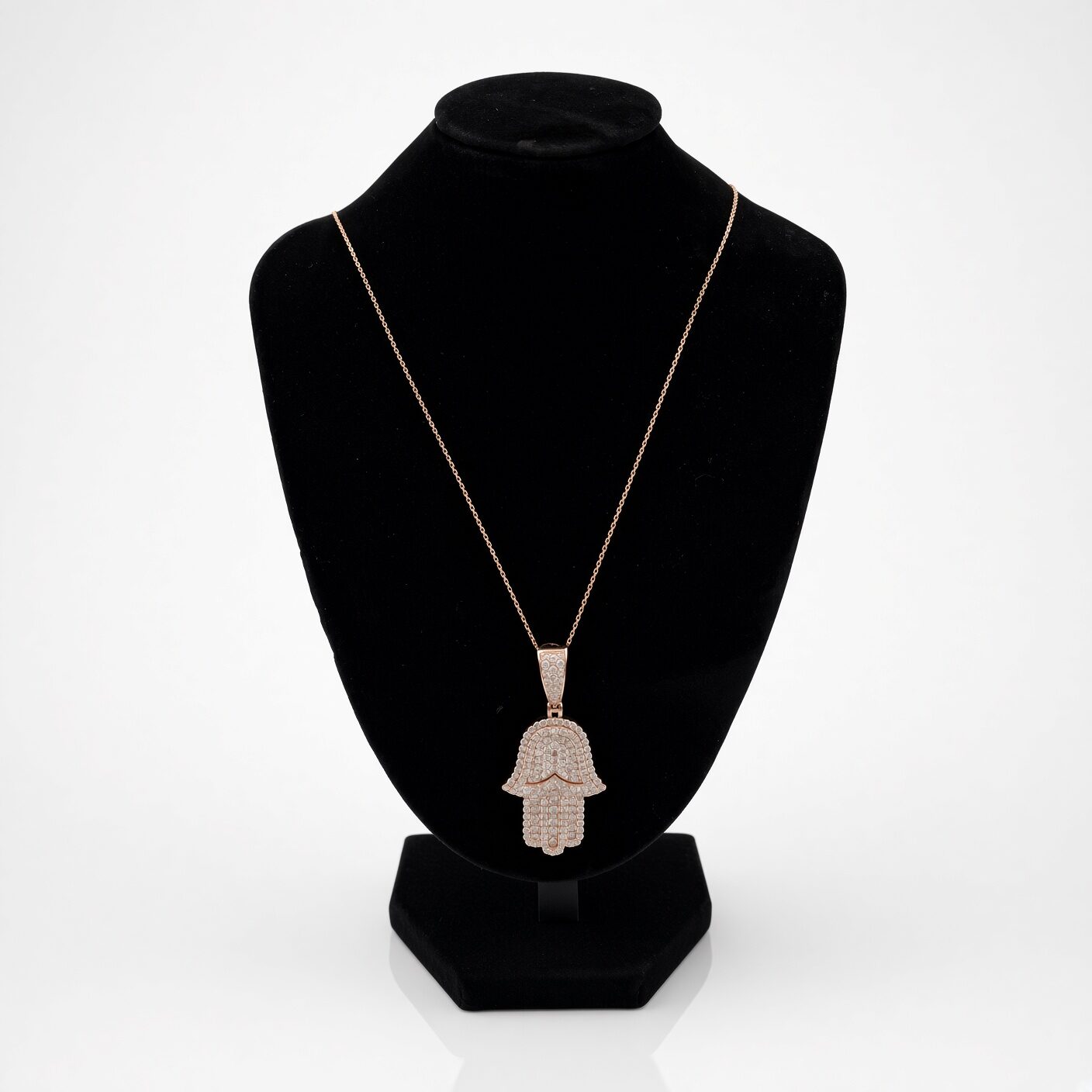
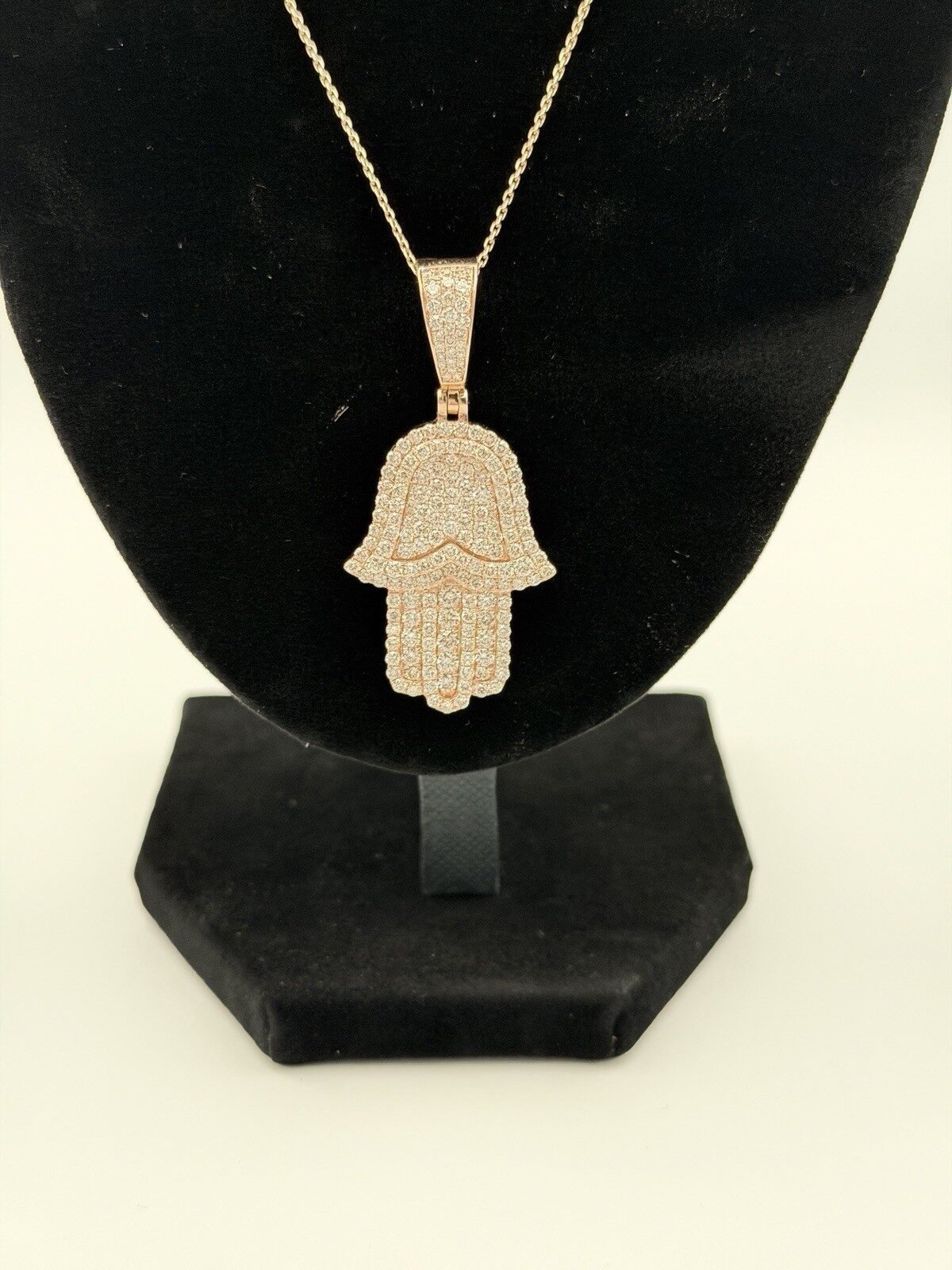
The one caveat is repair work. Because rose gold's copper content makes it slightly less ductile, resizing and solder work call for a jeweler comfortable with the alloy. For a pendant like our 14k rose gold diamond Hamsa, which requires no sizing, this rarely matters.
Why rose gold photographs so well
Photographers who shoot jewelry learn quickly that white metals are hard subjects. Rhodium-bright white gold behaves like a mirror, throwing back whatever light hits it, and it can read as gray or flat under imperfect lighting. Yellow gold is easier, but under warm indoor light it can oversaturate toward orange.
Rose gold occupies a forgiving middle. Its color is distinct enough to register accurately across a wide range of lighting, and its warmth reads as warmth rather than as a color cast. Under the soft, diffuse light most product photography uses, rose gold holds its identity: pink in shadow, pink in highlight.
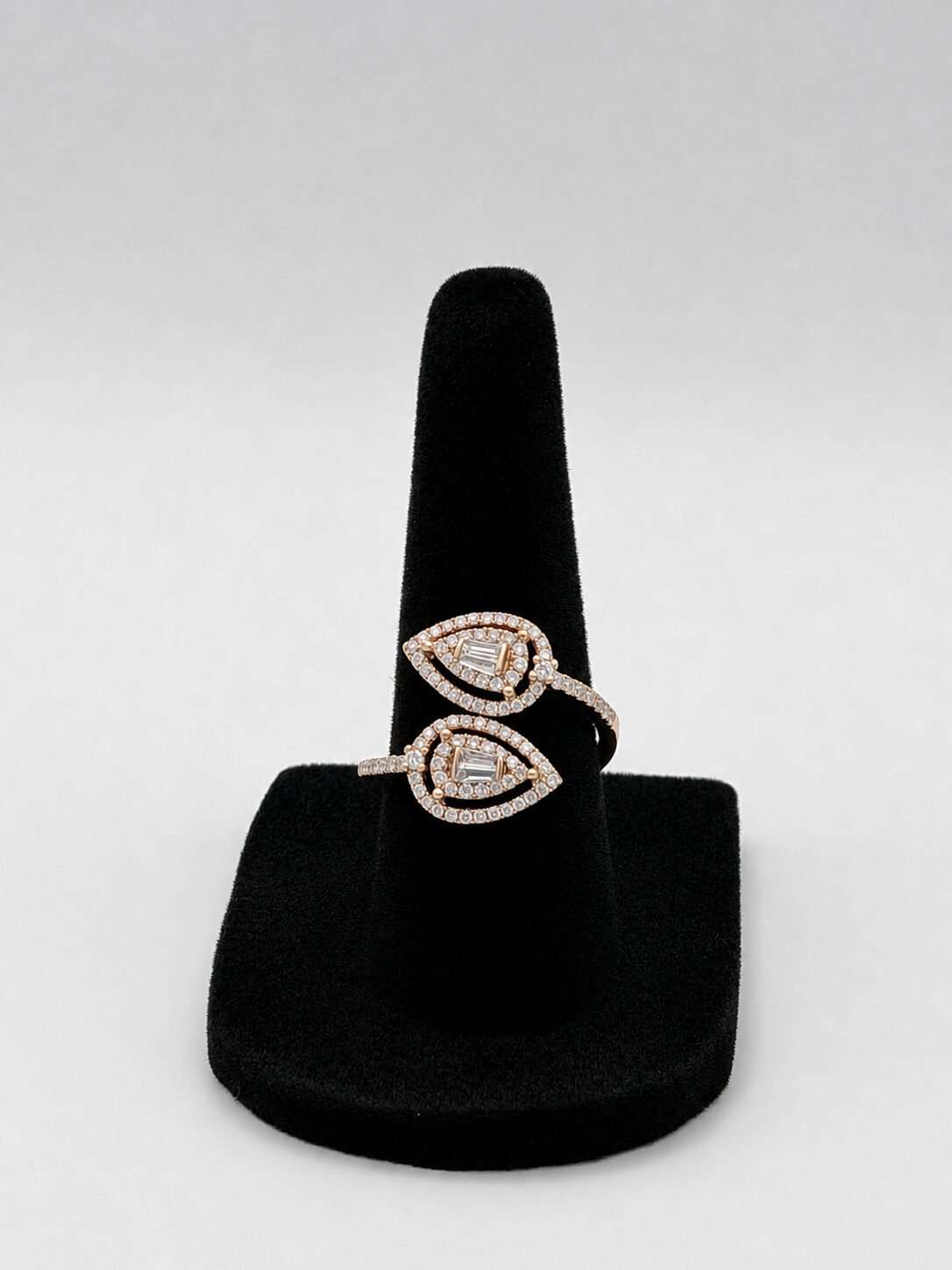
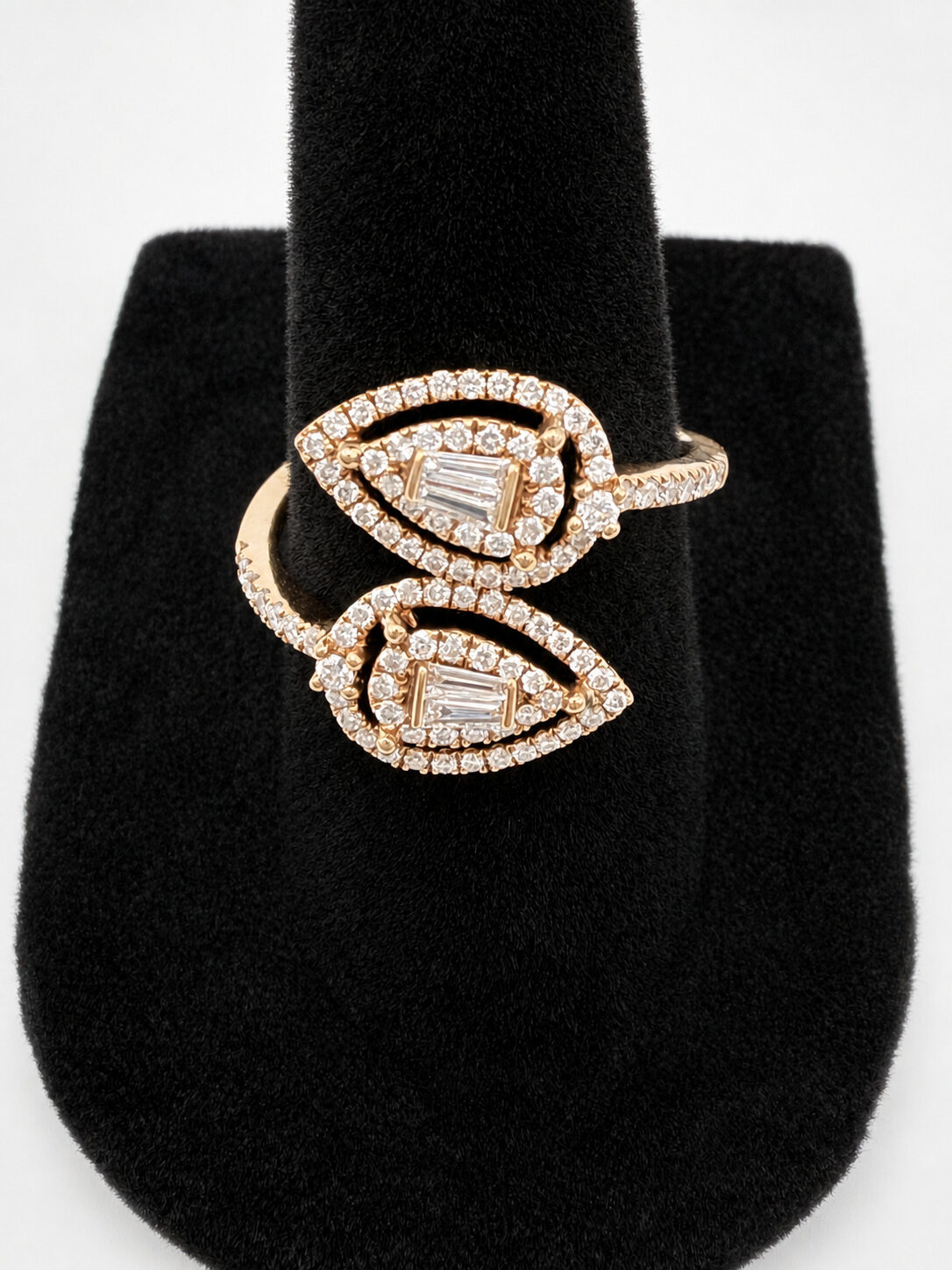
This matters more than it might seem for buying jewelry online. We photograph every piece as-is — the actual item you receive, never a stock render — and rose gold is the metal where the photograph and the in-hand piece tend to agree most closely. What you see in the listing is very close to what comes out of the box.
The same quality shows up in everyday photos: rose gold reads clearly in phone snapshots where white metal tends to disappear into skin highlights.
Caring for rose gold
Care is simple because there is no plating to protect. Warm water, a drop of mild dish soap, and a soft brush handle most buildup. Dry with a soft cloth. A jewelry polishing cloth restores luster when the surface dulls.
Two things to know. First, copper can react slowly with chlorine, so remove rose gold before pools and hot tubs — good advice for any karat gold, but slightly more relevant here. Second, over many years, the copper in rose gold can develop a subtle deepening of tone, a soft patina that many owners like and that a professional polish removes if you do not.
Store rose gold pieces separately from harder stones and other chains to avoid scratches, ideally in a soft pouch. Diamonds set in rose gold need nothing special; clean the pavé with the same soap-and-water method, brushing gently behind the stones where skin oils collect.
Seeing rose gold in person
Rose gold varies by maker, by karat, and by lighting, and a paragraph about copper ratios only goes so far. The honest way to evaluate it is on your own skin.
Every rose gold piece we list is a one-of-one, owned outright, weighed on a calibrated scale, and photographed exactly as it is. If you are in Orange County, we arrange collection by appointment; otherwise pieces ship insured with signature confirmation. Browse the current pieces in the shop, or send an enquiry if you want the actual gram weight and detail photos of anything before deciding.