Why millimeters matter more than inches
Two chains of identical length can differ in price by a factor of four, and the difference is thickness. A chain's weight scales with its cross-section, not its length alone — move from 2mm to 4mm in the same link style and you have roughly quadrupled the metal in every inch, not doubled it. Millimeters compound; inches merely add.
This is why serious chain listings lead with two numbers: gauge and gram weight. With gold around $4,400 per troy ounce — about $141 per gram of pure gold, so roughly $82 of gold content in every gram of 14k — the gram weight tells you what the metal itself is worth before any consideration of make or condition. A listing that gives you millimeters and grams is telling you what you are buying. A listing that gives you neither is not.
Choose thickness first, then length. The gauge determines the chain's character and cost; the length just places it on your chest.
2mm to 3mm: the understated gauge
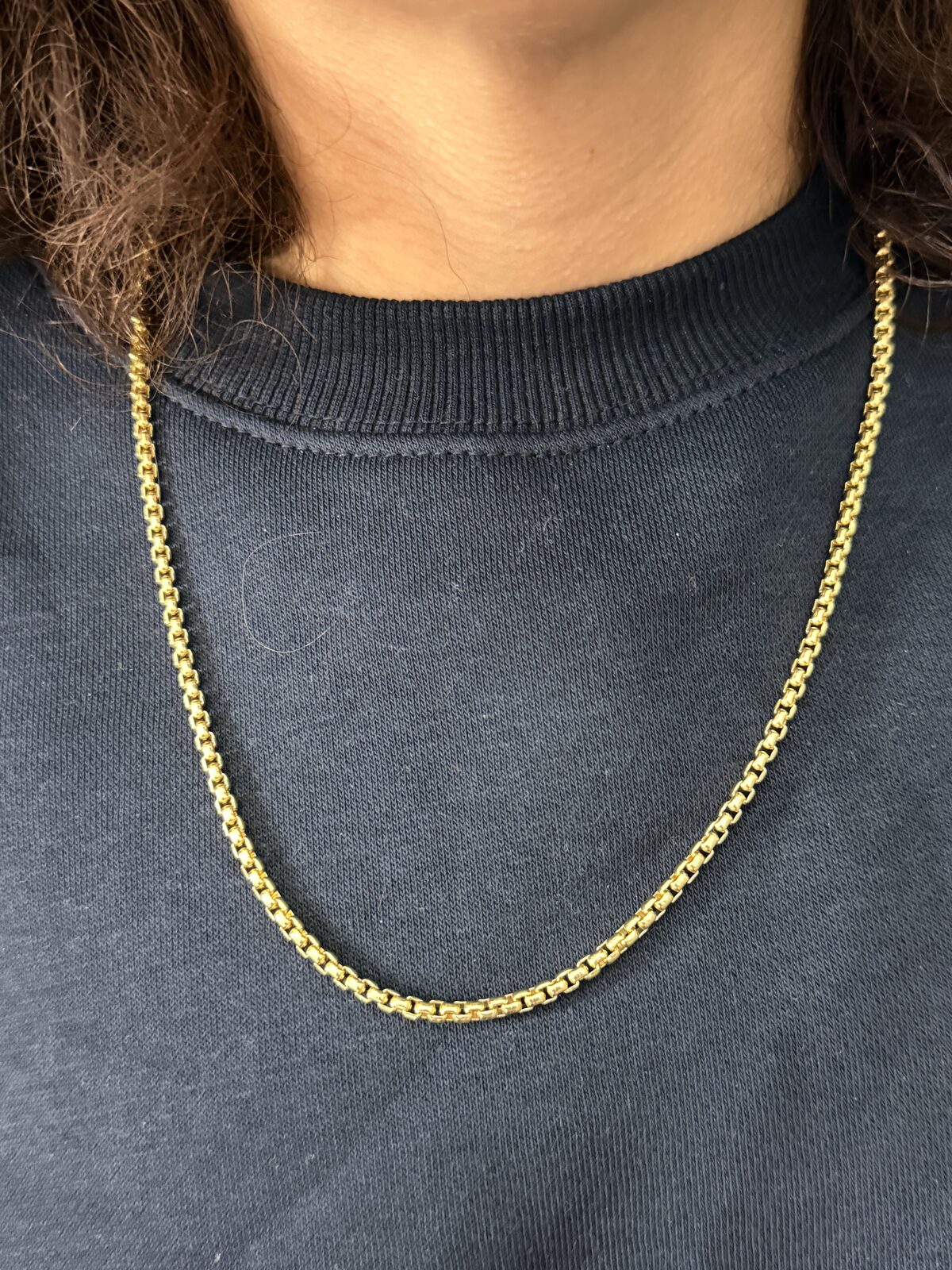
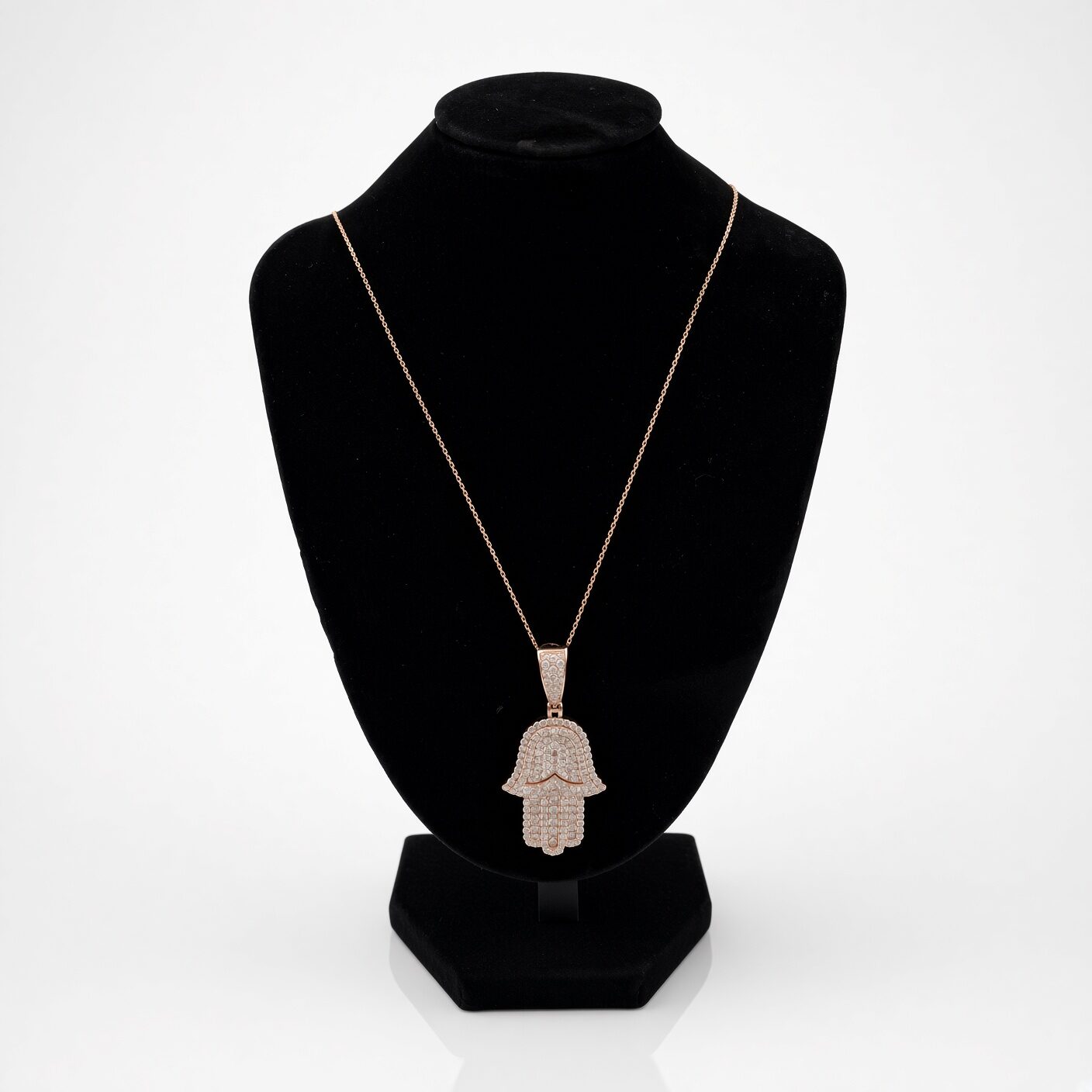
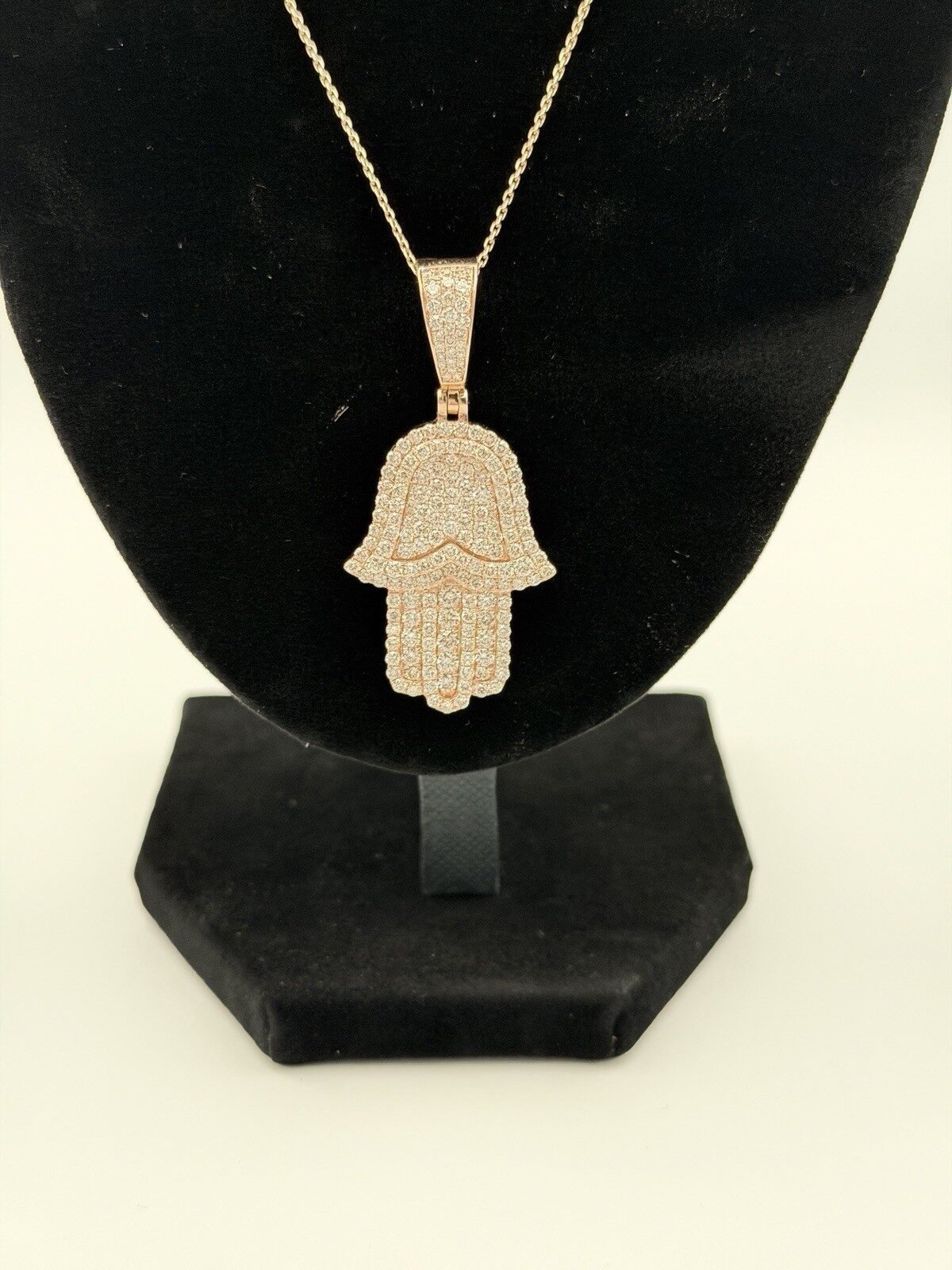
At 2 to 3mm a chain is a detail rather than a statement — visible at an open collar, invisible under a shirt, light enough to forget you are wearing it. This is the natural gauge for slimmer frames, for a first gold chain, and above all for carrying a pendant: a fine chain defers to the pendant instead of competing with it, and the pendant supplies the visual weight the chain deliberately withholds.
The economics are the entry point too. Depending on link style and length, chains in this range commonly run in the single-digit to low-teens gram weights, which keeps them the most accessible tier of solid gold.
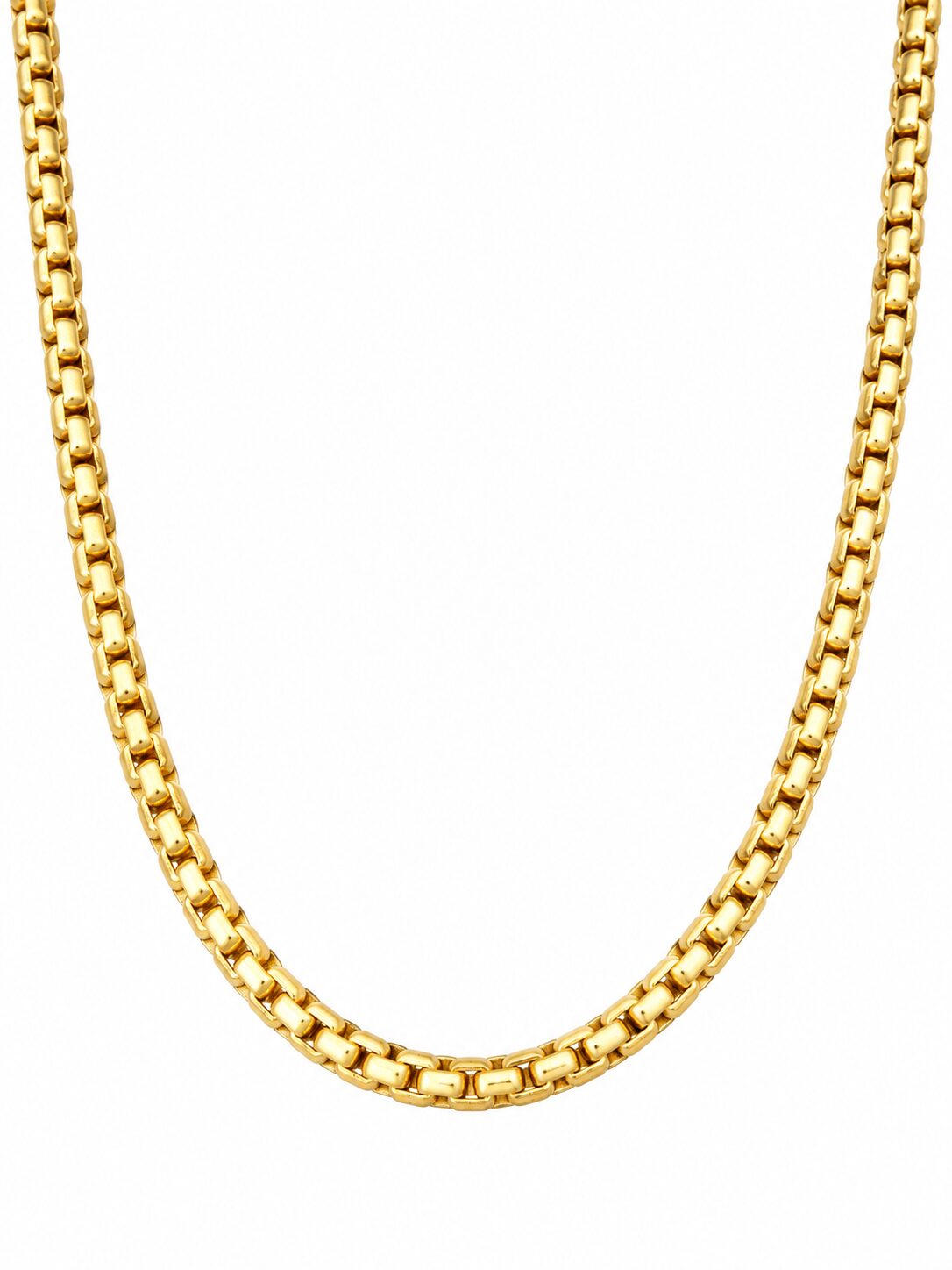
The honest trade-off is durability. Less metal in each link means less tolerance for snags and stress, so at this gauge, link geometry matters most — dense, interlocking styles survive daily wear far better than fine open links of the same weight. Fine chains fail at their weakest single point; good geometry distributes the load.
3mm to 5mm: the standard, for a reason
This is the range most men land in, because it solves the whole problem at once: clearly visible as a piece of jewelry, substantial in hand, wearable daily with anything, and durable enough at solid construction to be a decades-long piece. On a medium build, 3.5 to 4mm reads as confident without announcing itself; broader frames can carry 5mm the same way.
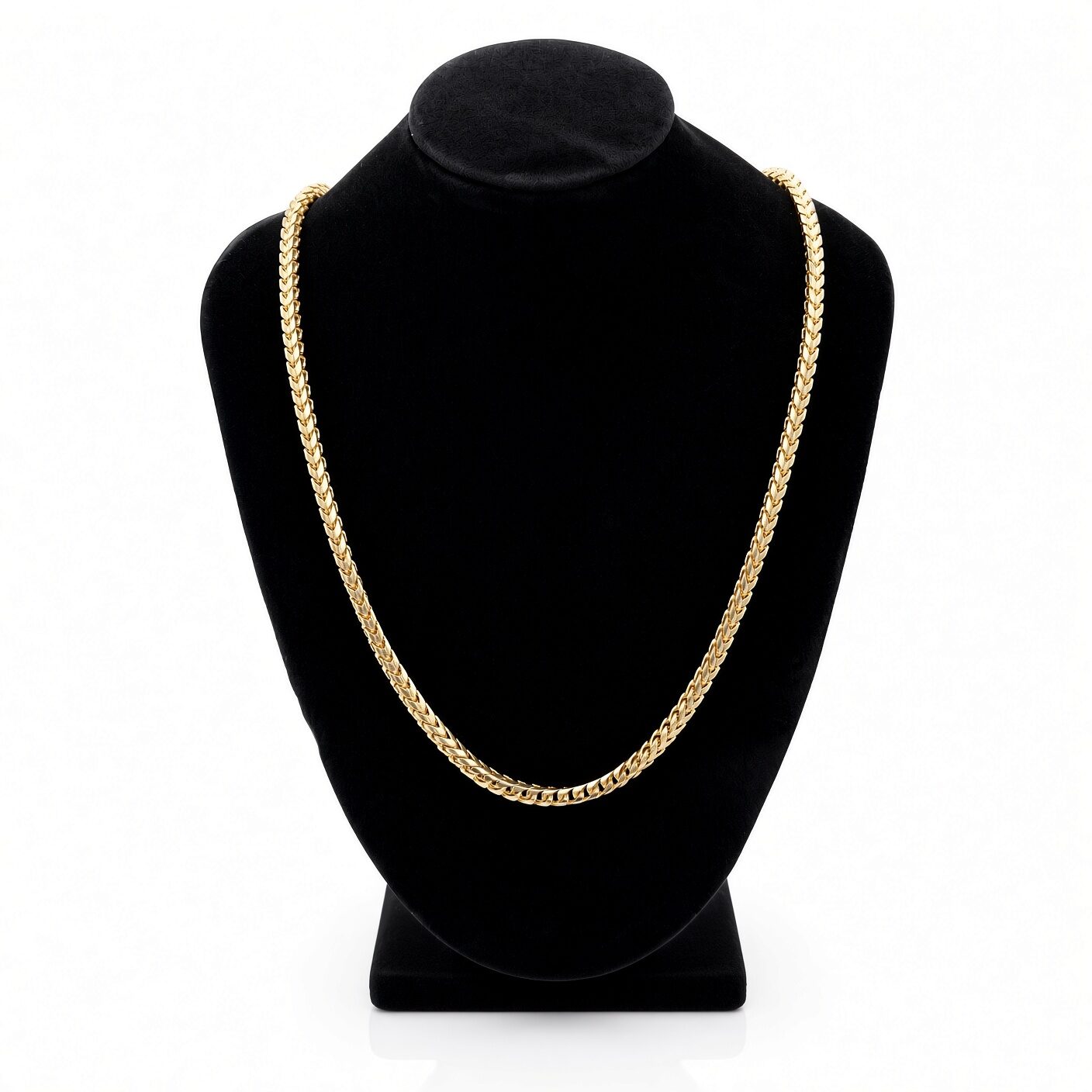
Real numbers make the tier concrete. Our 3.5mm 14k franco chain weighs 42 grams — a weight you feel when you pick it up and settle into within a day of wearing. The franco style earns its popularity at this gauge: its four-sided interlocking weave puts a great deal of metal contact into every millimeter, so stress spreads across the whole weave rather than concentrating at a single solder joint. It also drapes squarely and resists kinking, which matters more as chains get heavier.
At this weight, the metal is unambiguously the bulk of the value — 42 grams of 14k carries roughly 24.5 grams of pure gold. You are buying a store of metal that happens to be beautifully made.
6mm and up: statement territory, and the solid-only rule
Above 6mm a chain stops being an accent and becomes the centerpiece of whatever you are wearing. The visual authority is real, and so is the physics: as gauge climbs, weight climbs with the square of it, and at today's gold price a heavy solid chain in this territory is a four- or five-figure object on metal content alone. Anyone considering the tier should run the arithmetic — grams times purity times spot — before falling in love.
That cost pressure is exactly why hollow and semi-hollow chains exist: tube-formed links deliver the silhouette of a thick chain at a fraction of the weight and price. And it is exactly why we would argue against them at heavy gauges. A statement chain leads a physical life — it swings, it gets gripped, it meets doorframes and gym equipment — and hollow links dent and crush under exactly that use. Worse, a crushed hollow link often cannot be properly repaired, because there is no metal behind the wall to work with. A solid chain in the same situation gets re-soldered and polished, and carries full weight at resale forever.
At 6mm and beyond, the choice is stark: a smaller solid chain or a hollow large one. The solid chain is the one that is still yours, intact and fully valued, in twenty years.
Clasp proportion, and choosing your gauge
The clasp is where thickness decisions quietly fail. A chain's clasp must be proportionate to its gauge in both strength and appearance: an undersized clasp on a heavy chain is the mechanical weak point of the entire piece — the chain is only as secure as that one component — and it looks wrong, an afterthought hanging off serious links. On substantial chains, expect a robust lobster clasp scaled to the links, or a box clasp with a safety latch integrated into the chain's own profile. When you inspect any chain, work the clasp a dozen times; it should close with a positive snap every single time.
Then the decision itself, in three questions. Under a collar or over it? Concealed daily wear points to 2–3mm; visible wear opens the range. Pendant or standalone? A pendant wants a modest chain; a standalone chain can carry gauge. And what weight will you actually enjoy every day? Grams on paper become presence on the neck.
Every chain in our shop lists gauge, length, and actual gram weight, photographed as the piece sits — one of each, no repeats. If you are between two gauges and want a straight answer about how a specific chain wears, send us an enquiry.
Every gauge discussed here is available made to order in solid 14K on the gold chains page, from a 1.5 mm rope to a curb over a centimeter wide. What width gold chain should I get puts today's prices on each band.