The two-inch rule
Spacing is the foundation, and the working number is two inches: each chain in a stack should be roughly two inches longer than the one above it. A 16-inch chain sitting at the base of the neck, an 18-inch at the collarbone, a 20-inch just below — three distinct tiers, each with room to be seen, none crowding its neighbor.
Chains at similar lengths occupy the same territory, and chains sharing territory tangle. The two-inch gap is as much engineering as aesthetics: it keeps each piece moving on its own track as you move.
Two refinements. Necks vary, so trust where a chain actually sits on you over its nominal length — a 16-inch chain rides differently on different frames. And necklines matter: a crew collar hides anything under 18 inches, while an open collar can showcase a full three-tier stack. Build for what you actually wear. Something short and structured, like a 16-inch ball chain, makes a natural top tier precisely because it holds its position high and stays put.
Mixing textures: mirror against franco
If every chain in a stack has the same link style, the layers blur into one wide, indistinct band. Contrast is what lets the eye separate the tiers, and link texture is the strongest contrast available.
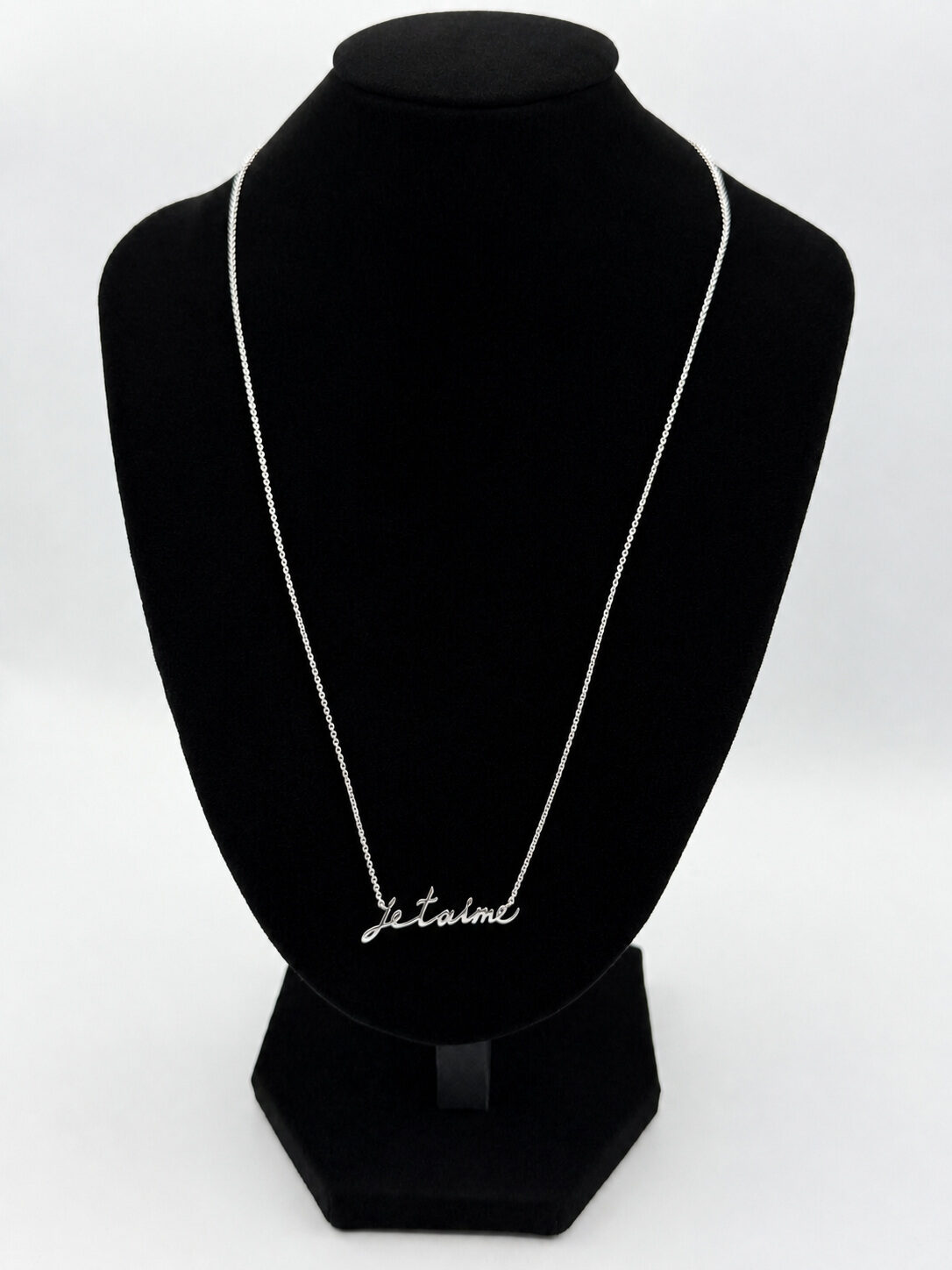
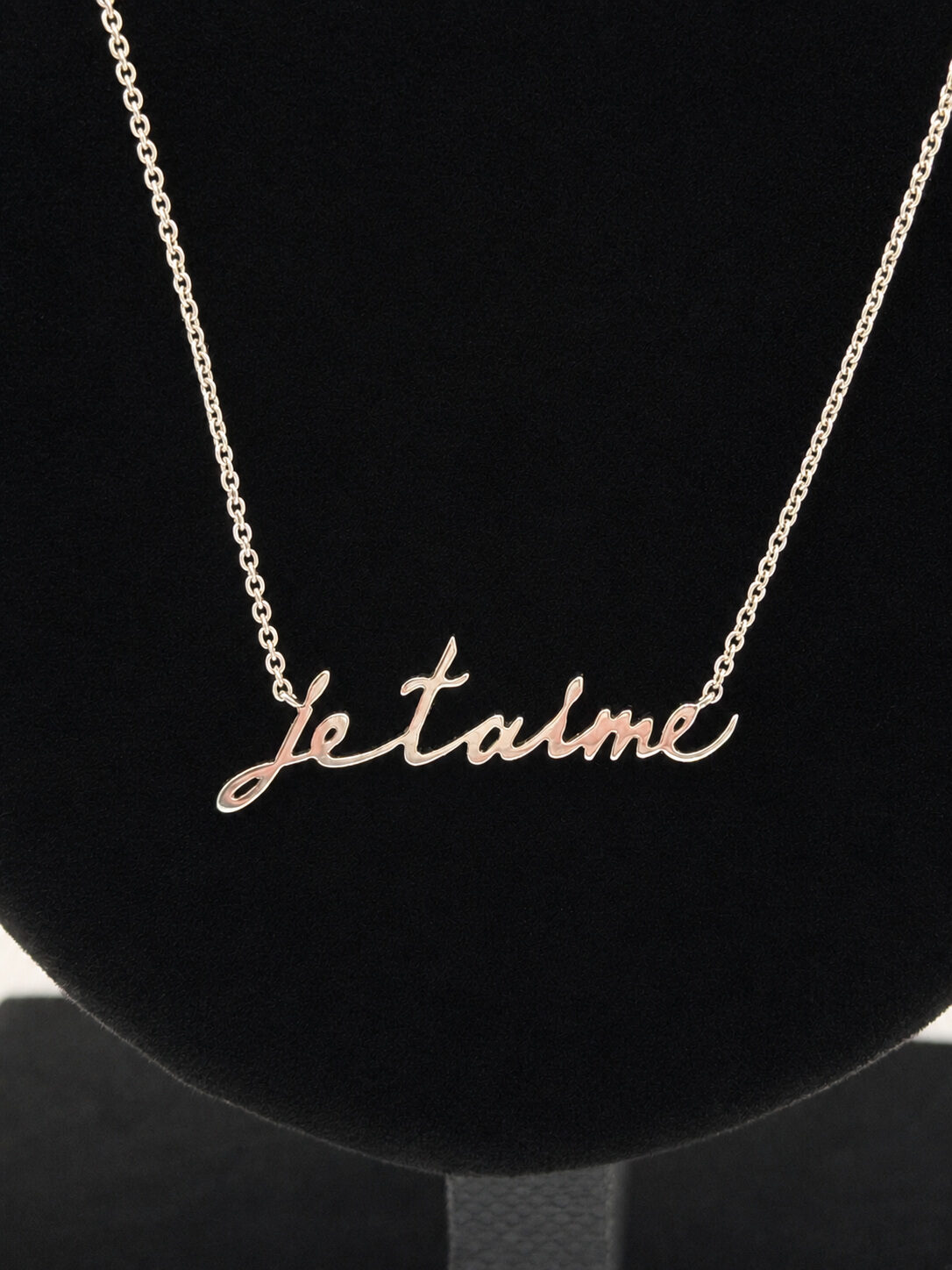
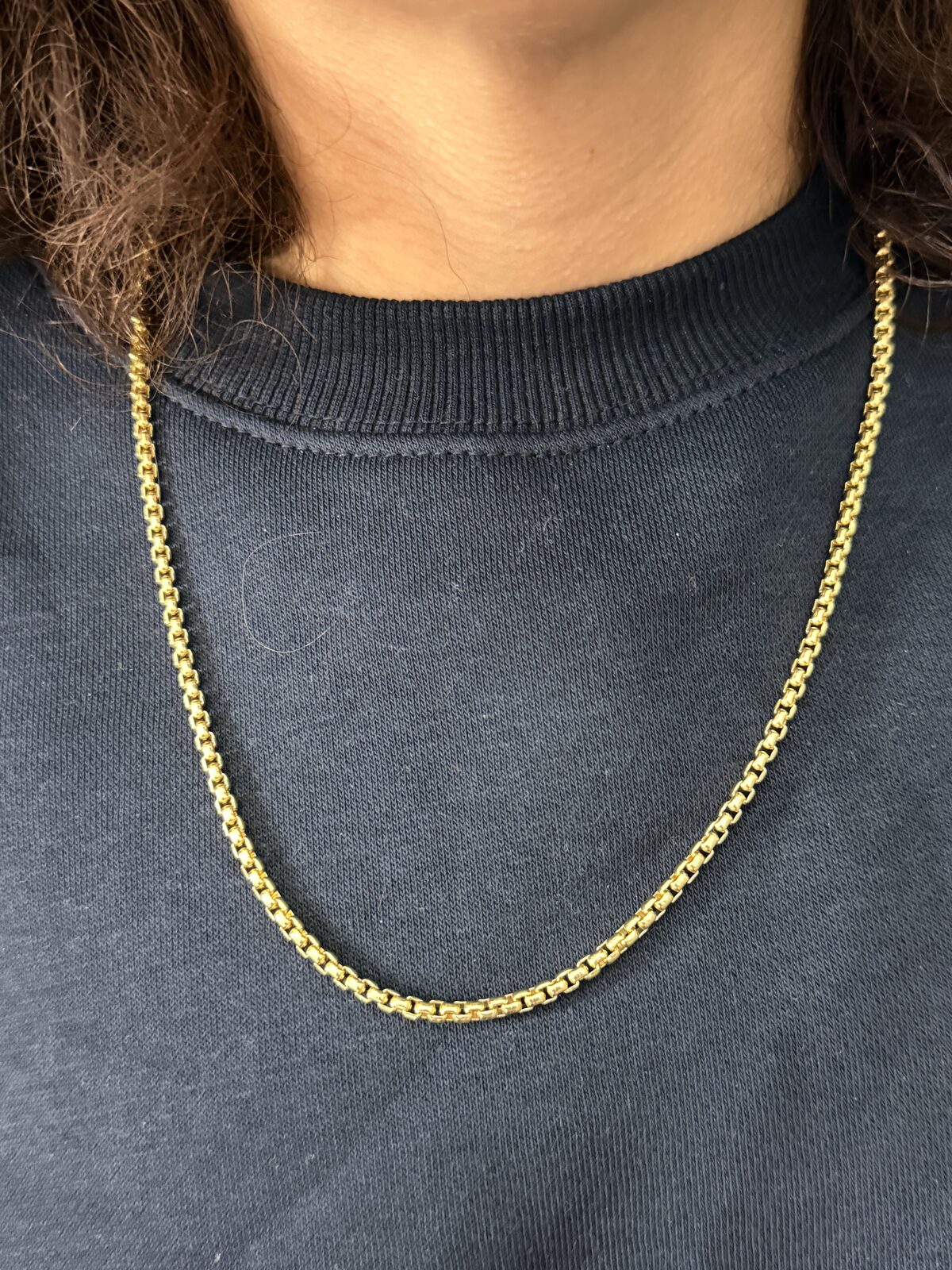
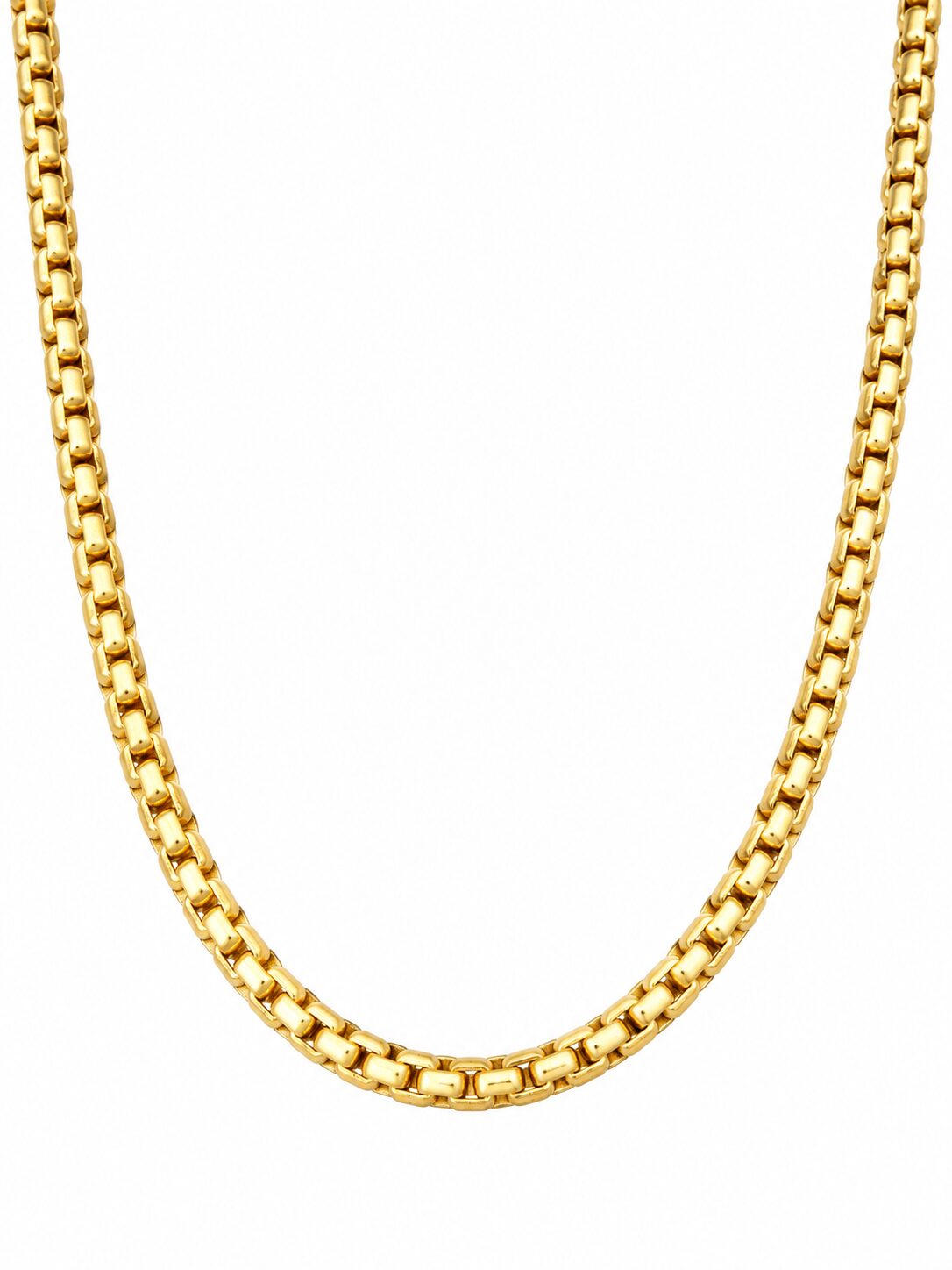
Think of chains as reflective or textured. A mirror link is the reflective extreme — broad flat surfaces that throw light in clean planes, like this 18-inch white gold mirror link. A franco is the textured counterpart: its tight V-shaped interlocking weave reads as dense, woven surface rather than flash, as on this 3.5mm franco. Set one against the other and each becomes more legible — the mirror looks brighter beside the franco's texture, the franco richer beside the mirror's shine. A ball chain offers a third voice: a rhythmic dotted line unlike either.
The same logic extends to metal color. A white gold tier against yellow gold tiers creates deliberate contrast — the rule from mixing metals generally applies: make the mix look repeated and intentional, not accidental.
The pendant as anchor
A stack of bare chains can float without a focal point. A single pendant fixes that: it gives the eye somewhere to land and organizes the other tiers around it.
One pendant, not several. Two pendants compete for the anchor role and, worse, for the same physical space — swinging pendants find each other and tangle. Give the pendant the middle or bottom tier, where it has room to hang and where its visual weight pulls the whole composition downward into a stable triangle. Keep the chains above it simpler, so they frame rather than fight it.
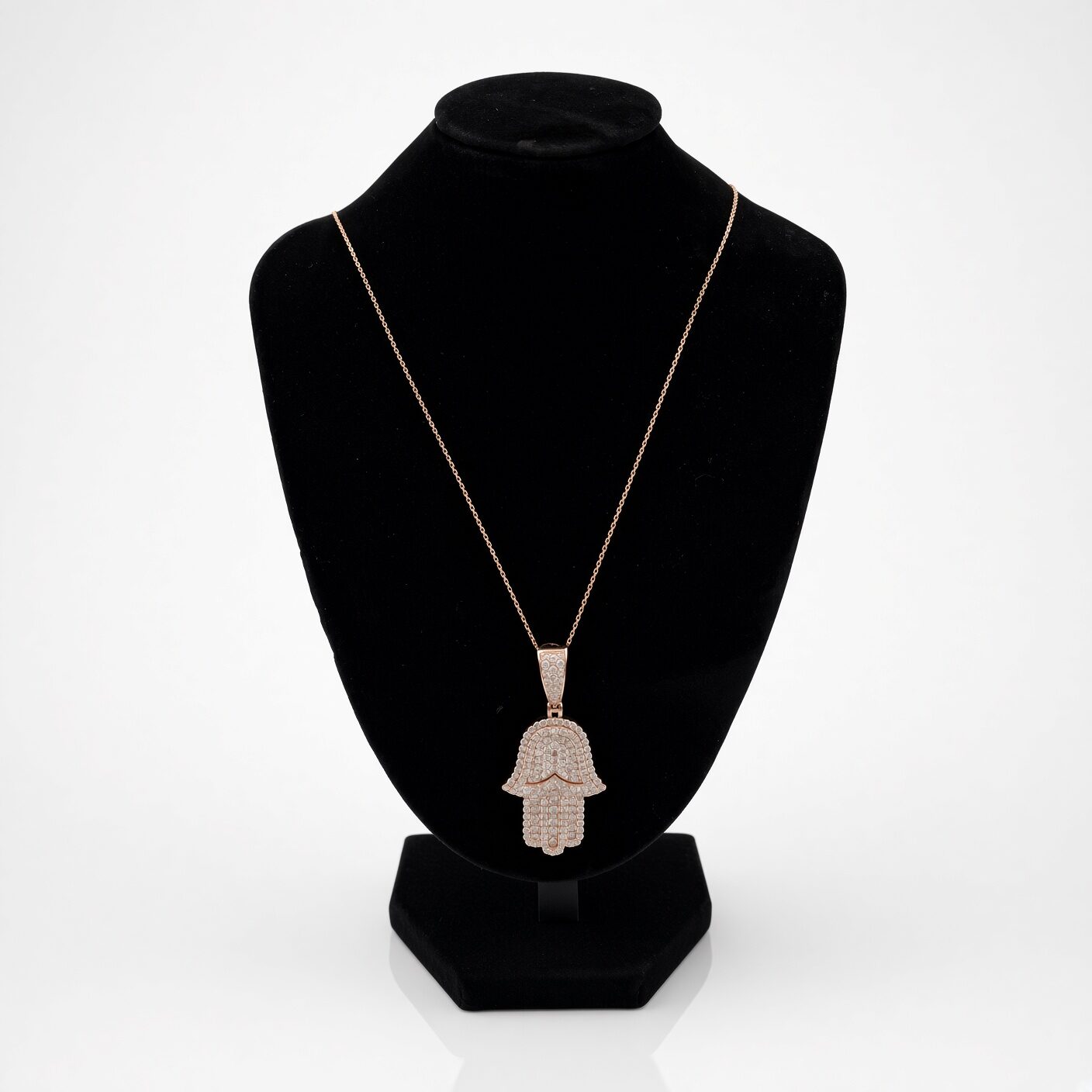
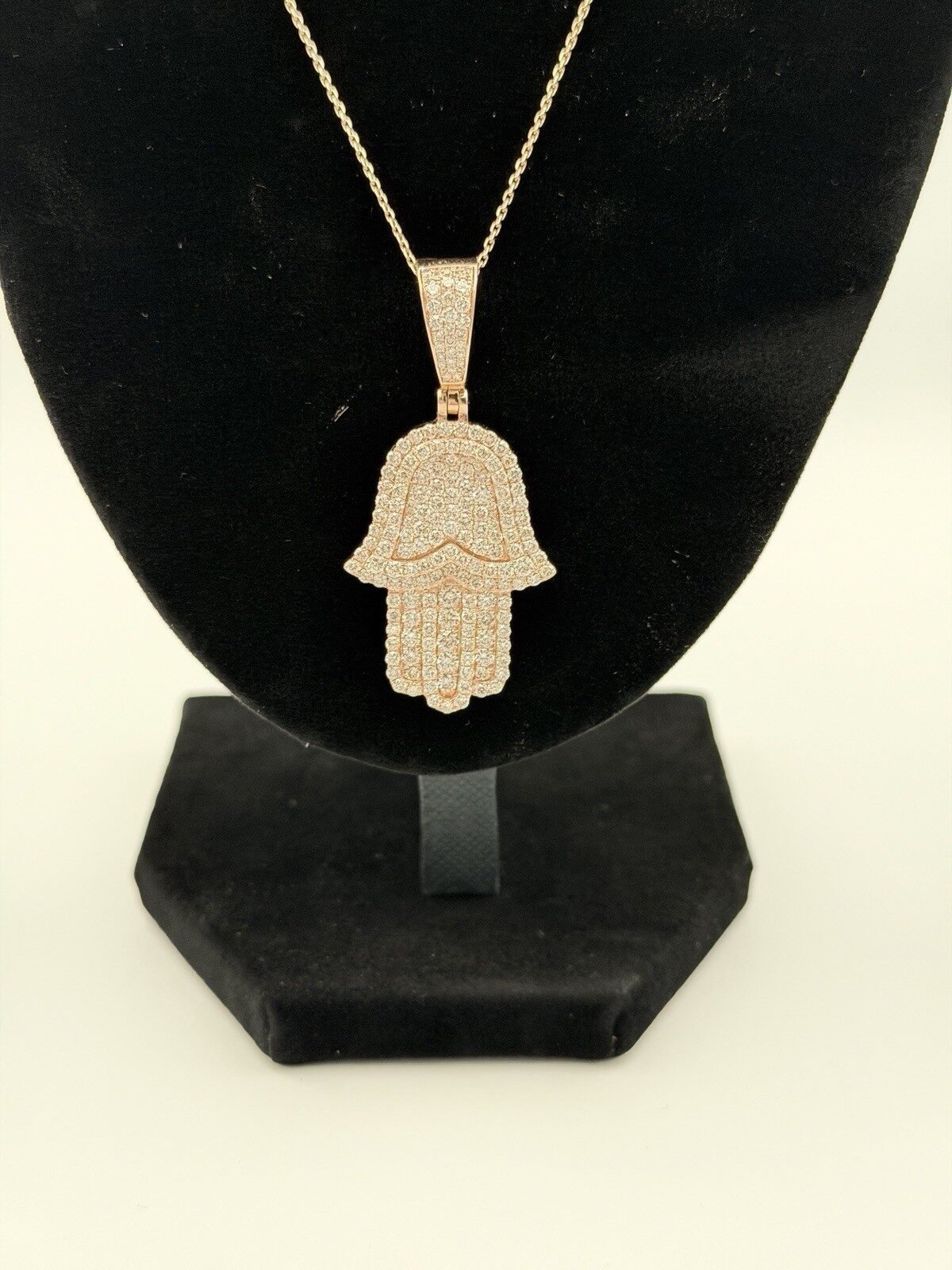
Scale the pendant to the stack. A substantial piece — say, a diamond hamsa at 3 carats total weight — carries enough presence to anchor two or three chains on its own, and its rose gold reads as a deliberate accent against yellow or white tiers. A small minimalist charm anchors a fine, delicate stack. Mismatched scale in either direction is what makes a stack look accidental.
Preventing tangles
Tangling is the failure mode of layering, and it is mostly preventable.
While wearing: the two-inch spacing rule does the heavy lifting. Beyond that, mixed link styles interlock less than identical ones — another argument for texture contrast — and heavier chains tangle less than fine ones, because weight keeps a chain seated in its own arc instead of migrating. The most tangle-prone stack is several near-identical fine chains at similar lengths; the most stable is distinct weights, distinct textures, honest gaps.
Off the neck: store each chain separately, clasp fastened, hung or laid straight. Never drop a layered set into a pouch together and hope. When travelling, thread each chain through a drinking straw or lay it flat between cloth layers.
When a knot happens: patience and two pins on a hard flat surface. Loosen the knot's core rather than pulling its ends — pulling tightens gold knots and can kink a fine link permanently.
Weight balance, and building a stack that lasts
The finishing consideration is weight distribution. As a rule, weight goes down: the lightest chain at the top of the stack, the heaviest at the bottom. A heavy top chain overpowers everything beneath it and, over a long day, wears noticeably at the back of the neck. A stack that graduates from fine to substantial feels balanced on the body and looks balanced to the eye — the composition widens and strengthens as it descends, the way it should.
Comfort is cumulative. Three chains you would happily wear individually can total more weight than you want to carry daily, so weigh the stack as a whole, not piece by piece. This is one reason we list actual gram weights on every chain we sell: layering decisions are weight decisions, and you should be able to make them from real numbers.
Because our inventory is one of each, a stack assembled from it will not be duplicated. Current chains and pendants — each photographed as-is, each weighed on a calibrated scale — are in the shop. If you are composing a stack and want to know how two specific pieces sit and move together, send us an enquiry through the contact form and we will give you a straight answer from the pieces in hand.
For building a stack from scratch, the paperclip and a fine rope from our made-to-length chains give you two lengths that are made to sit together.