What $4,400 gold actually means for a piece of jewelry
Start with the arithmetic, because everything else follows from it. At $4,400 per troy ounce, pure gold is worth roughly $141 per gram. Jewelry is almost never pure: 14-karat gold is 58.5 percent gold by mass, which puts its metal content around $83 per gram; 18-karat, at 75 percent, is around $106 per gram.
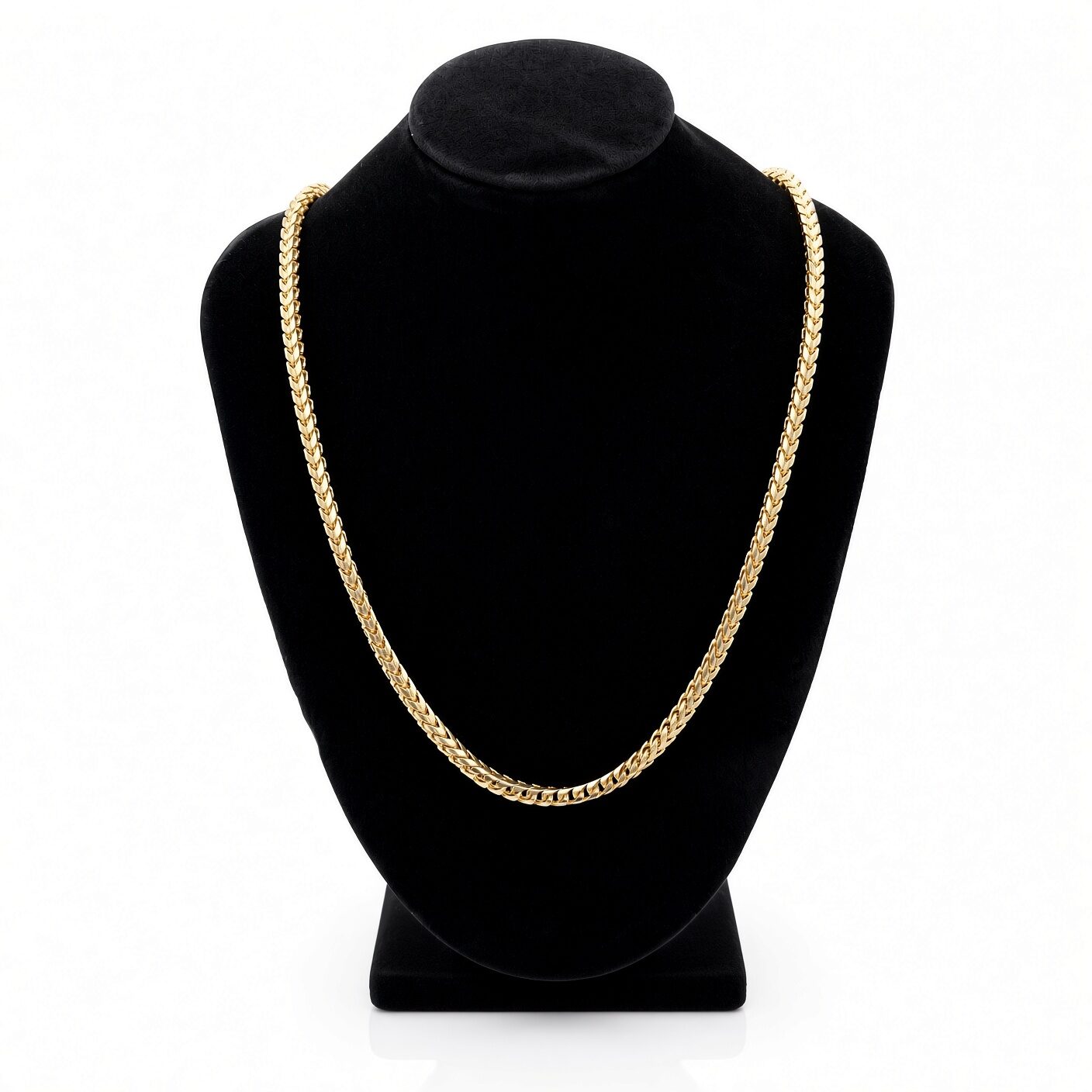
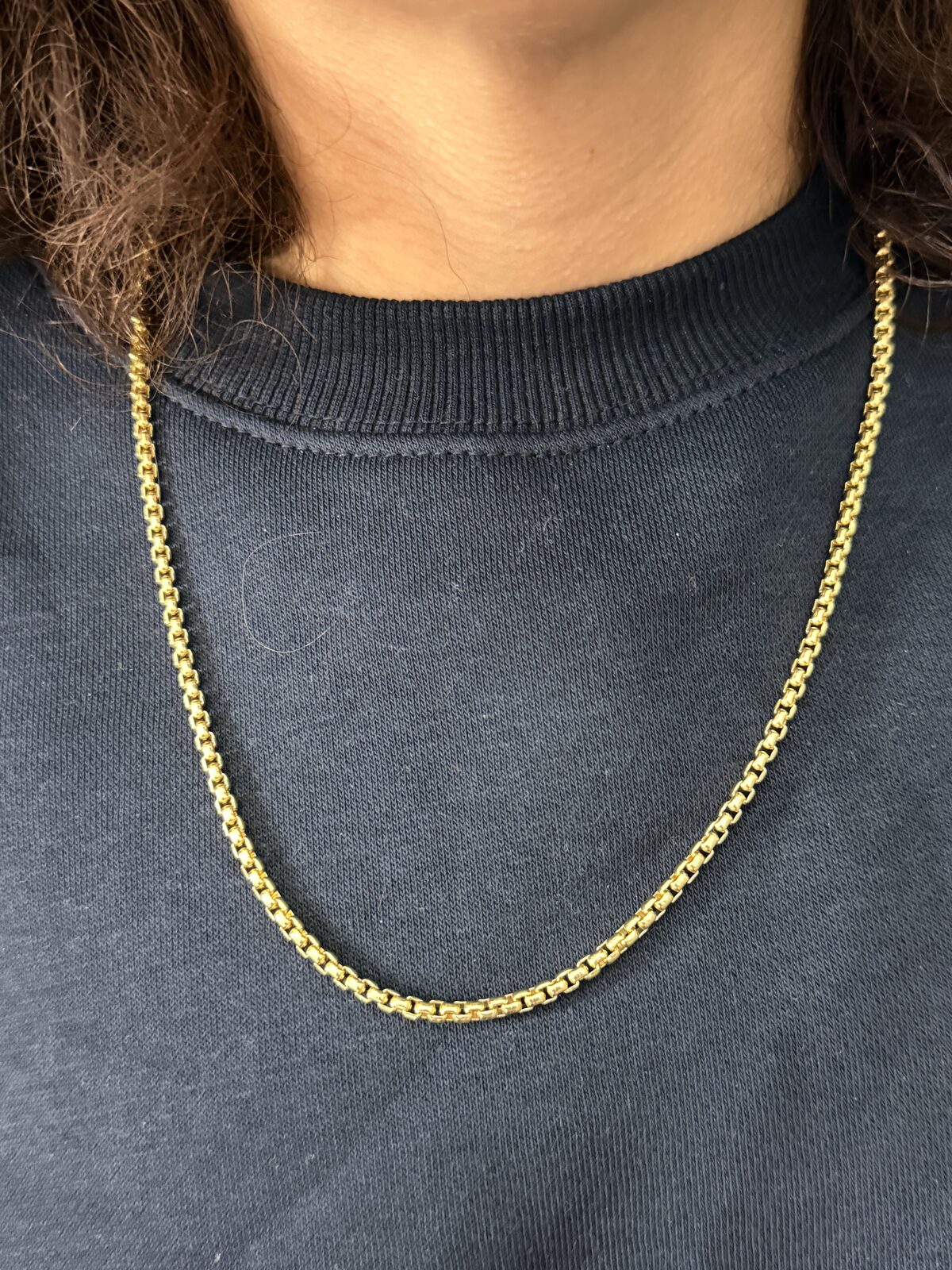
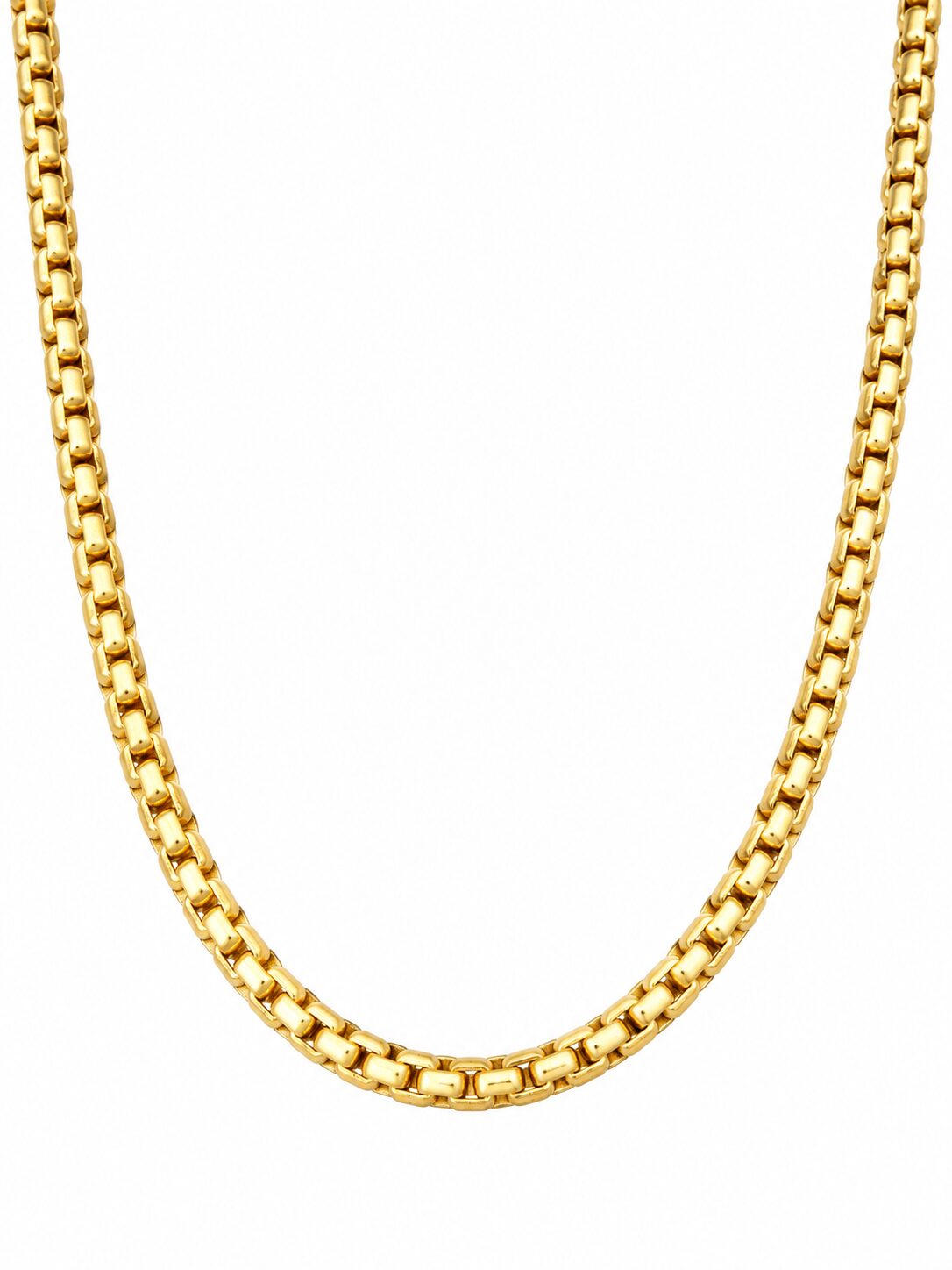
So a solid 14k chain weighing 42 grams, like this 3.5mm franco, contains roughly $3,500 of gold before anyone considers the work of making it. That figure is not an appraisal or an opinion. It is the spot price multiplied by the fineness multiplied by the weight, and anyone with the piece's true weight can calculate it in thirty seconds. This is why honest listings state weight: the number lets you check the price yourself.
The melt floor
That metal-content figure is what dealers call the melt value, and it functions as a floor. Whatever happens to fashion, whatever a future buyer thinks of franco links or hamsa pendants, a solid gold piece is always worth at least what a refiner will pay for the metal, which tracks the spot price closely.
Very few things you can wear have a floor at all. A designer handbag's resale value rests entirely on someone else wanting that bag. A solid gold chain's minimum value rests on the global gold market. The floor moves with the market, in both directions, but it never goes to zero, and it exists independent of taste, brand, or condition. A scratched chain melts at the same price as a pristine one. That is the legitimate core of the jewelry-as-store-of-value argument, and it is why the floor is only as trustworthy as the weight it is calculated from. A stated weight from a calibrated scale makes the floor a number; a listing without one makes it a hope.
The honest caveat: the jewelry premium never fully comes back
Here is the part a seller should say plainly. When you buy jewelry, you pay more than melt. The difference covers fabrication, finishing, and the seller's margin, and it is real cost, not padding. When you sell, most buyers of second-hand gold pay at or modestly above melt. The premium you paid on the way in does not fully survive the round trip, and treating jewelry as a pure investment vehicle ignores that friction.
The size of the premium varies enormously by where you buy. A mall retailer's price can sit far above metal value; a direct seller pricing honestly against melt keeps the gap small. But some gap always exists, and you should buy knowing it. If your only goal is gold exposure with minimal friction, bullion coins and bars from a reputable dealer carry lower premiums than any chain ever will.
Why construction decides whether the argument applies at all
The melt-floor argument has a strict precondition: the piece must actually be solid gold. Gold-plated jewelry has effectively no melt value; the layer of gold is measured in microns. Hollow chains are solid gold but contain far less metal than their appearance suggests, and they cannot be worn hard or easily repaired, so their practical life is short.
Solid construction is what makes a piece both durable and calculable. A solid franco or a solid mirror-link chain can be weighed, valued, worn daily, repaired if a link ever fails, and eventually sold on its metal content. This is why every piece in the shop is solid gold, weighed on a calibrated scale, with the weight published. A weight you can verify is the difference between a store of value and a story about one.
A wearable store of value is not a pure investment
The fair conclusion sits between the enthusiasm and the cynicism. Jewelry is a poor pure investment: the premium friction and the absence of yield see to that. But it is a unique hybrid that nothing else replicates: an object you wear and enjoy every day that retains a hard, market-priced floor underneath it.
Framed that way, the question changes. You are not asking whether a chain will outperform anything. You are asking whether you would rather hold some of your discretionary spending in a form that keeps most of its value rather than none of it. A piece you will actually wear, bought solid and near melt, is one of the few purchases that is simultaneously consumption and preservation. A piece bought hollow, plated, or at triple melt is just consumption wearing a costume. The distinction is not in the gold; it is in the buying.
A note on advice, and where to look
Nothing here is financial advice, and no one selling gold should be your investment advisor. Gold's price can fall as well as rise, and decisions about your savings belong with you and, if you use one, a licensed professional.
What a seller can do is give you the numbers to reason with: stated karat, exact gram weight, photographs of the actual piece, and a price you can compare to melt yourself. Every listing in the shop is built that way. If you want the arithmetic on a particular piece before deciding, ask through the enquiry form.