Where each length sits on the body
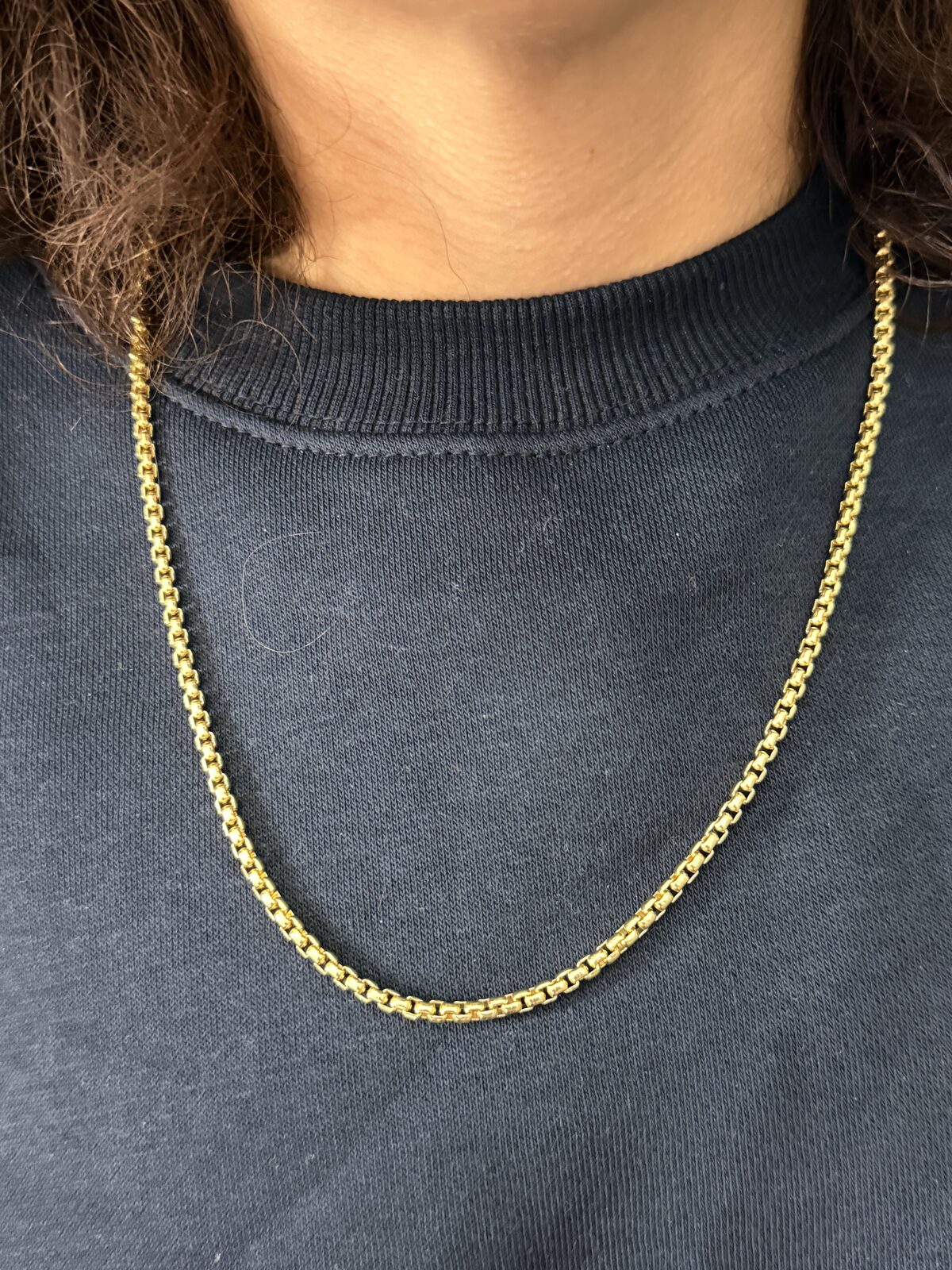
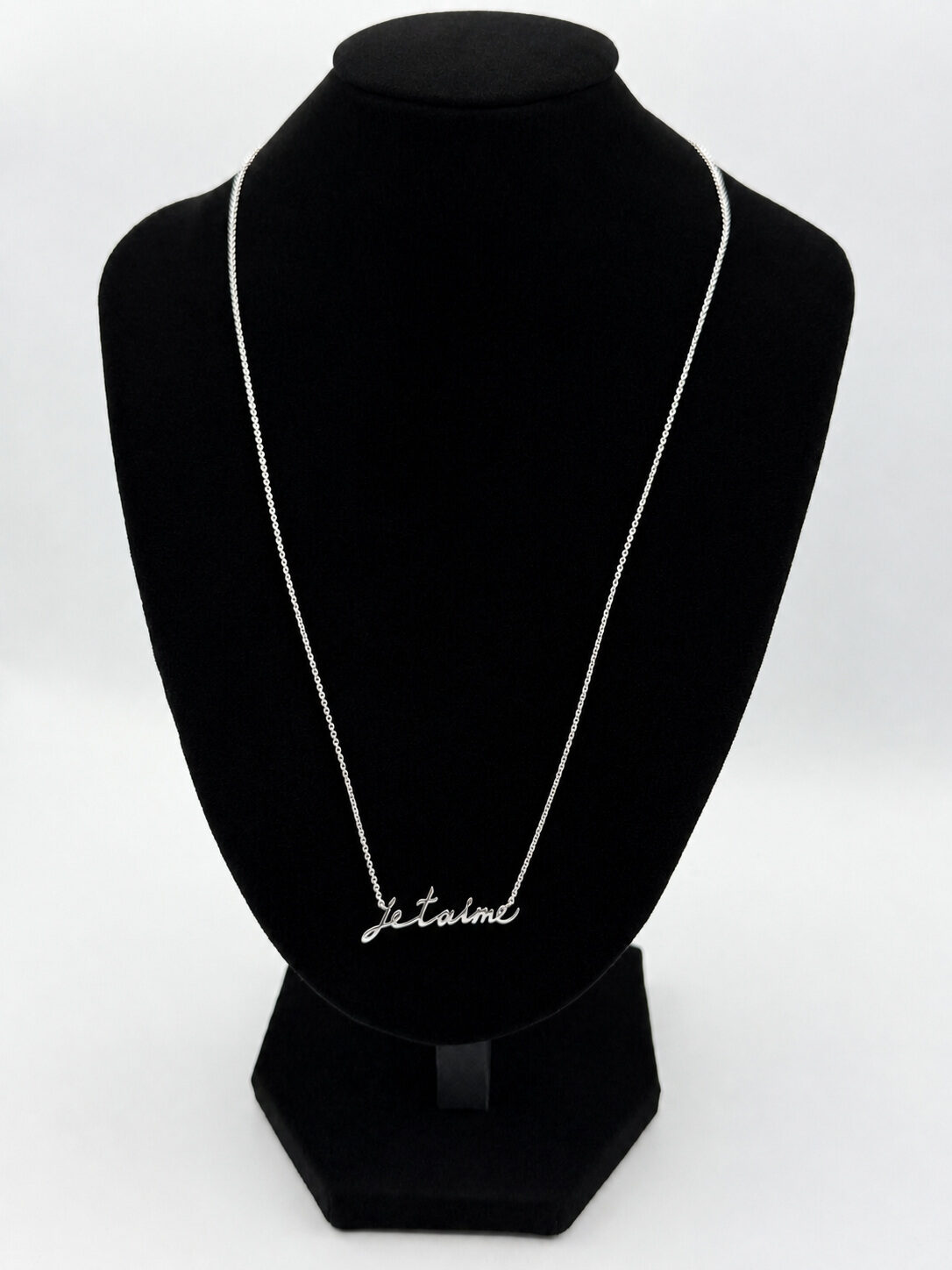
Chain lengths are standardized in two-inch steps, but bodies are not, so the useful way to think about length is by landmark rather than by number. On an average adult, the map runs like this.
- 16 inches sits at the base of the neck, resting on or just above the collarbone. On many women it reads as a choker-adjacent length; on most men it is snug.
- 18 inches falls at the collarbone, the classic length for women's pendants and the most common length sold in fine jewelry.
- 20 inches lands just below the collarbone, at the top of the sternum. It is the most versatile men's length and a relaxed pendant length for women.
- 22 inches reaches mid-sternum, clearing most collars, which makes it the natural choice for a chain worn over a shirt.
- 24 inches falls below the sternum toward the chest, the length for long layering pieces and for heavier chains meant to hang free.
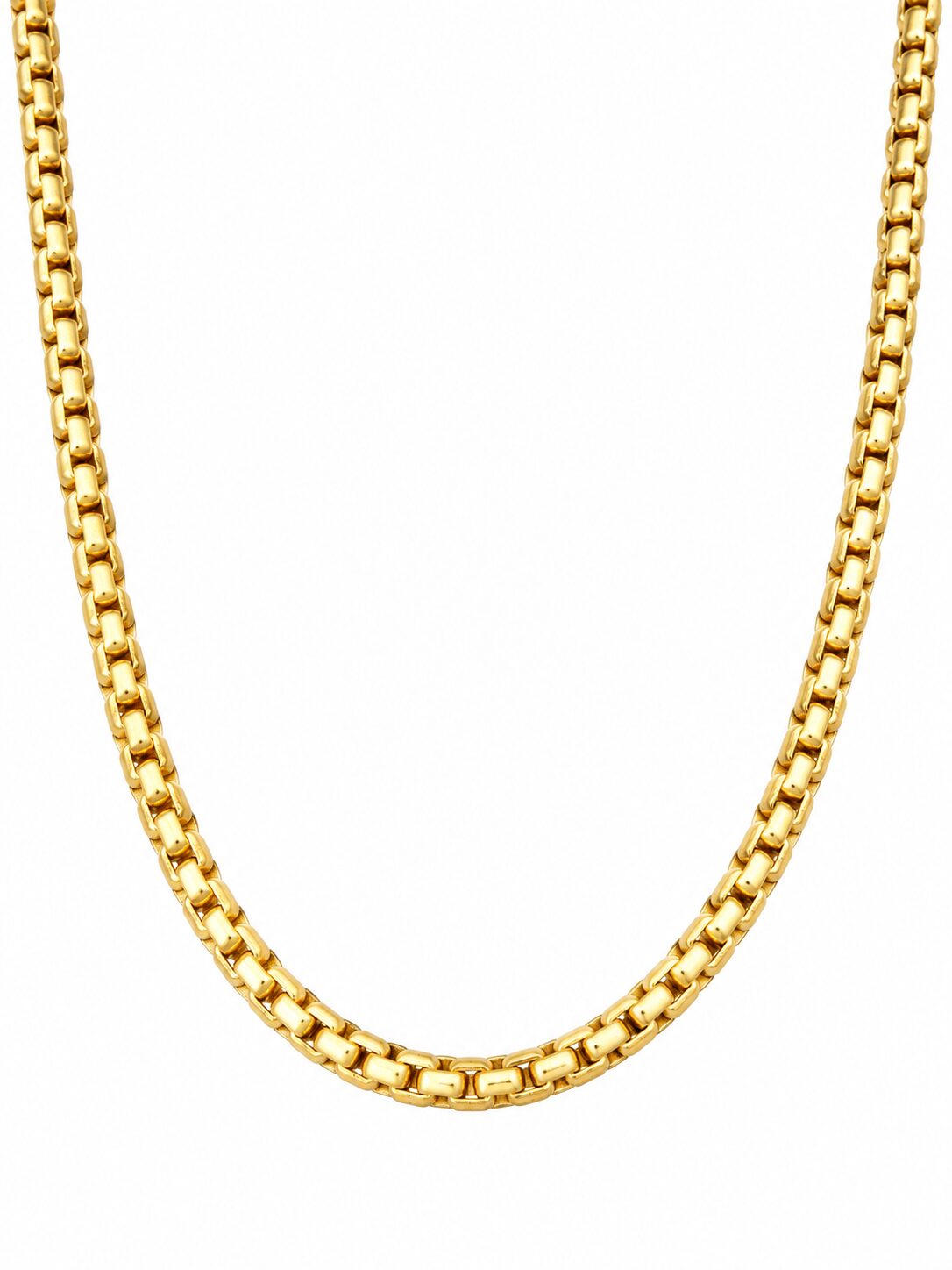
Neck circumference shifts this whole map. Add roughly two inches to your snug neck measurement and you have the shortest length that will sit comfortably; everything longer is a style decision rather than a fit requirement. Chain thickness nudges it too: a substantial chain sits fractionally higher than a fine one at the same stated length, because the links themselves take up part of the drop, which is worth remembering when you move from a delicate chain to a heavy one and expect it to fall in the same place.
The logic of layering
Layered chains work when each chain has its own territory. The reliable formula is a two-inch gap between pieces, which is exactly why the standard lengths come in two-inch steps: a 16, an 18 and a 20 layer cleanly because each sits at its own landmark and none of them tangle at rest.
Contrast helps as much as spacing. Two chains of identical style and width at different lengths read as one chain that has slipped; two different textures at different lengths read as a considered stack. A fine faceted chain over a plain one is the classic pairing, something like our 16-inch diamond-cut ball chain sitting above our 18-inch mirror link, where the ball chain provides flicker and the mirror link provides a clean line below it, both in matching white gold so the stack still reads as one decision.
Two chains is a look; three is a commitment. Beyond three, tangling stops being an occasional annoyance and becomes the daily condition of the necklace.
Matching length to a pendant
A pendant changes the calculus because the eye goes to where the pendant sits, not where the chain does. The flattering zone for most pendants is between the collarbone and mid-sternum, which in practice means an 18 to 22 inch chain depending on the wearer and the pendant's size. A small pendant rides well at 18 inches, where it stays visible above necklines. A large or heavy pendant wants 20 to 22 inches, both for proportion and because the extra drape lets it hang flat instead of jutting.
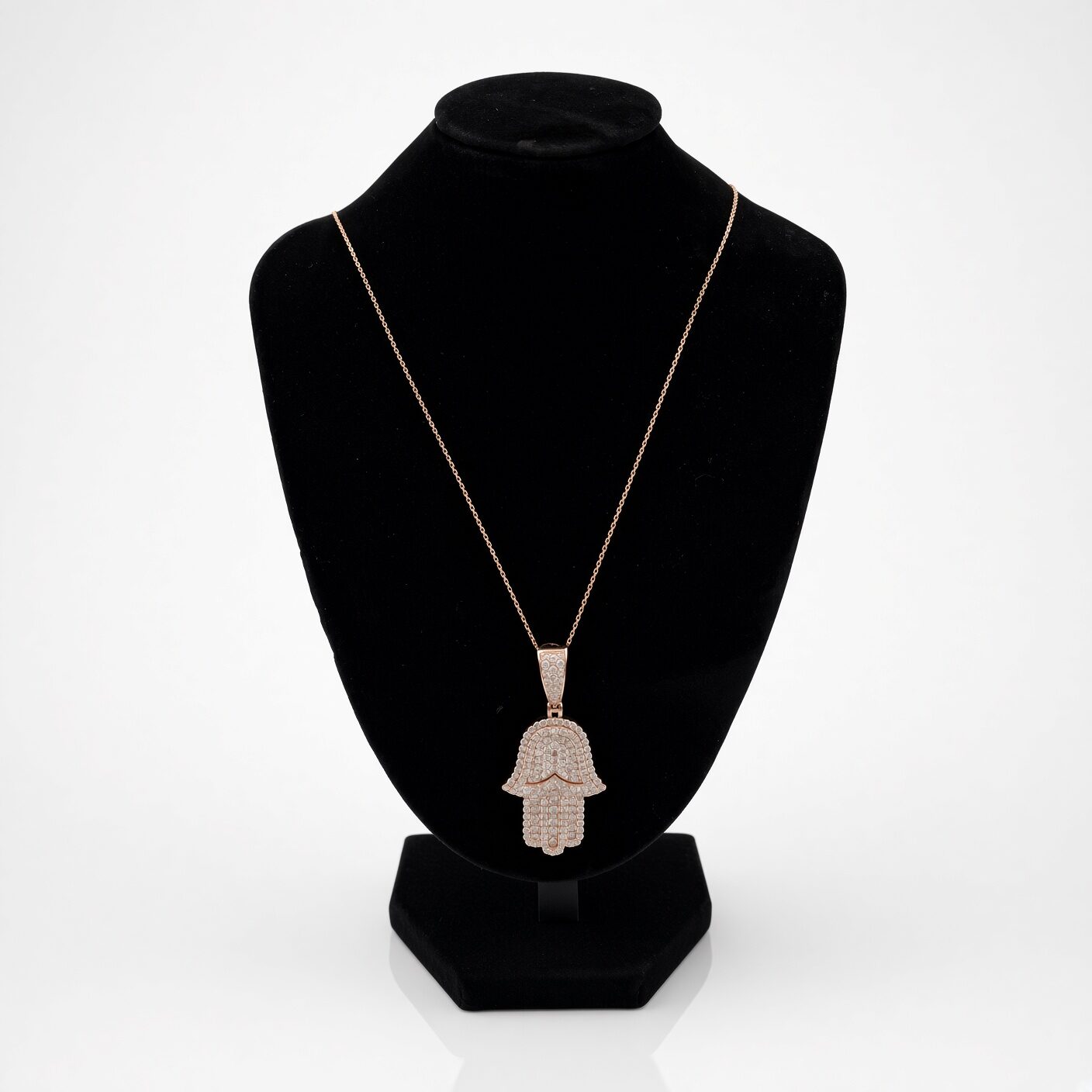
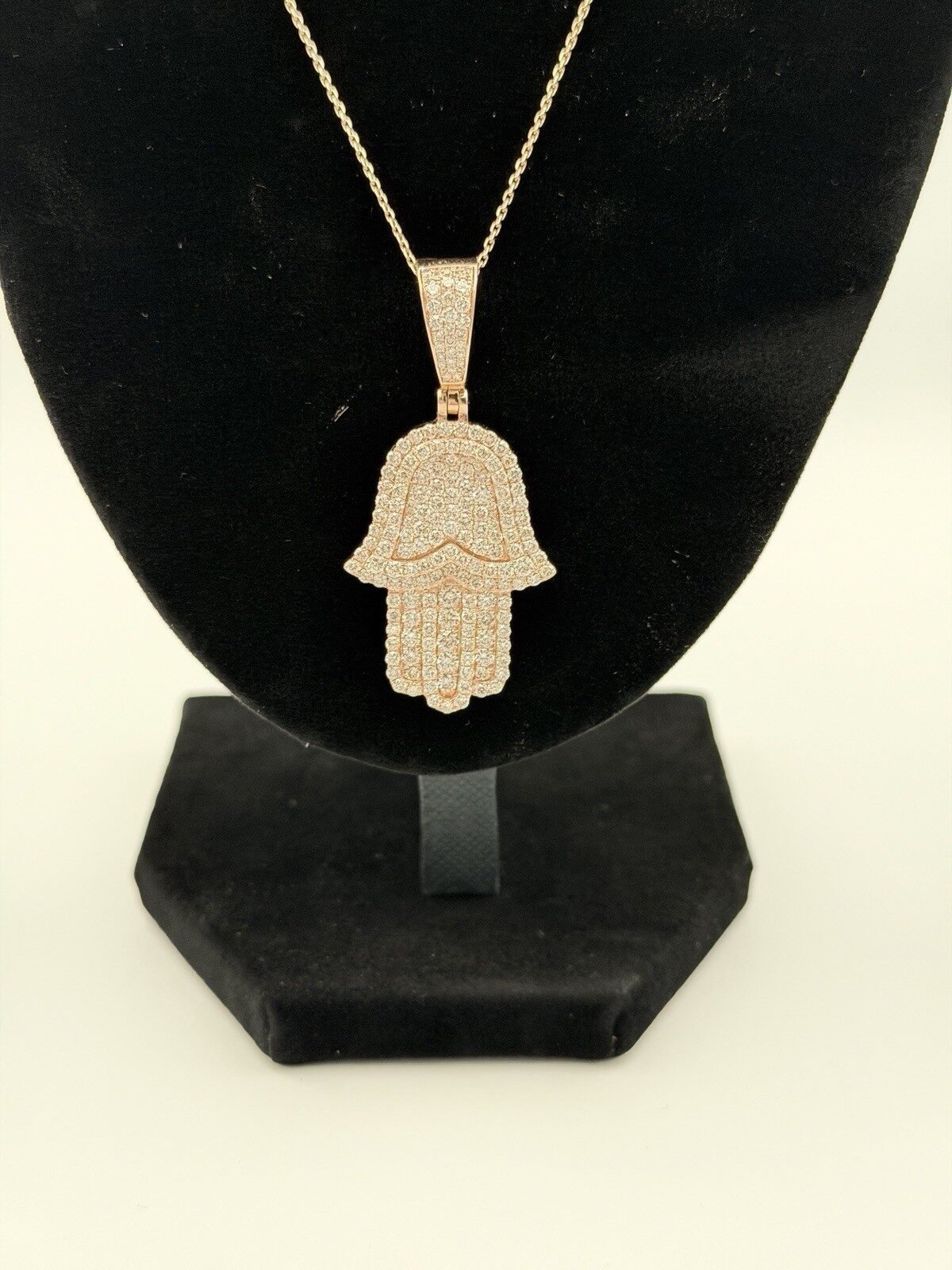
Weight matching matters as much as length. A pendant with real mass, like our rose gold diamond Hamsa at three carats total weight, needs a chain with the substance to carry it: the chain should feel like the pendant's foundation, not its leash. A 41.85-gram franco such as our 20-inch, 3.7mm piece is the kind of chain that carries a serious pendant without being visually overpowered by it. As a rule of thumb, the chain should be at least as heavy as the pendant it carries, and its bail should slide freely over the links.
Men's and women's conventions, loosely held
Convention says women's chains run 16 to 18 inches and men's run 20 to 24, and the convention exists for anatomical reasons: the same landmarks sit at different measurements on different frames. A 20-inch chain hits the collarbone on many men and mid-sternum on many women, so the same piece is a different necklace on each wearer.
Hold the convention loosely. Women wearing 20 and 22 inch chains at a relaxed drape, and men wearing 18-inch chains close at the collar, are both long-established looks rather than exceptions. The chain does not know who is wearing it. What matters is where it falls on your body and whether that placement suits the necklines you actually wear. If you are between lengths, size up when the chain will be worn over clothing or with a pendant, and size down when it will sit against skin at the collar, where slack reads as looseness rather than drape.
Measuring at home, and finding the piece
You do not need a jeweler to get this right. A shoelace or a length of string around the neck, adjusted in a mirror until it hangs where you want, then measured flat against a ruler, will land you on the correct length more reliably than any chart. Measure twice if the chain will carry a pendant, once at rest and once with your heaviest collar, because a chain that clears a crew neck can disappear under an actual collar.
For the individually photographed chains in our in-stock collection, the length listed is the length of that actual chain, stated alongside its width and its weight on a calibrated scale. Browse the current collection with your measurement in hand, and if you are deciding between two lengths, or want to see how a specific chain falls in person, local Orange County collection is available by appointment; send us an enquiry and we will arrange it.
If you already know the length you want, our solid 14K chains are made to it: pick a style, set the width and length, and the price is on the page.