Three chains, three ways of solving the same problem
Every chain has one job: turn a bar of gold into something flexible enough to drape and strong enough to survive being worn. Franco, cuban and rope are three different engineering answers to that problem, and the differences are not cosmetic. The geometry of the link determines where stress concentrates, how the chain moves, and what it looks like when it fails.
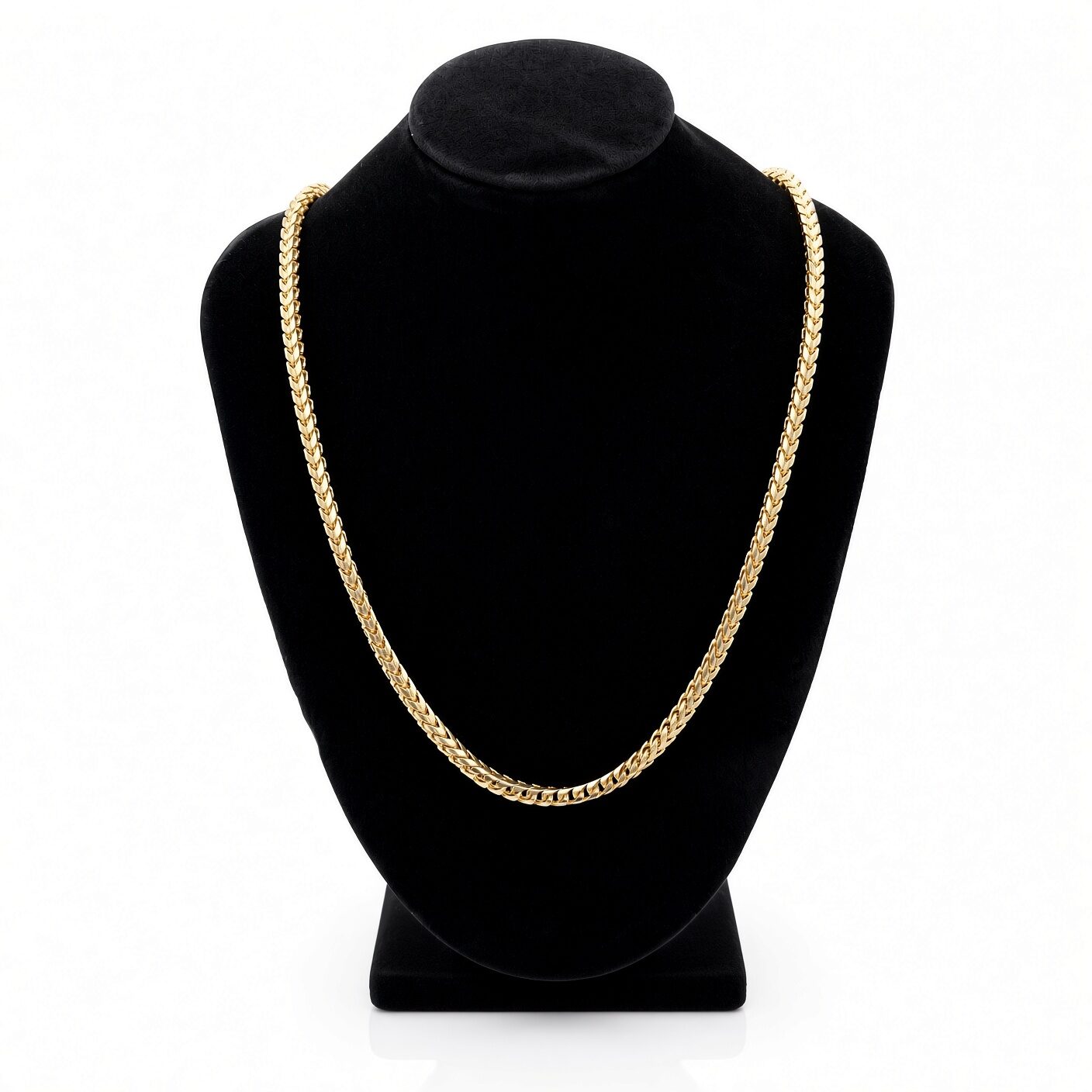
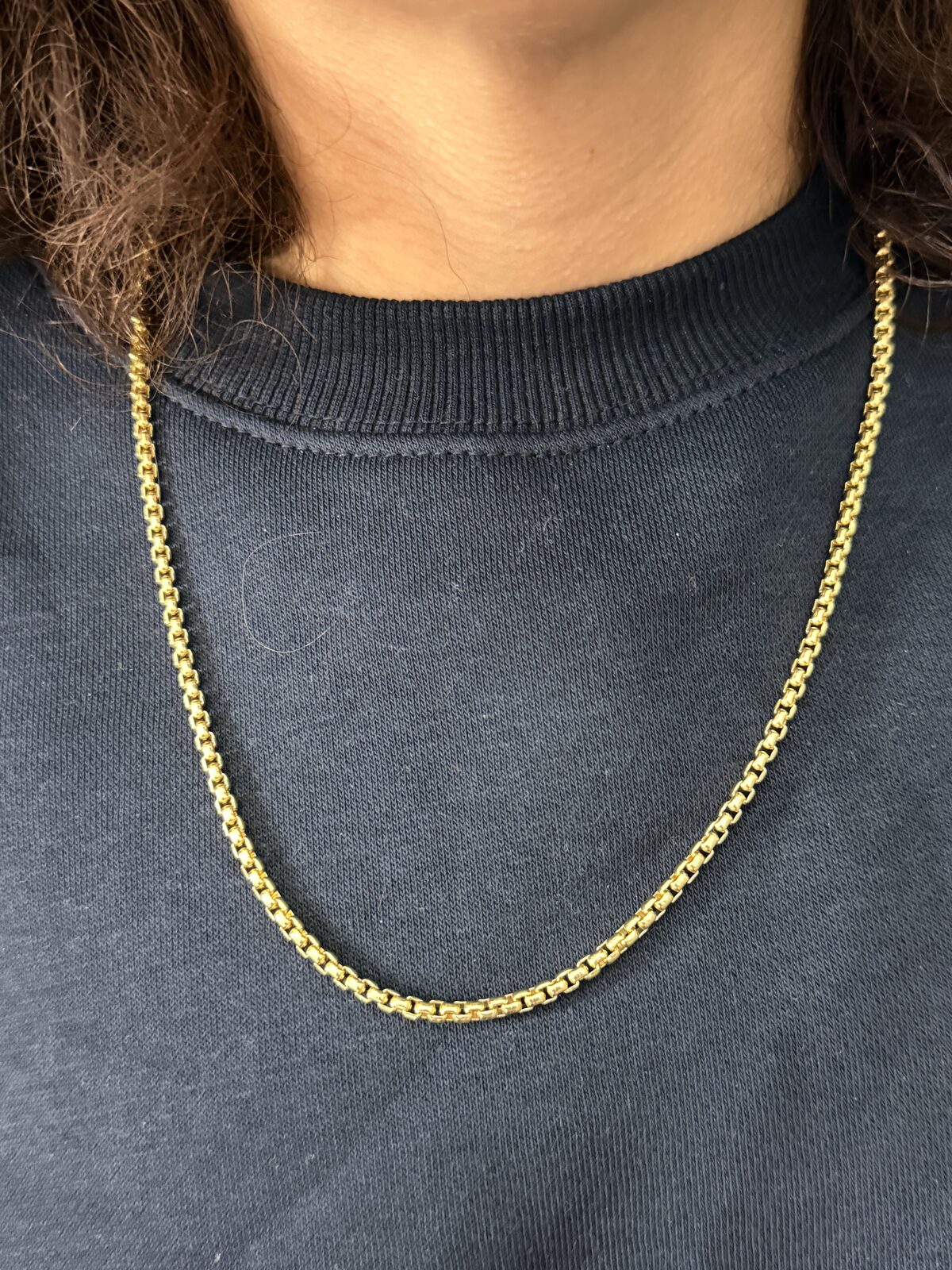
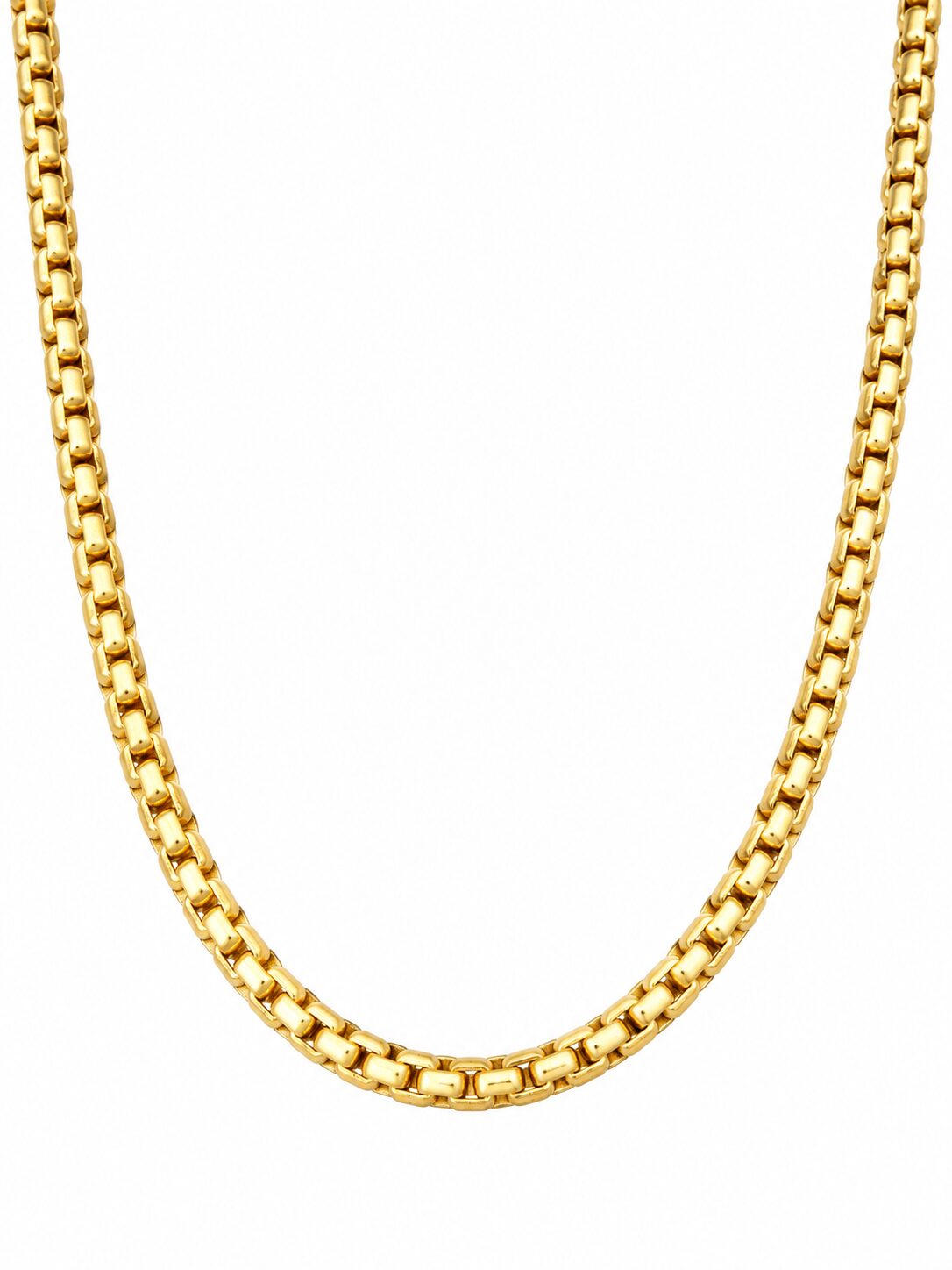
A cuban chain is a curb chain refined. The links interlock, then the whole chain is twisted and pressed flat, so each link lies at an angle against its neighbor and the chain presents a wide, continuous face. A franco is built from curb-style links stacked tightly into a four-sided column with a distinctive V pattern running down each face. A rope chain is made of many small links assembled in an offset spiral, so the finished chain looks like two strands of gold twisted around each other.
Each look has its audience. The more useful question is how each one holds up, because a chain from our collection is meant to be worn, not stored.
How each one is made
Cuban links start as round or oval links that are interlocked, soldered, twisted and then run through a press. The flattening is what gives cuban its signature: a ribbon of gold with a beveled edge that sits flat against the skin. Because every link is soldered and then work-hardened by the pressing, a well-made solid cuban is one of the most robust chains you can buy.
Franco construction stacks curb links so tightly that the chain becomes a squared column rather than a flat ribbon. The links share load along the whole length of the column instead of pivoting at a single point, and the chain flexes as a unit. This is why franco drapes in a smooth curve rather than folding at each link.
Rope is the most labor-intensive of the three. Dozens of small links per inch are joined in an offset pattern that creates the spiral. The payoff is texture and sparkle; the cost is that each individual link is thin, because the visual mass of a rope comes from the pattern rather than from heavy links.
How they behave in daily wear
This is where the geometries separate. A franco distributes stress across the whole link column rather than at a single solder joint, which is why it is the chain that survives daily wear, sleep, gym sessions and toddlers grabbing at it. When a franco does eventually wear, it wears evenly and visibly, so you see it coming.
A solid cuban is nearly as tough. Its links are thick and its flat profile keeps it from snagging. Its weak point is the clasp end and any single link that takes a hard pull, since a curb-family link pivots at defined points. Repairs are straightforward because the links are large enough for a bench jeweler to open, solder and refinish.
Rope is the most fragile of the three for the same weight. The spiral means the chain rubs against itself at hundreds of contact points, and those thin links abrade slowly from the inside. When a rope breaks it tends to unravel locally, and repairs are fiddly because the pattern must be rebuilt, not just rejoined. A rope worn occasionally will last for decades; a rope worn daily under clothing and seatbelts will not.
Weight, presence and the cost of the look
Gold is sold by weight, so the honest way to compare chains is to ask how much presence each geometry buys per gram. Rope is the most efficient: the spiral pattern reads larger and sparklier than its gram weight suggests. Cuban is the least efficient in those terms, because its presence comes from genuinely wide, thick links; a substantial cuban is expensive precisely because there is a lot of gold in it. Franco sits in the middle, with a dense, squared profile that feels heavier in the hand than it looks on the neck.
As a concrete reference point, our 14k franco at 3.7mm and 20 inches weighs 41.85 grams, weighed on a calibrated scale and stated in the listing. That is a serious piece of metal in a chain that reads as clean and understated. A cuban with the same visual width would weigh less; a cuban with the same weight would look considerably bolder.
Which chain should carry a pendant
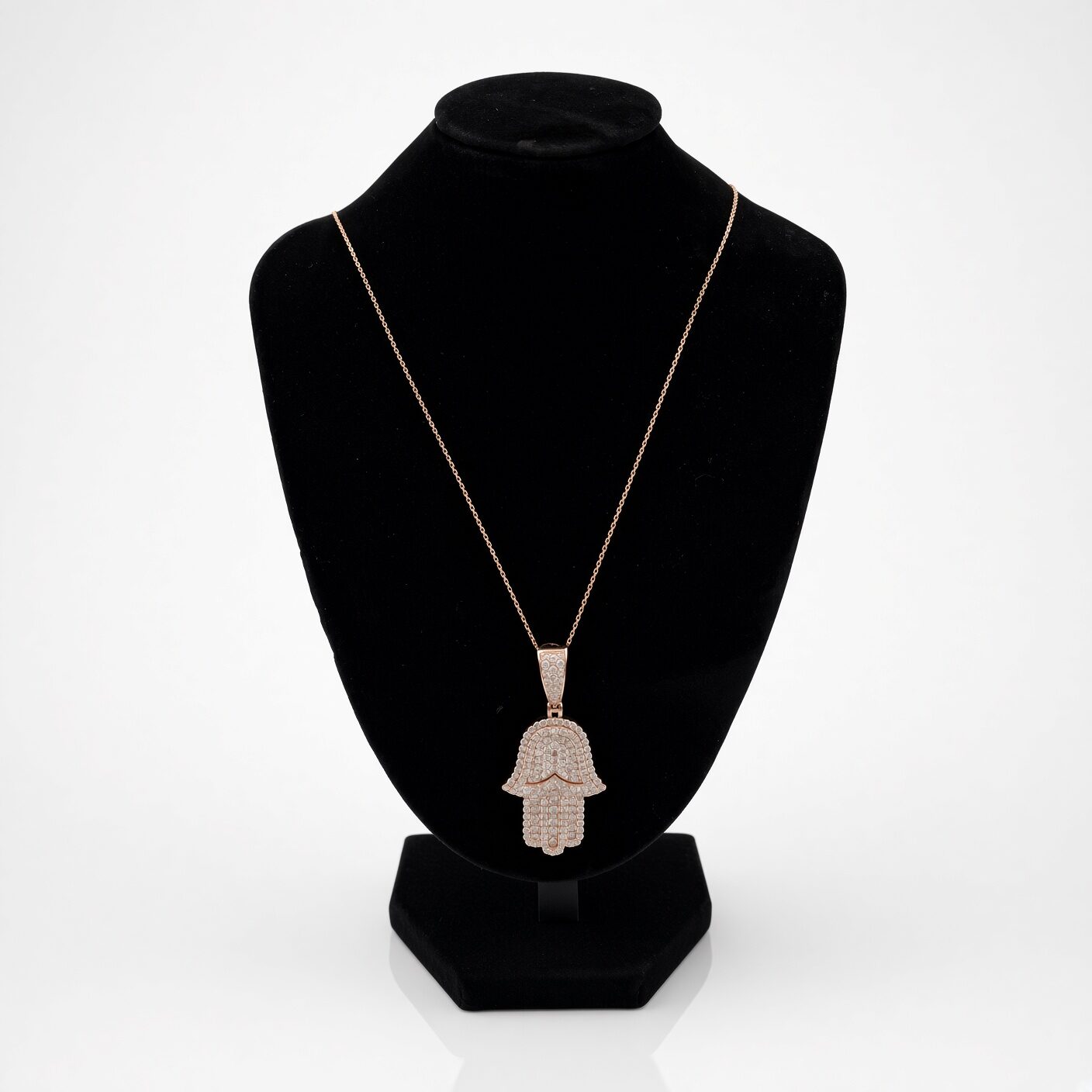
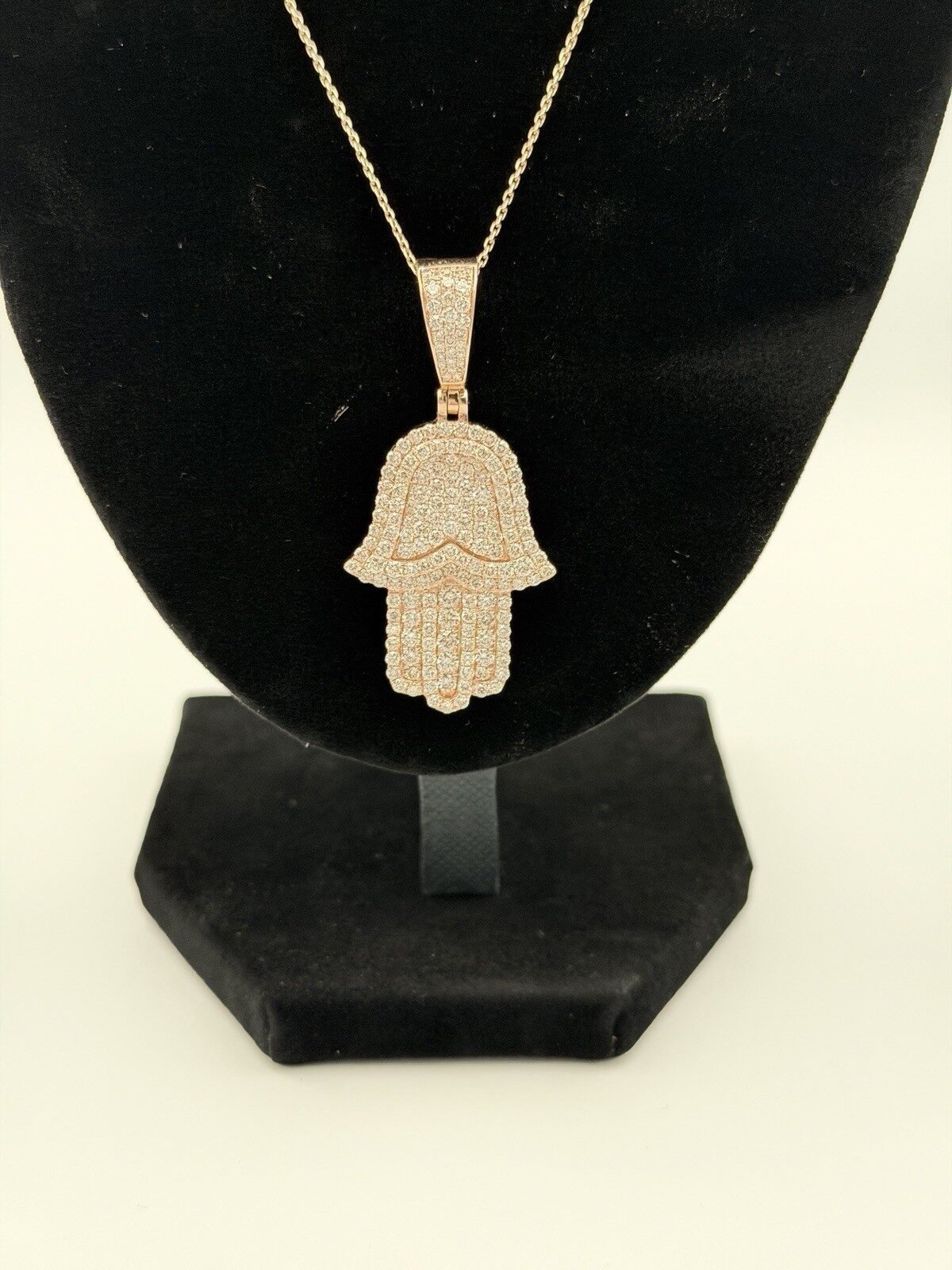
A pendant changes the mechanics. It adds a point load that slides along the chain all day, so the chain under a pendant needs abrasion resistance more than anything else. Franco is the best pendant chain of the three for exactly this reason: the bail rides on a smooth, squared column with no protruding edges to catch and wear. A pendant with real mass, like our rose gold diamond Hamsa at three carats total weight, deserves a chain built to carry it for years.
Cuban can carry a pendant, but its flat links make some bails sit awkwardly, and heavy cubans are usually worn on their own; the chain is the statement. Rope under a pendant is the combination we would talk you out of: the bail saws at those thin spiral links at a single point, and that is where the chain will eventually part.
The honest ranking
For daily durability at equal weight: franco first, solid cuban a close second, rope third. For presence per gram: rope first, franco second, cuban third. For carrying a pendant: franco, then cuban, then rope. For a chain that is the whole statement by itself, a solid cuban is hard to argue with.
There is no wrong answer among the three if the chain is solid gold and the weight is honestly stated; there are only wrong pairings of chain and lifestyle. Every chain we sell is photographed as the actual piece, weighed to the gram, and described plainly so you can make that call yourself. Browse the current collection, and if you want a second opinion on a specific pairing, send us an enquiry and we will give you a straight answer.
Rope and curb are both on our made-to-length chains page in solid 14K, in any width and length, priced live. Start with the rope or the curb.