Choose the karat first
Karat is the fraction of the alloy that is gold: 10k is 41.7 percent, 14k is 58.5 percent, 18k is 75 percent. Higher karat means richer color and more metal value per gram; it also means softer metal.
For a chain worn daily, 14k is the sensible default. It is hard enough to take real wear, gold enough to hold serious melt value, and at roughly $83 per gram of metal content with gold near $4,400 per ounce, it keeps a substantial floor under the purchase. 18k earns its place in pieces handled more gently, and its deeper color is a legitimate preference. 10k maximizes durability per dollar but gives up color and metal content. There is no wrong answer, but decide karat before you look at anything else, because it sets the frame for every price you will evaluate.
The solid-only rule
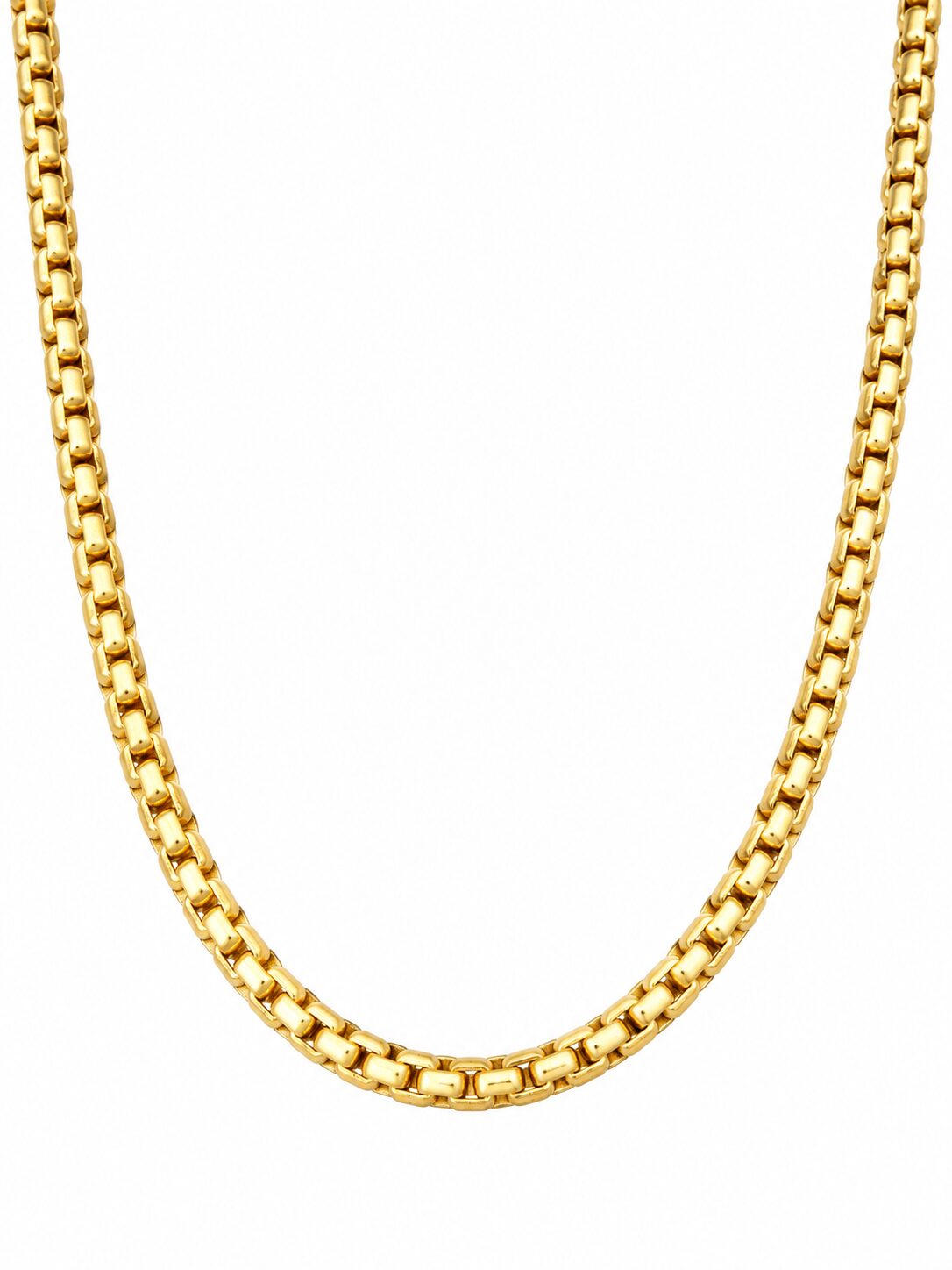
This is the rule that outranks all others: buy solid, or do not buy. Chains come in three constructions. Plated chains are base metal with a microscopic gold surface; they are costume jewelry regardless of the marketing. Hollow and semi-hollow chains are real gold formed into tubes, which lets a chain look twice its weight; they dent, they kink, and once a hollow link collapses it is generally beyond economic repair, because heat from a torch crushes the tube further.
A solid chain is gold all the way through every link. It can be worn without ceremony, repaired by any competent bench if a link ever fails, and ultimately holds its melt value forever. The difference in sticker price between hollow and solid is real; the difference in what you own is larger. Every chain in the shop is solid, without exception, because hollow gold fails the only test that matters: whether the piece is still worth owning in twenty years.
Verify weight against length
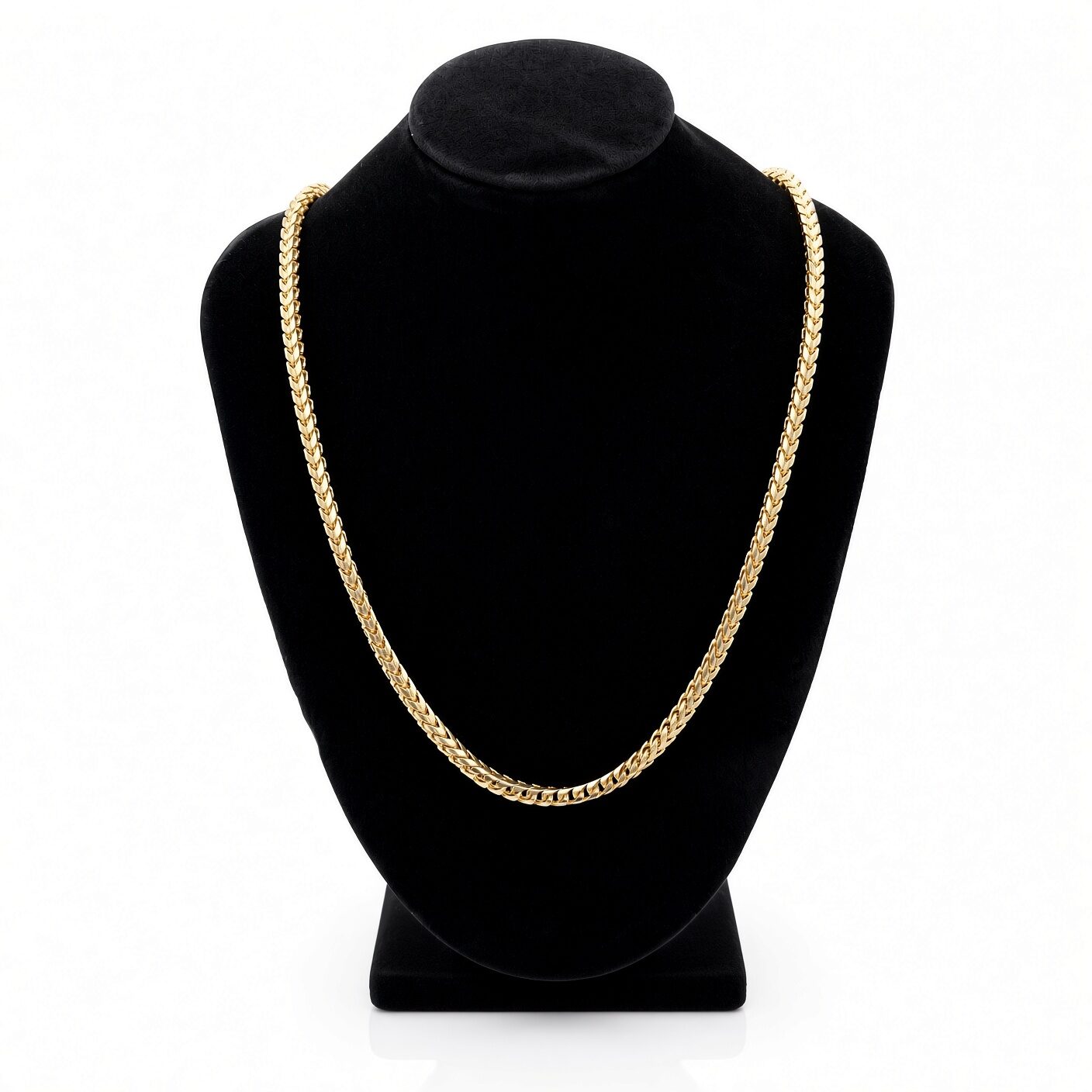
Weight is the number that keeps everyone honest, so the listing must state it, and the seller should be weighing on a calibrated scale rather than estimating. Once you have the weight, sanity-check it against the length and width: a chain's mass should be plausible for its dimensions. A 3.5mm solid franco at 24 inches sitting at 42 grams is coherent; the same dimensions claimed at 19 grams would mean hollow construction, whatever the listing says.
You do not need to memorize gram-per-inch tables. You need only compare candidates: when two chains of similar link style, width, and length differ wildly in weight, the light one is hollow. And when a listing omits weight entirely, treat that as an answer in itself. A seller with a calibrated scale and solid inventory has every incentive to publish the number.
Check the clasp
Chains do not usually fail at a link; they fail at the clasp, and they get lost when it happens. On any chain you are considering, look at the clasp in the photographs. A lobster clasp with a firm, snapping action is the standard for daily wear. The jump rings connecting clasp to chain should be soldered closed, not merely bent shut, because an unsoldered ring is the single weakest point on an otherwise solid chain.
This is one more reason the photographed-actual-item rule matters: a stock render shows you an idealized clasp, while a photograph of the real piece shows you the one your thumbnail will actually operate. On heavier chains, the clasp should also be proportionate; a 40-gram chain hanging from a delicate clasp is a mismatch you can see at a glance.
Insist on photographs of the actual item
Most jewelry retail runs on representative images: one sample or one render stands in for every unit sold. For a first-time buyer this is a quiet hazard, because finish, link tightness, and clasp quality vary, and you have no way to see what you will receive.
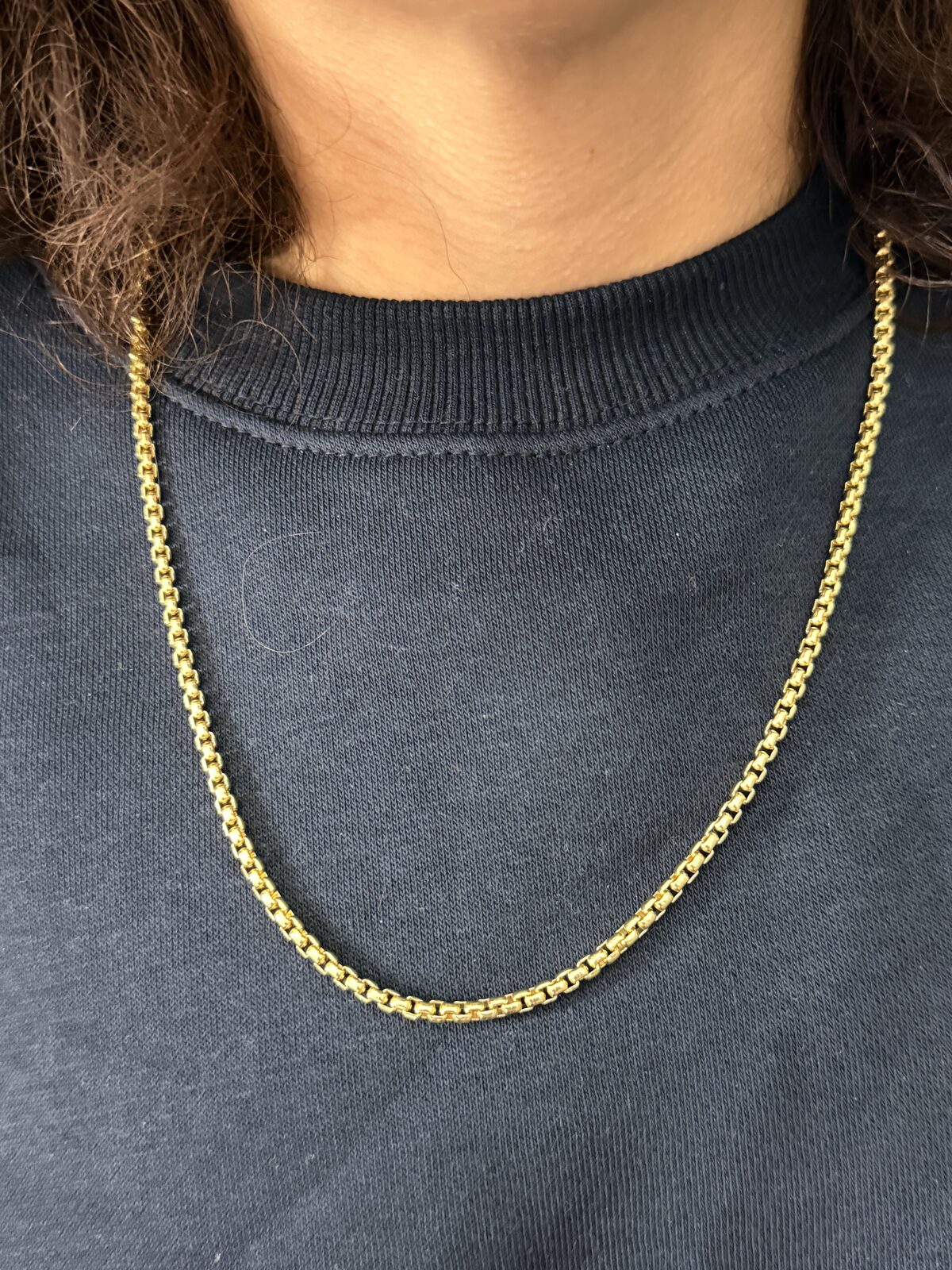
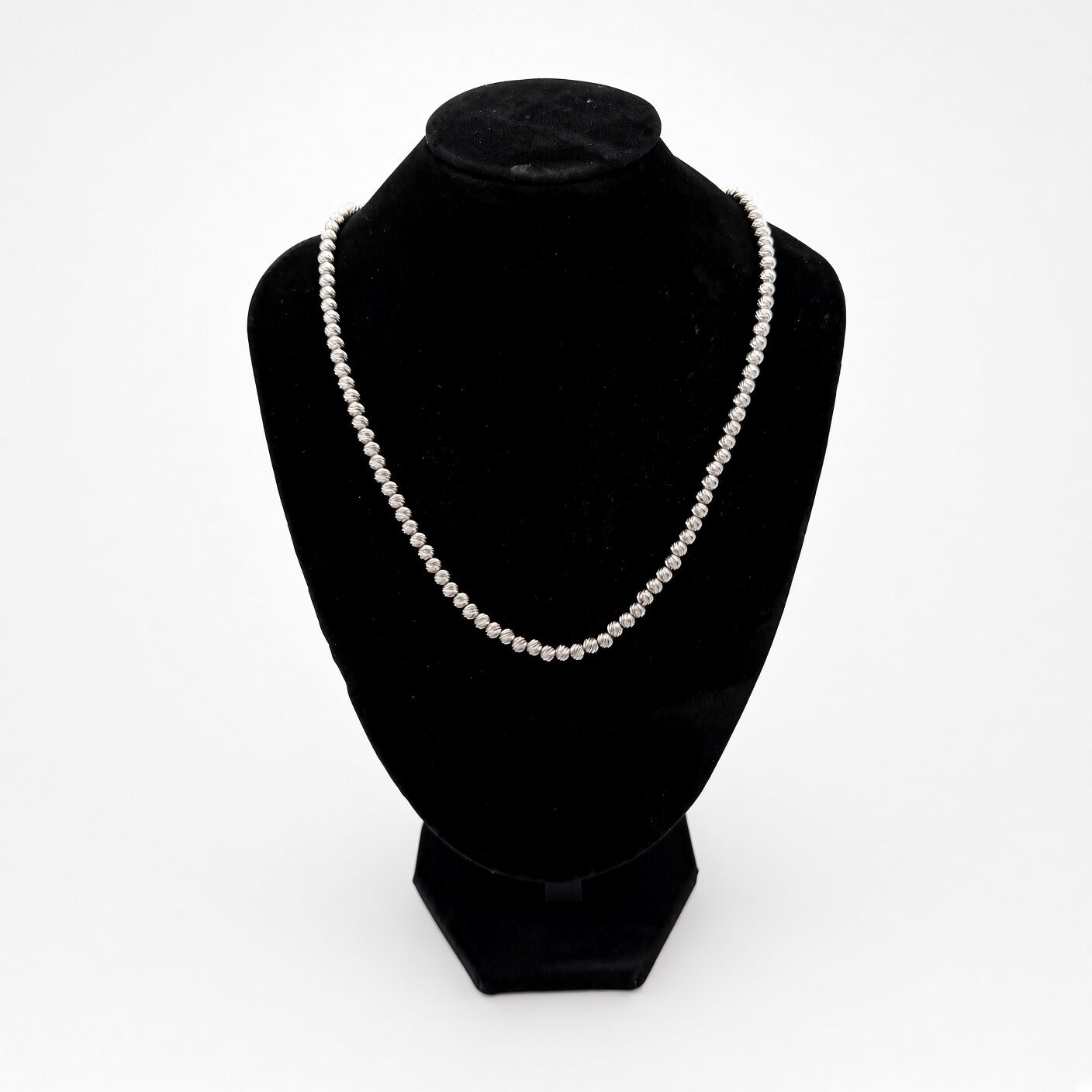
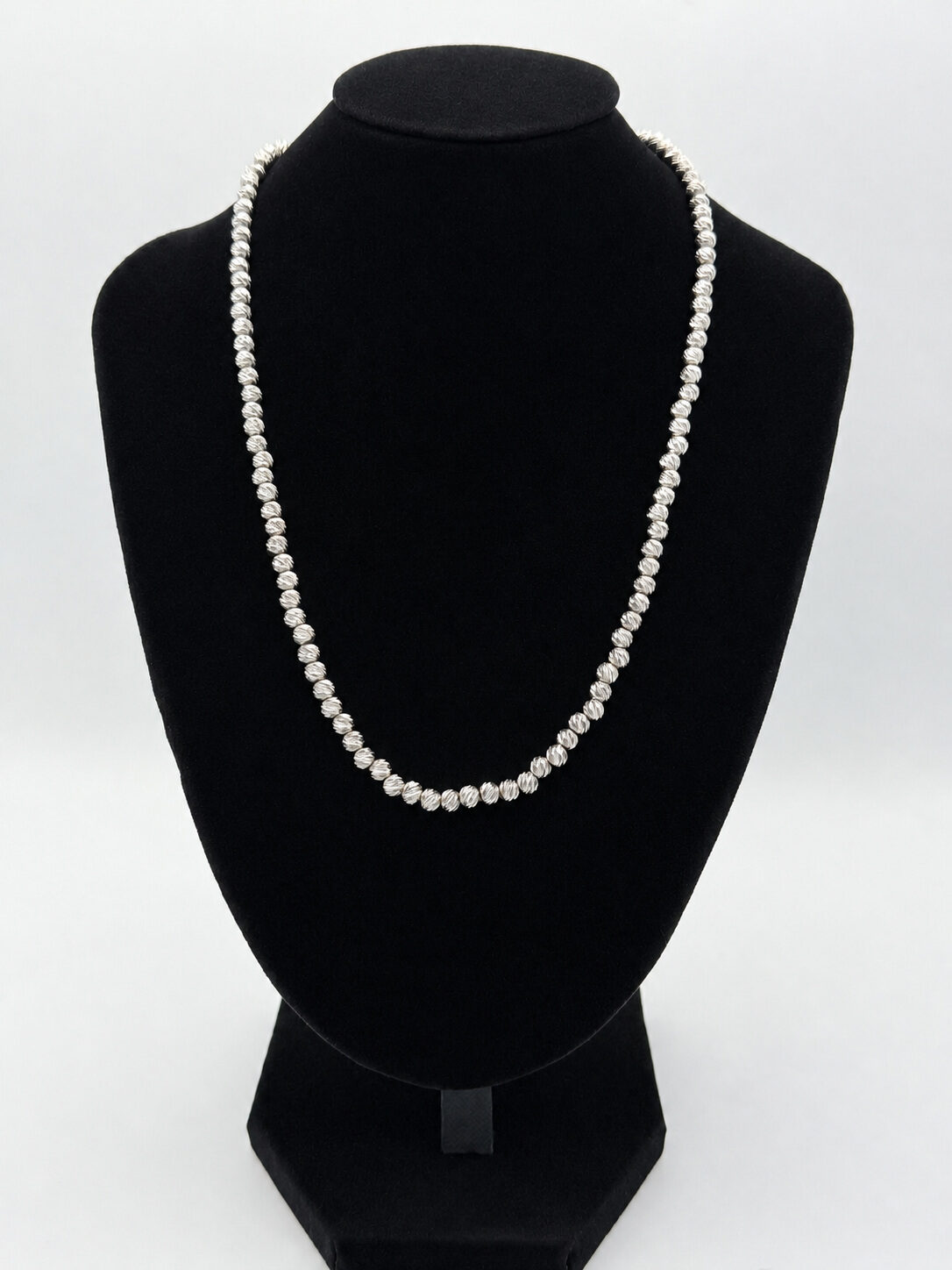
The stronger standard is simple: the listing photographs the exact physical piece being sold, as it is. Surface condition visible. Clasp visible. Hallmark visible where the piece allows it. A one-of-each seller can meet this standard because there is only one of each; the photo and the item cannot diverge. Compare the honesty of a listing like the 18-inch white gold mirror-link chain, where the piece pictured is the piece shipped, against a catalog image that promises only a resemblance.
Price sanity against melt, then decide
The final check converts everything above into arithmetic. Multiply the chain's weight by its gold content per gram, roughly $83 for 14k and $106 for 18k with gold near $4,400 per ounce, and you have the melt value: the hard floor under the piece. Every chain price is really melt plus a premium, and the premium is what you are evaluating. A modest premium over melt is the honest cost of a finished, wearable object. A price at multiples of melt is a decision to donate the difference to someone's rent.
Run that calculation on anything you are considering, wherever you are considering it. The listings here publish exact weights precisely so the math takes seconds. If a piece passes all six checks and the number makes sense, you have done what a careful first buyer can do; questions about any specific chain can go through the enquiry form.
Every chain on our gold chains page passes these checks by construction: solid 14K through the link, stamped, weight shown for the size before you buy, and priced to the live gold market.