The ten-minute clean that handles ninety percent of it
Fill a bowl with warm — not hot — water and add a few drops of plain dish soap. Nothing specialized: ordinary degreasing dish soap is genuinely the right tool, because what you are removing is grease. Let the piece soak for five to ten minutes so the film lifts.
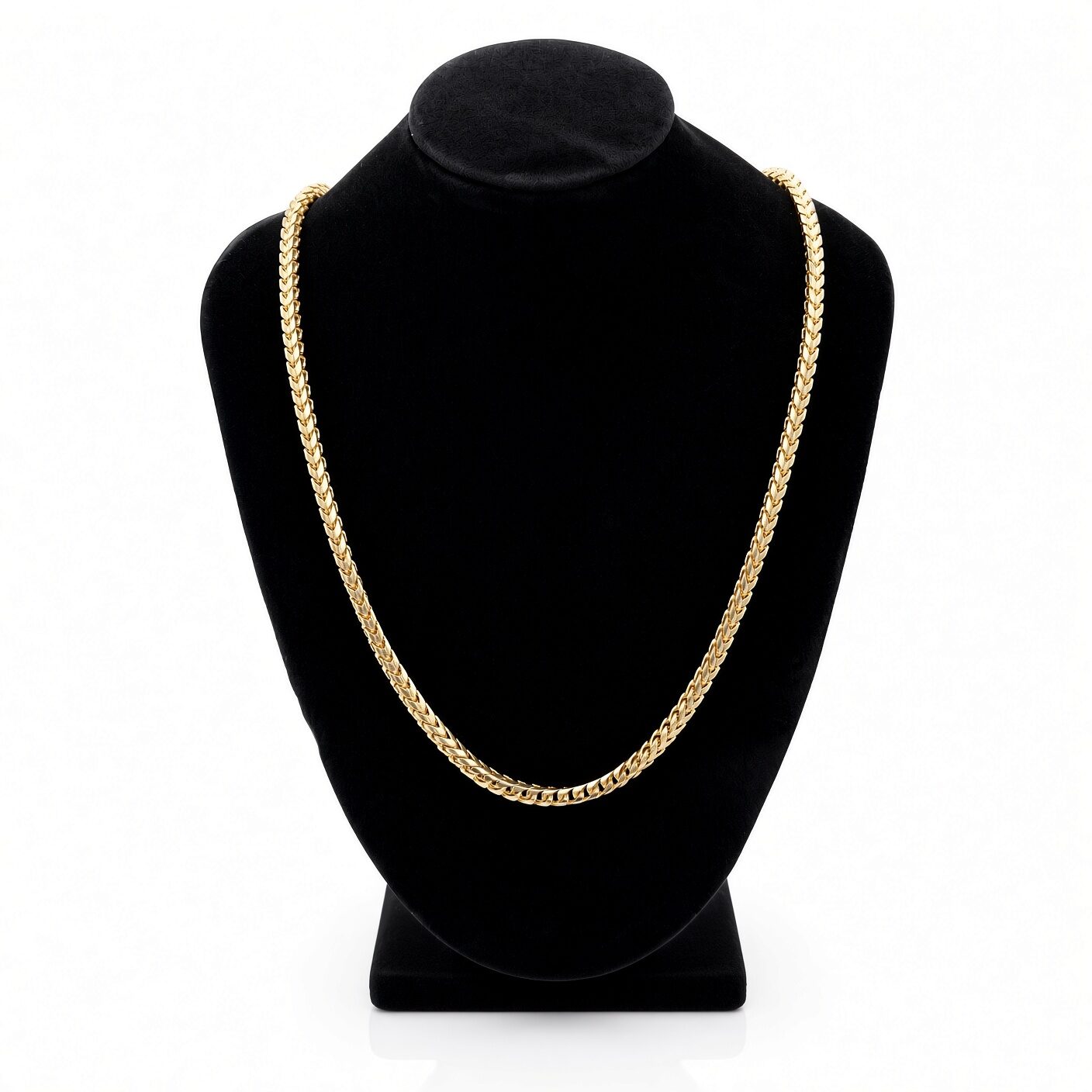
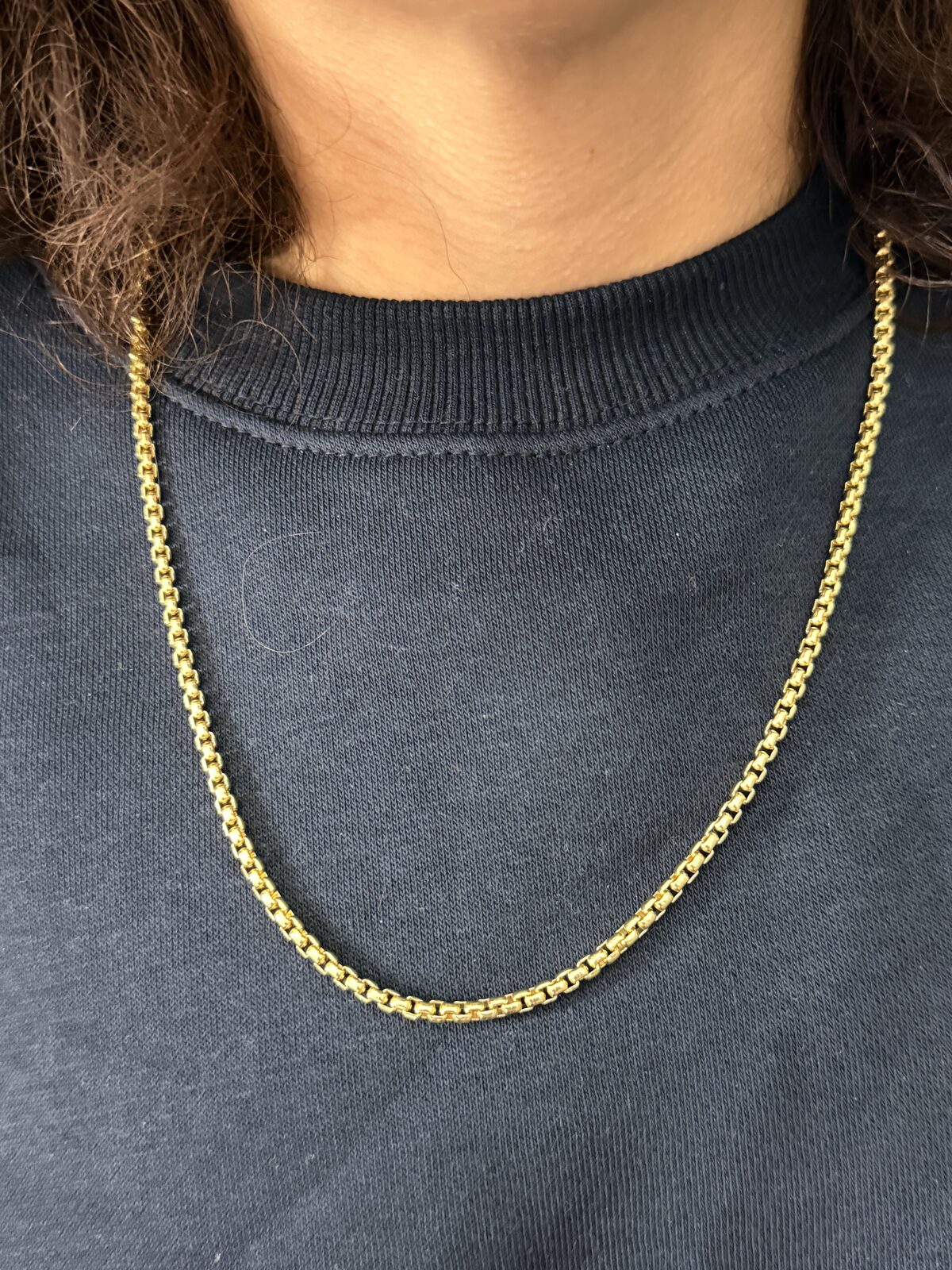
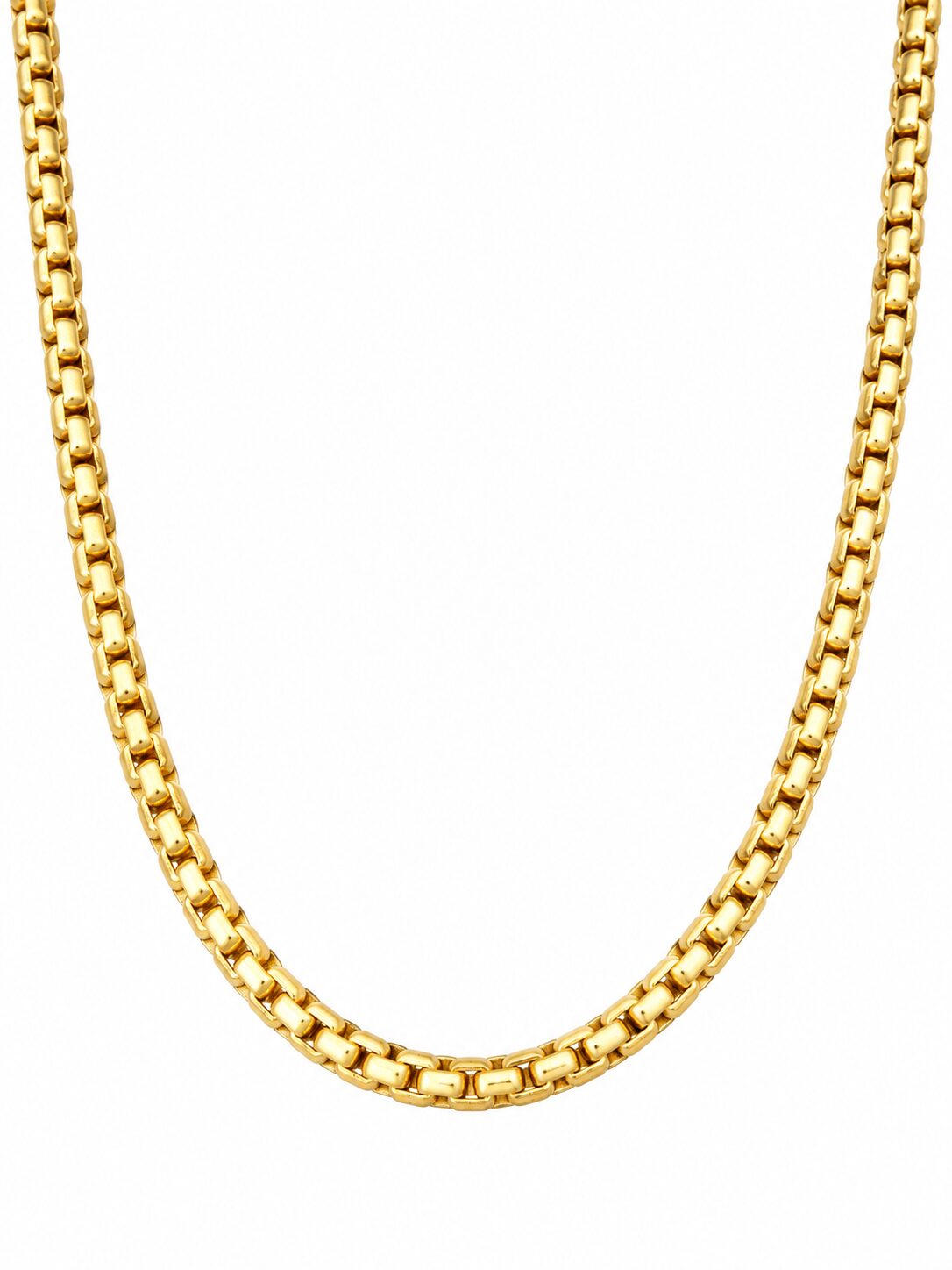
Then work it gently with a soft-bristled brush — a baby toothbrush or a worn soft adult one. On chains, brush along the run of the links and let the bristles reach into the gaps where residue collects; the crevices between links are where a chain loses its light. Rinse in clean water, then dry completely with a soft lint-free cloth before wearing or storing. Trapped moisture in link gaps is harmless to the gold but slows nothing down like a fresh water spot on a polished surface.
One practical caution: do this over a bowl, never an open sink drain. More jewelry is lost to plumbing than to theft.
What never to do
The short list of genuine hazards:
Chlorine. This is the serious one. Chlorine attacks the alloying metals in gold — the copper, silver, nickel, and zinc that give a piece its hardness — and prolonged exposure can leave solder joints and stressed points brittle enough to fail. Take gold off before pools and hot tubs, every time. Household bleach belongs in the same category.
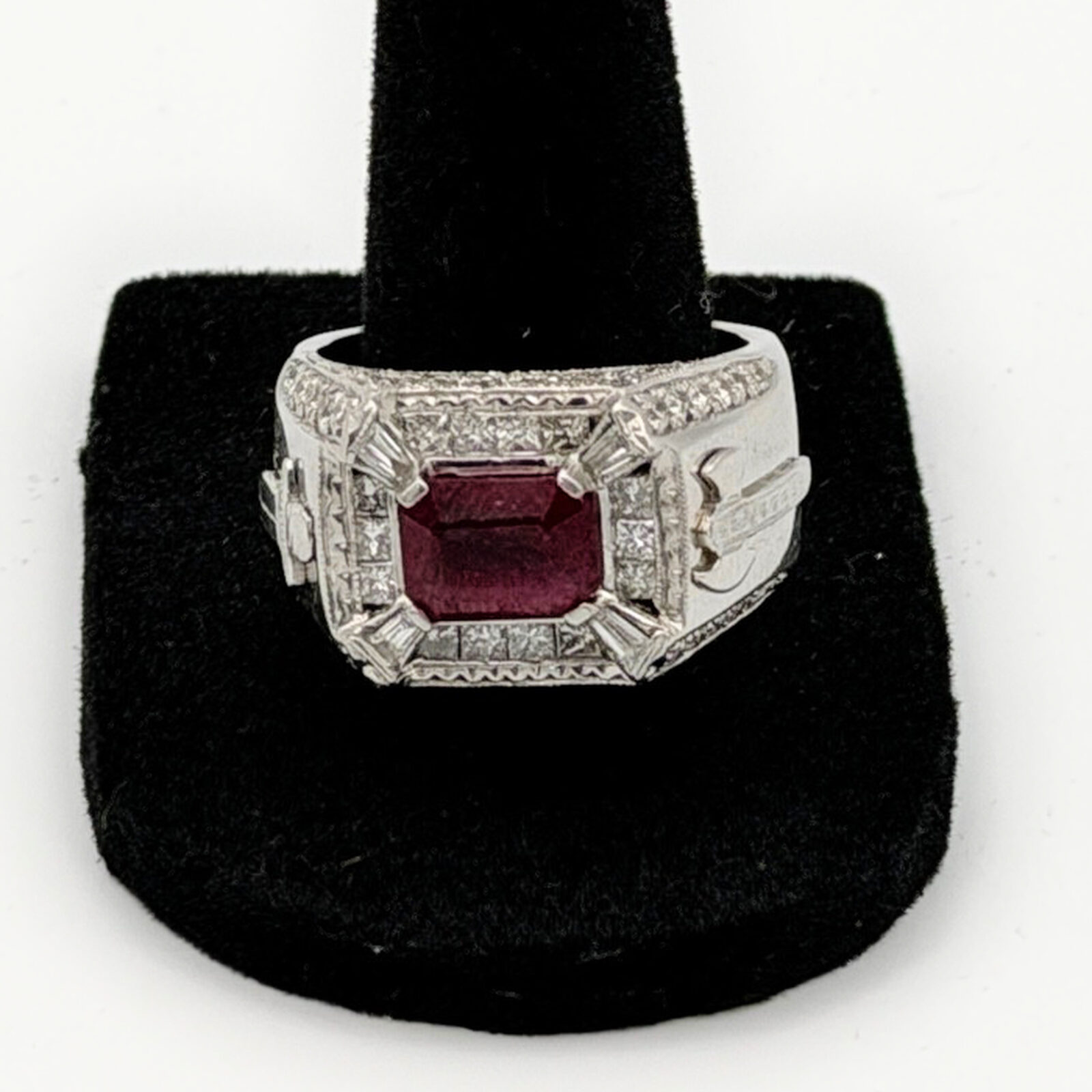
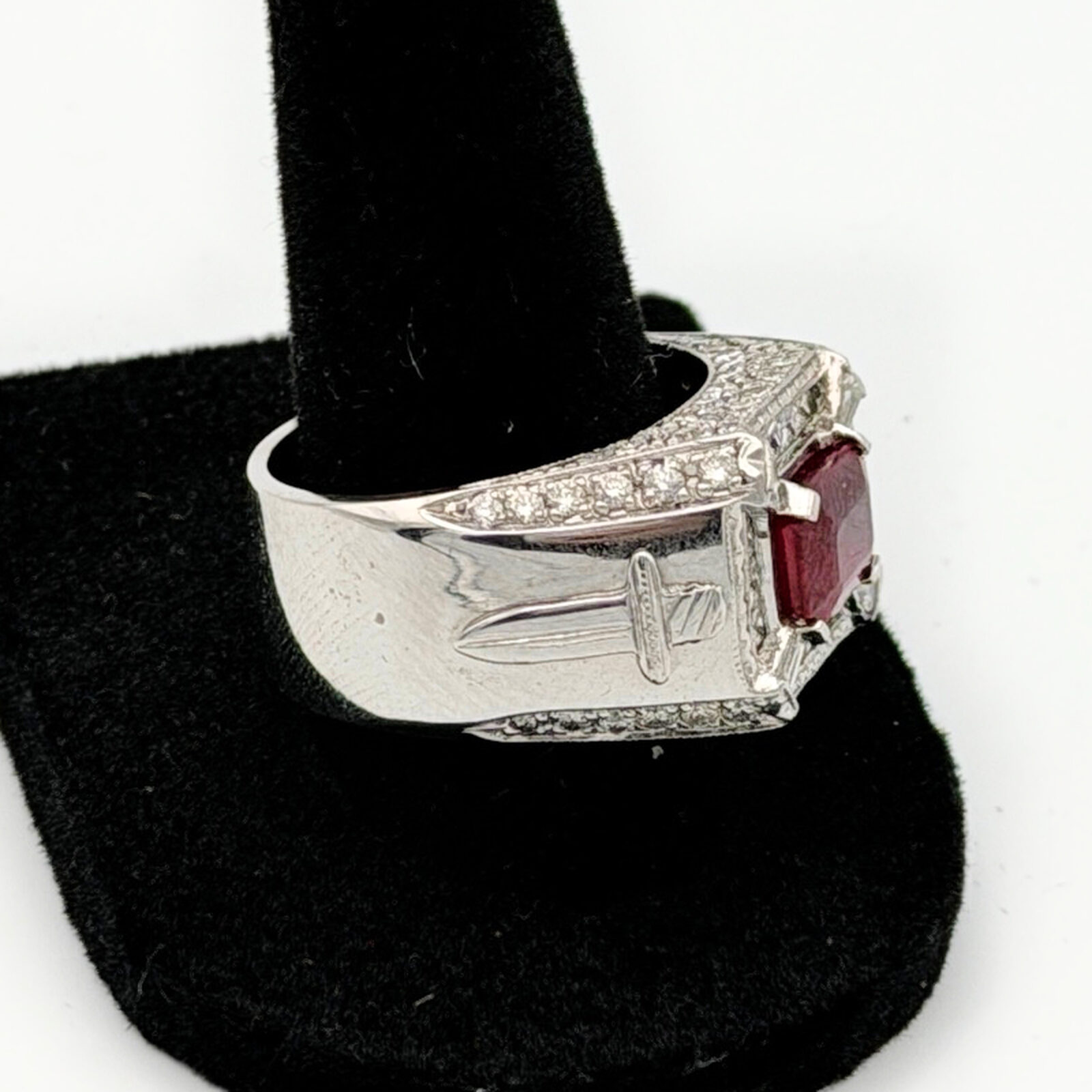
Ultrasonic cleaners with stone-set pieces. Ultrasonic machines are fine for plain solid gold, but they are a gamble with gemstones. Many stones on the market are treated — fracture-filled, heated, oiled — and ultrasonic vibration can damage treatments, open existing internal fractures, or shake stones loose from worn prongs. Unless you know a stone's treatment history with certainty, keep set pieces out of the machine and use the soap-and-brush method instead.
Abrasives. Toothpaste, baking soda, and "magic" scrubbing pastes all scratch. Gold is soft; abrasives trade a layer of your metal for a shine that soap would have delivered for free.
Harsh dips. Strong chemical dips formulated for other metals can be too aggressive for gold alloys and stone settings. If a product's label does not clearly cover your exact metal and stones, it is not worth the experiment.
Storage: the quiet half of jewelry care
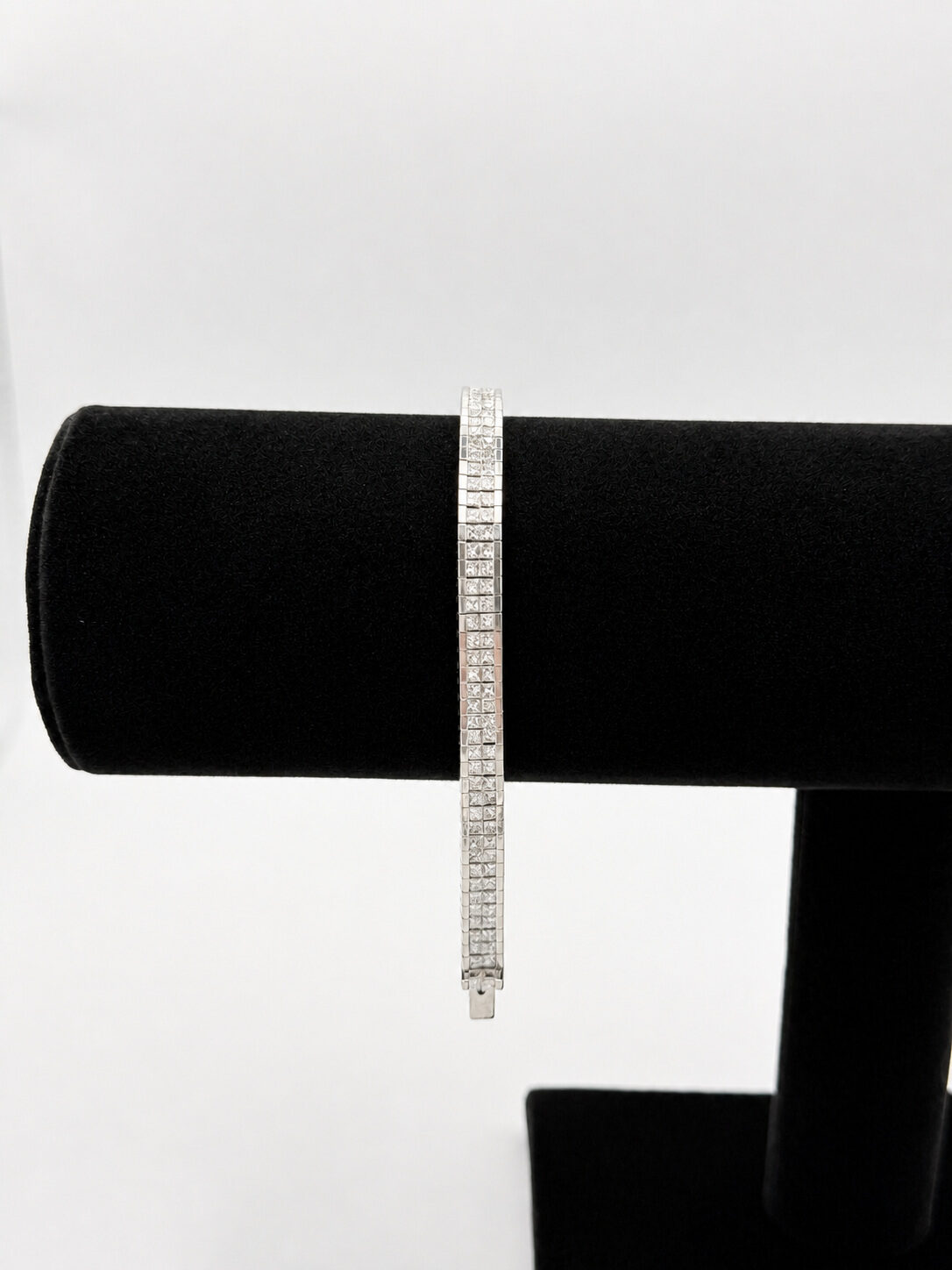
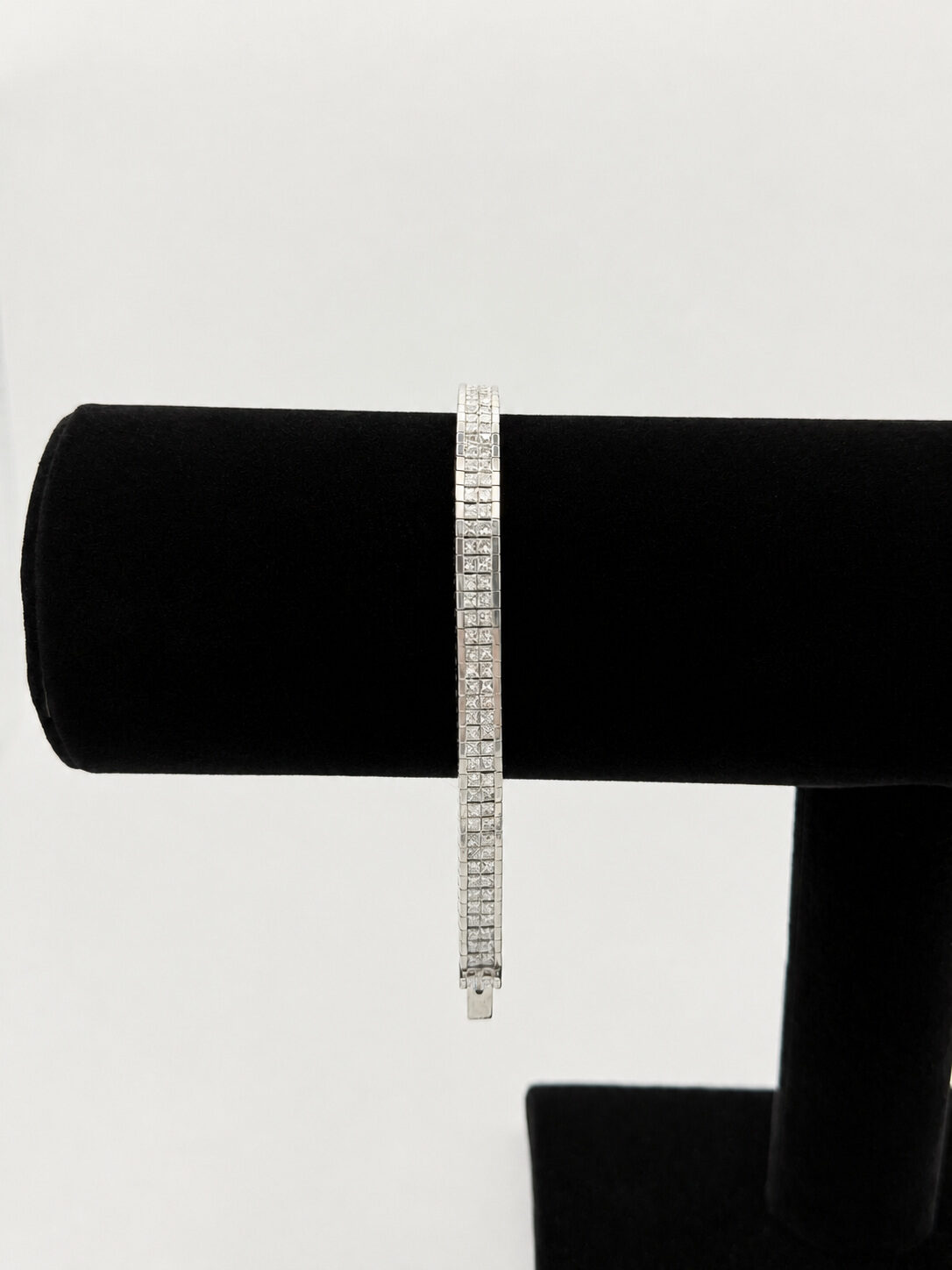
Most damage to fine jewelry happens in drawers, not on bodies. Pieces stored loose together scratch one another — and if anything in the pile contains diamonds, the diamonds win every encounter, because diamond scratches gold effortlessly.
The rule is one piece, one compartment: individual pouches, a lined box with dividers, or hanging storage for chains. Fasten the clasp on a chain before storing it — a closed loop tangles far less than an open strand — and lay or hang it straight rather than coiling it tightly.
Store gold dry and away from prolonged humidity. The gold itself will not corrode, but moisture encourages residue films, and if a white gold piece is rhodium-plated, a clean dry environment extends the life of that finish. Put jewelry on last in the morning — after sunscreen, fragrance, and lotions have dried — and take it off first at night. That single habit reduces cleaning frequency more than any product.
Caring for diamond-set pieces
Diamonds are famously hard and famously grease-loving. Skin oil clings to a diamond's pavilion and kills its light from below, which is why a diamond piece can test dull while being perfectly clean to the eye. The soap-and-soak method works here too — the soak matters more, and the brush should reach underneath the stones, where the oil actually sits.
The gold, not the diamond, is the fragile party. Check settings a few times a year: hold the piece to your ear and tap gently, listening for a rattle, and look for any stone that sits visibly off-center or any prong tip that has thinned. A pendant with substantial total carat weight, like this rose gold diamond hamsa at 3ctw, carries many small stones in pavé-style settings — exactly the construction that rewards a gentle hand and a periodic once-over rather than aggressive machine cleaning.
When professional help matters
Home care keeps gold clean. A bench jeweler keeps it structurally sound, and a few situations genuinely call for one.
Worn clasps and links. If a clasp no longer snaps firmly shut, or you can see thinning where links rub — often near the clasp, where the chain flexes most — repair it before it fails on the street. This is inexpensive work; replacing a lost chain is not.
Prong and setting checks. A jeweler will re-tip worn prongs and tighten stones for a small fraction of a stone's replacement cost. Annually is a sensible rhythm for anything worn daily.
Rhodium re-plating. When a white gold piece warms in tone as its plating thins, re-plating restores the original bright white. Routine, quick, and worthwhile on a piece you love.
Deep restoration. Professional polishing removes a whisper of metal each time, so it is best reserved for pieces that need it rather than scheduled habitually.
Well-kept solid gold simply endures — which is much of why pre-owned pieces hold value so well. Every piece in our shop is photographed exactly as it is, condition visible, no retouching. If you have a question about caring for a particular piece you are considering, send us an enquiry and we will tell you what it actually needs.